Can You Wear Black in Summer? Styling Tips for Hot Weather
- Cleo Fairchild
- 9 November 2026
- 0 Comments
Summer Black Dress Comfort Calculator
Wearing black in summer is possible, but it depends heavily on physics. This tool helps you determine if your specific outfit combination will keep you cool or leave you sweating.
Comfort Score: 0/100
Calculating...Analysis will appear here.
It feels counterintuitive, doesn't it? The sun is blazing, the pavement is radiating heat, and you’re eyeing that sleek black dress hanging in your closet. But can you actually wear it without feeling like you’re wrapped in a wool blanket on a July afternoon? The short answer is yes, but with major caveats. It’s not just about color; it’s about physics, fabric choice, and how you style the rest of your look.
The Science Behind Dark Colors and Heat
Let’s tackle the elephant in the room: does black make you hotter? Technically, yes. Dark colors absorb more visible light and convert it into heat energy compared to white or pastels, which reflect sunlight. However, this doesn’t mean black is off-limits. The key lies in where that heat goes. If your clothing allows air to circulate freely, the heat absorbed by the fabric dissipates quickly through convection-basically, the wind or your own movement carries it away. Tight-fitting black synthetics will trap that heat against your skin, making you sweat profusely. Loose, natural fibers let it escape. So, the problem isn’t the color itself; it’s the combination of dark dye and non-breathable materials.
Fabric Is More Important Than Color
If you want to rock black in August, the material matters ten times more than the hue. You need fabrics that breathe and wick moisture away from your body. Here are the best options:
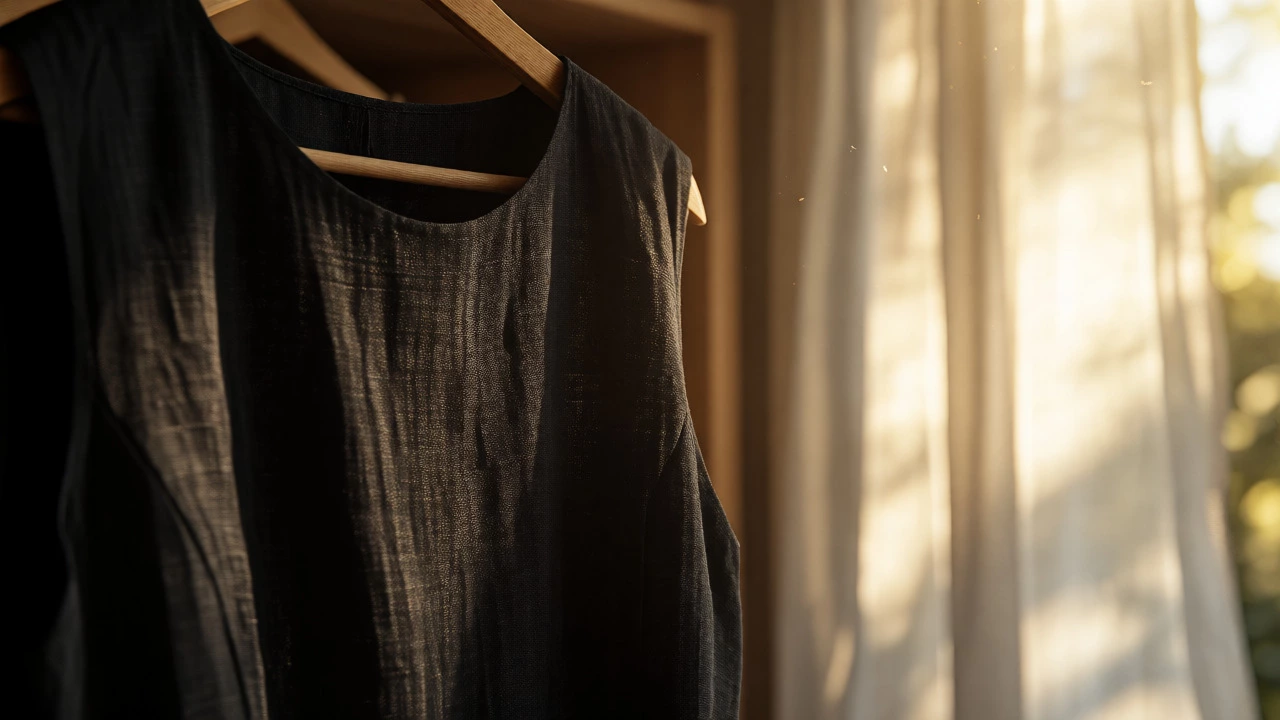
- Linen: This is the gold standard for hot weather. Linen has a loose weave that allows maximum airflow. A black linen shift dress might absorb some heat, but it won’t stick to your skin when you sweat.
- Cotton Voile: Lightweight and airy, cotton voile lets breeze pass right through. Look for high-thread-count organic cottons that feel soft rather than stiff.
- Rayon or Viscose: Made from wood pulp, these semi-synthetic fabrics drape beautifully and cool down quickly. They are excellent for flowy maxi dresses.
- Chambray: Often mistaken for denim, chambray is much lighter and thinner. It gives you that structured look without the heavy weight of actual jeans.
Avoid polyester, nylon, and heavy satin unless they are specifically engineered as "moisture-wicking" athletic fabrics. Standard synthetic blends act like plastic wrap in humidity, trapping sweat and creating a swampy microclimate next to your skin.
Choosing the Right Silhouette
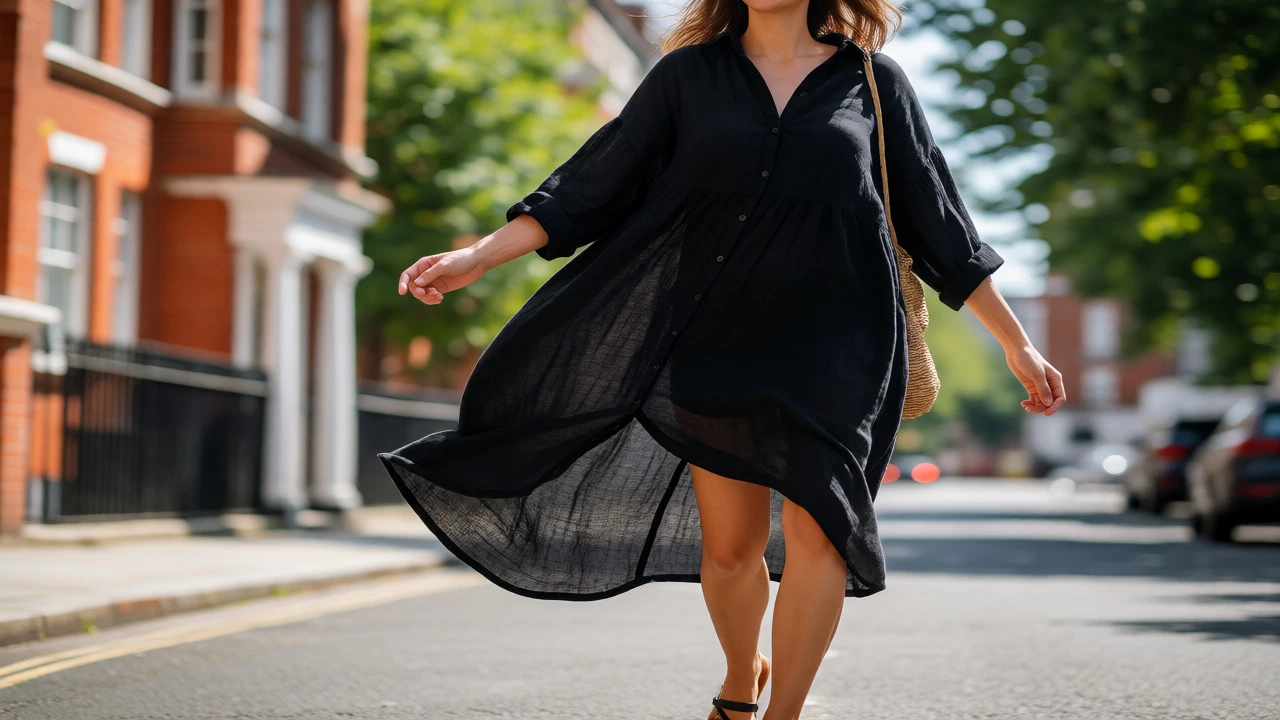
Tight fits hug the body, preventing air circulation. When wearing black in summer, go for looser cuts. An A-line dress, a kaftan, or an oversized shirt dress creates a gap between the fabric and your skin. This gap acts as insulation against external heat while allowing your body heat to rise and escape. Think of it like a chimney effect. If you prefer fitted styles, choose pieces with strategic cut-outs, open backs, or deep necklines to increase ventilation.
Styling Black for Daytime vs. Evening
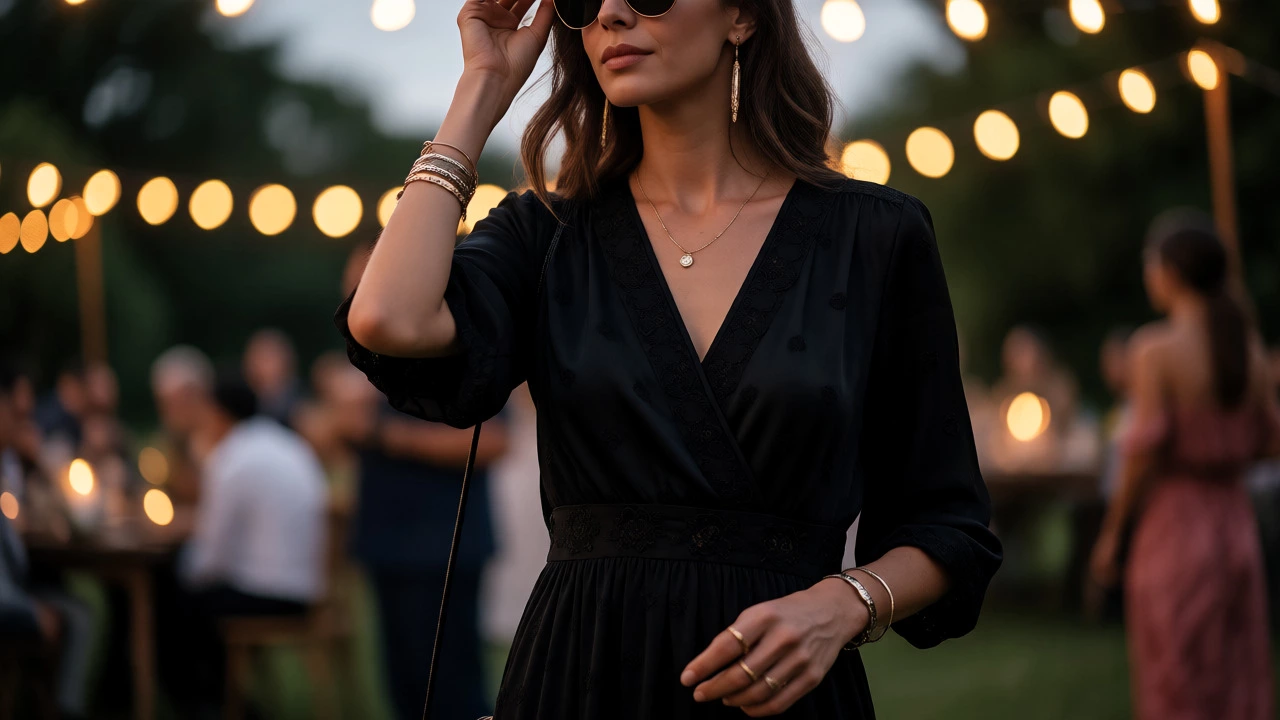
Context changes everything. Wearing all-black head-to-toe at noon under direct sunlight is tough. But for evening events, black remains elegant and practical. During the day, break up the darkness with accessories. A wide-brimmed straw hat reflects sunlight off your face and shoulders. Sunglasses aren’t just for glare; they protect your eyes from the contrast of bright surroundings and dark clothing. Add metallic jewelry-gold or silver catches the light and distracts from the heaviness of the black fabric.
For office settings, a black blazer over a white tank top balances the visual weight. It looks professional but keeps you cooler than a full black suit. If you’re heading to a beach wedding, a black midi dress with floral prints or lace details softens the look, making it appropriate for daytime festivities.
| Fabric Type | Breathability | Heat Absorption Impact | Best For |
|---|---|---|---|
| Linen | High | Low (due to airflow) | Daytime casual, beach cover-ups |
| Cotton Poplin | Medium-High | Medium | Office wear, structured shirts |
| Rayon/Viscose | Medium | Medium | Flowy evening dresses |
| Polyester Blend | Low | High (traps heat) | Quick-dry travel outfits only |
Psychological and Practical Benefits
Beyond temperature, there are reasons people love black in summer. It hides sweat stains better than light colors, which is a huge plus in humid climates. White shows every drop of perspiration immediately; black masks it until you take the garment off. Additionally, black slimming effect works year-round, and many find it easier to mix and match with other wardrobe staples. If you live in a city with lots of pollution or dust, black clothes stay looking cleaner longer than beige or pastel counterparts.
Common Mistakes to Avoid
Don’t pair black with heavy boots if you’re trying to stay cool. Swap them for sandals or espadrilles. Also, avoid layering too much. One statement piece is enough. If you must layer, use sheer overlays like chiffon or organza instead of thick cardigans. Finally, check the lining. Many black dresses have linings made of acetate or polyester, which negate the breathability of the outer shell. Always opt for unlined or cotton-lined garments when possible.
Final Verdict
You absolutely can wear black in summer. It’s stylish, versatile, and forgiving regarding sweat marks. Just respect the rules: choose natural, breathable fabrics, keep silhouettes loose, and accessorize with light, reflective elements. Your comfort depends less on the color of your clothes and more on how well those clothes allow your skin to breathe.
Does black clothing actually make you hotter than white?
Technically, yes, because black absorbs more solar radiation. However, if the fabric is loose and breathable, the heat dissipates before it reaches your skin. In windy conditions, black can sometimes feel cooler than tight white clothing because it facilitates convective cooling.
What is the coolest fabric to wear in summer?
Linen is widely considered the coolest fabric due to its loose weave and high breathability. Cotton and silk are also excellent choices. Avoid synthetic materials like polyester unless they are specifically designed for moisture-wicking sports performance.
Is it okay to wear black to a summer wedding?
Yes, especially for evening weddings or formal events. Choose a lightweight fabric like chiffon or silk and add colorful accessories to soften the look. Avoid heavy velvet or thick satin, which are inappropriate for warm weather.
How do I prevent sweating through my black clothes?
Black hides sweat better than light colors, but to prevent discomfort, wear moisture-wicking undergarments. Choose loose-fitting tops to allow air circulation, and consider using antiperspirant deodorants applied to areas prone to excessive sweating.
Can I wear black jeans in the summer?
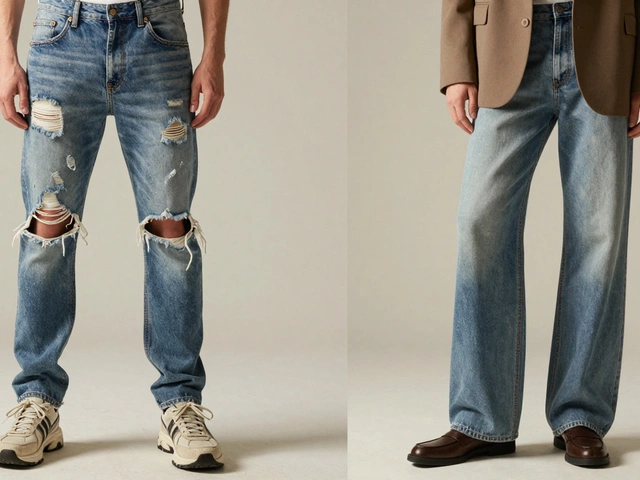
Standard denim is usually too hot for summer. Instead, look for chambray shirts, linen-blend trousers, or lightweight stretch denim in a cropped or wide-leg cut to improve airflow around the legs.