Why Do People Wear Hoodies in Hot Weather? The Real Reasons Explained

- Cleo Fairchild
- 3 May 2026
- 0 Comments
Summer Hoodie Suitability Calculator
Comfort Score
Enter details to calculate
Recommendations:
It’s a warm afternoon in Bristol. The sun is out, the temperature is climbing toward 90 degrees Fahrenheit (about 32°C), and you’re sweating in a light t-shirt. Then you see someone walking past in a thick, fleece-lined hoodie. You might think they’ve lost their mind. Or maybe you’re just confused. Why would anyone choose to wear heavy clothing when it’s scorching outside?
You aren’t alone in this confusion. It happens every summer. People wear hoodies at festivals, on sunny commutes, and even at the beach. But there’s more to this trend than meets the eye. It isn’t just about fashion or rebellion. There are real physiological, psychological, and practical reasons why people keep their hoodies on, even when the mercury rises.
The Science of Thermal Regulation
Your body has a built-in cooling system called thermoregulation. When you get hot, your blood vessels expand near the skin’s surface to release heat, and you start to sweat. As the sweat evaporates, it cools you down. Most people assume that wearing less clothing helps this process. And usually, it does. But sometimes, covering up can actually help regulate your temperature better than exposing your skin.
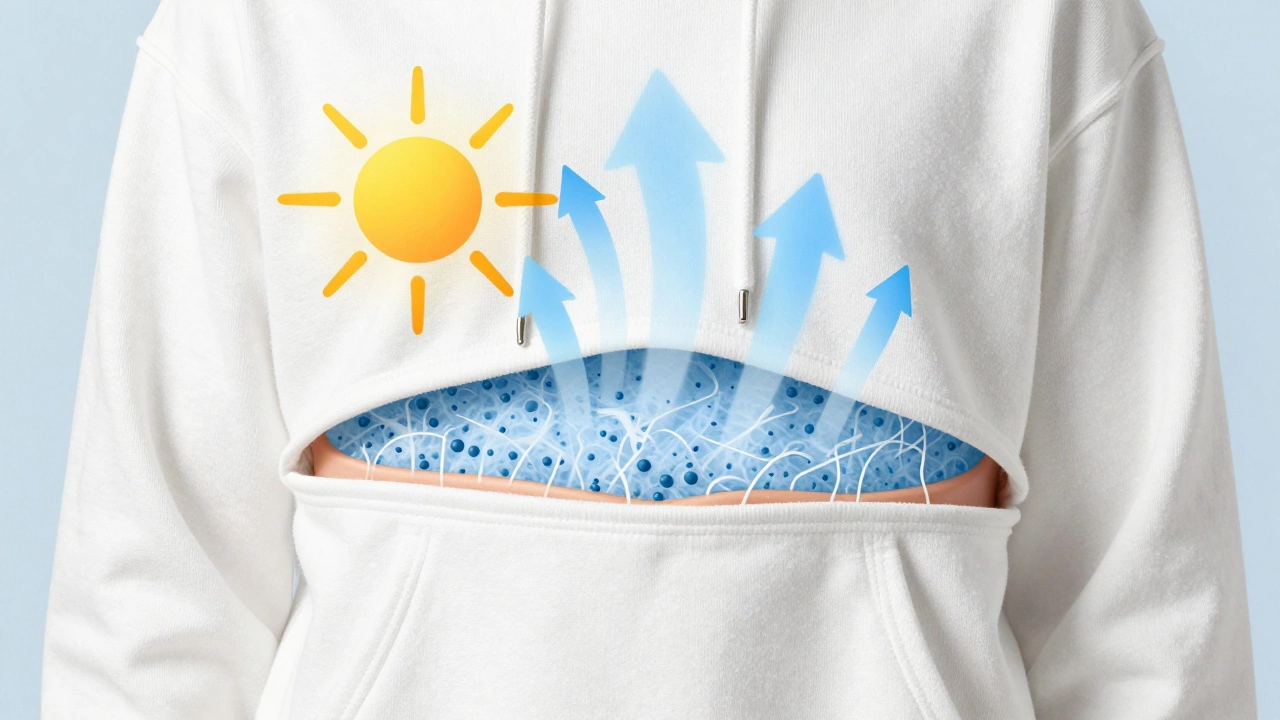
This sounds counterintuitive, but it’s based on how air moves around your body. When you wear a loose-fitting hoodie, it creates a small pocket of air between the fabric and your skin. This air layer acts as insulation. In direct sunlight, bare skin absorbs heat rapidly. A hoodie blocks some of that direct solar radiation. If the hoodie is made of breathable material, it allows moisture to escape while keeping the hottest part of the sun off your shoulders and back.
Think of it like an oven mitt. You wouldn’t touch a hot pan with bare hands, but you can hold it safely with protection. Similarly, a hoodie can protect your upper body from intense UV rays and radiant heat, especially if you’re moving through shade and sun quickly.
| Fabric Type | Breathability | Heat Reflection | Suitability for Hot Weather |
|---|---|---|---|
| Cotton | High | Low | Good if loose-fitting |
| Polyester | Medium | Medium | Only with moisture-wicking tech |
| Fleece | Low | High | Poor unless very thin |
| Linen Blend | Very High | Medium | Excellent for layering |
So, not all hoodies are created equal. A thin cotton hoodie will behave very differently from a thick synthetic one. The key is breathability. If the fabric traps heat and sweat, you’ll overheat. If it lets air circulate, you might actually feel cooler than someone in a tight tank top.
The Role of Air Conditioning
Let’s talk about indoor environments. Many offices, malls, and public transport systems run their air conditioning at levels that feel freezing to most people. In places like the UK, where summers can be unpredictable, buildings often stay cool regardless of the outside temperature.
If you step outside in a t-shirt and then enter a building set to 18°C, you’ll shiver within minutes. Wearing a hoodie indoors means you don’t have to carry a jacket or deal with the hassle of putting something on and taking it off repeatedly. It’s convenience. You stay comfortable whether you’re walking in the sun or sitting in a chilled café.
This is especially true in cities with poor climate control consistency. Some buildings blast AC to save energy during peak hours, making interiors significantly colder than outdoors. A hoodie becomes a tool for adaptability. You’re prepared for both extremes without needing extra layers.
Fashion and Identity
Fashion isn’t always logical. Sometimes, we wear clothes because they make us feel a certain way. Hoodies have become a symbol of casual confidence. They’re associated with comfort, anonymity, and a relaxed attitude. For many people, wearing a hoodie in summer sends a message: “I’m not trying too hard.”
In streetwear culture, hoodies are staples. Brands like Supreme and Nike release limited-edition hoodies that sell out instantly, regardless of the season. Owning and wearing these pieces is part of identity. People want to show off their style, even if it means enduring some discomfort.
There’s also the factor of social signaling. Hoodies can create a sense of belonging. If everyone around you is wearing them-whether at a music festival, a university campus, or a skate park-you might put yours on to fit in. It’s not just about warmth; it’s about community.
Psychological Comfort and Security
Have you ever felt exposed? Maybe you’re self-conscious about your arms, your tan lines, or just feeling vulnerable in a crowded space. A hoodie offers coverage. It hides parts of your body you might not want others to see. The hood itself provides a sense of privacy. Pulling it up creates a personal bubble, shielding you from stares, cameras, or unwanted attention.
This psychological effect is powerful. Studies in environmental psychology suggest that enclosed spaces reduce anxiety. A hoodie mimics that enclosure. It’s like wearing a portable safe house. For people who suffer from social anxiety or sensory sensitivities, a hoodie can be a coping mechanism. It dampens visual input and gives a feeling of security.
Even if you don’t struggle with anxiety, you might still appreciate the comfort. After a long day, slipping into a soft hoodie feels like a hug. That emotional connection makes people reluctant to take it off, even when it’s warm.
Practicality and Functionality
Hoodies serve practical purposes beyond warmth. They have pockets. Large, deep pockets where you can store your phone, keys, wallet, and snacks. Unlike jeans, which might ride up or dig into your hips, hoodie pockets sit comfortably against your torso. You don’t need a bag to carry essentials.
The hood itself is useful. It protects your head and neck from rain, wind, or sun. On a breezy day, it keeps your hair from flying everywhere. If you’re riding a bike or walking fast, the hood stays in place better than a cap. It’s functional gear disguised as casual wear.
Additionally, hoodies are easy to clean. Machine washable, durable, and resistant to wrinkles. You can throw one in the laundry and forget about it until it’s ready. Compare that to delicate fabrics that require hand washing or ironing, and the hoodie wins on convenience.

When Not to Wear a Hoodie in Heat
All this said, there are limits. Wearing a heavy hoodie in extreme heat can lead to overheating, dehydration, or heat exhaustion. Your body needs to dissipate heat efficiently. If your clothing traps too much moisture and restricts airflow, you risk serious health issues.
Signs you should remove your hoodie include:
- Excessive sweating that doesn’t dry
- Dizziness or lightheadedness
- Rapid heartbeat
- Nausea or fatigue
- Reddened skin that feels hot to the touch
If you experience any of these symptoms, find shade, hydrate, and remove excess layers immediately. Don’t push through discomfort for the sake of fashion or habit.
Also, consider the activity level. If you’re running errands or standing still, a lightweight hoodie might work fine. But if you’re exercising, hiking, or doing manual labor, opt for moisture-wicking performance wear instead. Your safety comes first.
Choosing the Right Hoodie for Warm Weather
If you love hoodies but hate the heat, you can still enjoy them by choosing wisely. Look for specific features that improve comfort in warm conditions.
- Material: Choose cotton, linen blends, or technical fabrics designed for breathability. Avoid thick fleece or synthetic materials that trap heat.
- Fit: Go for oversized cuts. Tight hoodies restrict airflow and increase friction. Loose fits allow air to circulate freely.
- Color: Light colors reflect sunlight. Dark colors absorb it. White, gray, or pastel shades will keep you cooler than black or navy.
- Ventilation: Some hoodies come with mesh panels or zippered vents. These help release trapped heat and moisture.
- Weight: Check the gram weight. Lightweight hoodies under 250 grams per square meter are ideal for summer use.
By selecting the right hoodie, you can balance style, function, and comfort without sacrificing either.
Is it dangerous to wear a hoodie in 90-degree weather?
It depends on the situation. If you’re sedentary and wearing a breathable, lightweight hoodie, it’s generally safe. However, if you’re physically active, dehydrated, or wearing a thick, non-breathable hoodie, you risk overheating. Listen to your body and remove layers if you feel dizzy, nauseous, or excessively sweaty.
Why do teenagers wear hoodies in school during summer?
Teenagers often wear hoodies for psychological comfort and social reasons. Hoodies provide a sense of security, hide insecurities, and align with peer group norms. Additionally, schools may have strict dress codes, and hoodies offer a simple way to comply while maintaining personal style.
Can wearing a hoodie help prevent sunburn?
Yes, a hoodie can act as physical sunscreen. Tight-weave fabrics block UV rays effectively. While it won’t replace sunscreen on exposed areas like your face and hands, it protects your chest, back, and arms from direct sun exposure, reducing the risk of burns.
What is the best type of hoodie for hot climates?
The best hoodies for hot climates are made from lightweight, breathable materials like cotton or linen blends. They should be loose-fitting to allow air circulation and preferably light-colored to reflect heat. Technical fabrics with moisture-wicking properties are also excellent choices.
Do hoodies make you look cooler in photos?
Not necessarily. In bright sunlight, dark hoodies can create harsh shadows and contrast, which might not flatter everyone. Lighter colors tend to photograph better in daylight. However, hoodies can add texture and depth to images, depending on lighting and styling.