What Style of T-Shirt Is Most Flattering? A Guide to Necklines, Fits, and Fabrics
- Cleo Fairchild
- 7 June 2026
- 0 Comments
Find Your Perfect T-Shirt Style
Ever stared at a rack of white tees and felt completely stuck? You’re not alone. The basic t-shirt is supposed to be the easiest piece in your closet, yet it’s often the hardest to get right. Buy one that’s too loose, and you look like you’re wearing a sleeping bag. Pick one that’s too tight, and it highlights every roll you want to hide. The secret isn’t finding a “magic” shirt that works for everyone. It’s about matching specific cuts to your unique shape.
Most people think style is just about color or brand. But when it comes to looking polished and confident, the real game-changers are the neckline, the shoulder seam, and the fabric weight. Get these three things right, and even a $10 tee looks like designer wear. Get them wrong, and no amount of jewelry will save the outfit. Let’s break down exactly which styles work for which bodies, so you can stop guessing and start dressing with confidence.
The Power of the Neckline
If you only change one thing about your t-shirt game, make it the neckline. This is the frame for your face, and it dictates how much skin you show and where the eye travels. A high crew neck on a petite frame can swallow you whole, making you look shorter and heavier than you are. On the other hand, a deep V-neck on someone with a smaller bust might feel too revealing without adding any flattering structure.
Which neckline is most universally flattering?
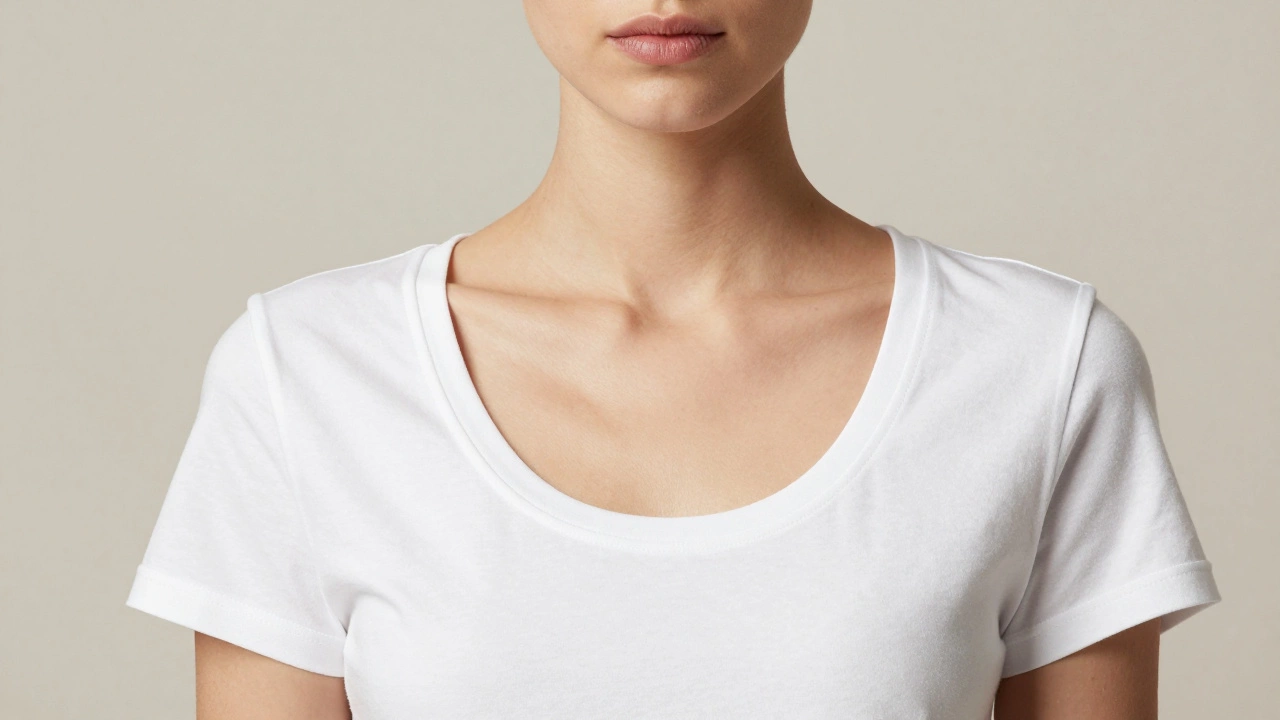
The scoop neck is widely considered the most versatile option. It creates a gentle curve that elongates the neck and draws attention upward toward the collarbones, working well for almost every body type from athletic to curvy.
For those with broader shoulders or a larger bust, a deeper V-neck is your best friend. It breaks up the horizontal line of the chest, creating a vertical illusion that slims and lengthens the torso. If you have a slender build, however, a wide boat neck might overwhelm your frame. Instead, opt for a moderate scoop or a classic crew neck that sits just below the collarbone. This adds balance without exposing too much skin.
Don’t forget the mock neck. While it used to be reserved for winter layers, a lightweight mock neck tee is incredibly chic for transitional weather. It works wonders for those with longer necks, providing coverage that feels sophisticated rather than restrictive. Just ensure the fabric has some stretch; otherwise, it can pull awkwardly around the chin.
Finding Your Perfect Fit: Slim vs. Regular vs. Oversized
Fit is where most people go wrong. We’ve all seen the trend of oversized streetwear, but wearing a shirt two sizes too big doesn’t automatically make you look cool-it usually just makes you look sloppy. The goal is intentional looseness, not accidental drowning.
- Slim Fit: Best for athletic builds or those who want a sharp, tailored look. Look for shirts that skim the body without hugging it tightly. If the fabric pulls across your back or stomach, it’s too small.
- Regular Fit: The safe bet for most body types. It offers room through the chest and waist while maintaining a defined shape. This is ideal if you carry weight in your midsection but still want to look put-together.
- Oversized: Great for balancing out wider hips or thighs. If you have an hourglass figure, an oversized tee tucked into high-waisted jeans creates a beautiful contrast. For pear-shaped bodies, let the shirt hang loosely over the hips to create symmetry.
A crucial detail many ignore is the shoulder seam. On a well-fitting t-shirt, the seam should sit right at the edge of your shoulder bone. If it droops down your arm, the shirt is too big. If it sits on top of your shoulder, it’s too small. This single measurement tells you more about the fit than anything else.
Fabric Matters More Than You Think
You can have the perfect cut, but if the fabric is cheap, thin, or clingy, the illusion falls apart. Fabric weight determines how the shirt drapes on your body. Lighter fabrics like thin cotton blends tend to cling to every bump and bulge. They also risk being see-through, which is never a flattering outcome.
Aim for a medium-weight cotton, ideally between 180 to 220 grams per square meter (GSM). This weight provides enough structure to hold its shape without feeling stiff. It skims over curves rather than sticking to them. Pima cotton or Supima cotton are excellent choices because their long fibers result in a smoother surface that resists pilling and maintains its drape after multiple washes.
Avoid synthetic blends that lack breathability unless they contain spandex or elastane. A small percentage of stretch (around 2-5%) ensures the shirt moves with you and recovers its shape. Pure polyester often traps heat and can look shiny under bright lights, drawing unwanted attention to areas you’d rather keep subtle.
Color Psychology and Visual Tricks
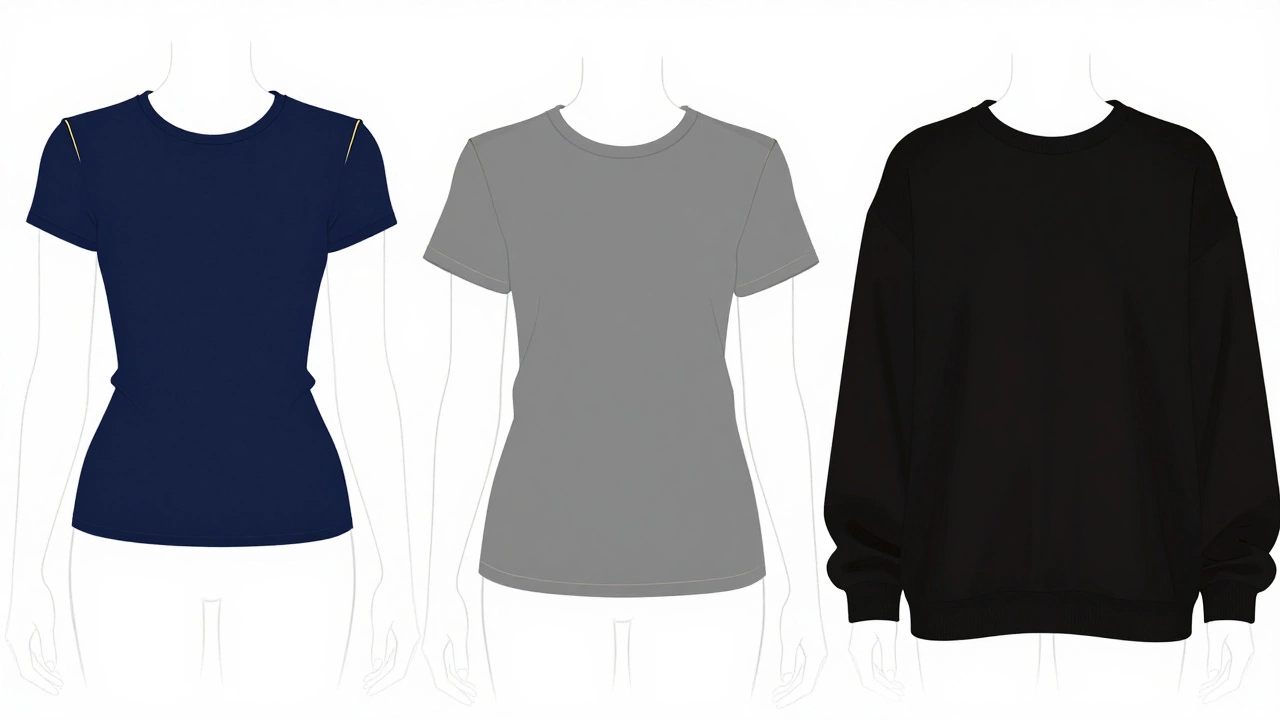
Color plays a massive role in how your body is perceived. Dark colors naturally recede, making areas look smaller, while light colors advance, making them appear larger. This isn’t a rule you must follow strictly, but it’s a powerful tool for balancing proportions.
If you want to minimize the appearance of your upper body, stick to navy, charcoal, black, or deep burgundy. These shades create a sleek, streamlined silhouette. Conversely, if you have a smaller frame and want to add volume, lighter pastels, creams, or bold prints can help broaden your shoulders visually.
Monochromatic dressing is another easy win. Wearing a t-shirt in a similar shade to your pants or skirt creates an unbroken vertical line, instantly elongating your legs and making you look taller. Contrast breaks this line, which can shorten your appearance if you’re petite. So, pair a white tee with white jeans for maximum height, or use a belt to define your waist if you prefer a more segmented look.
Styling Tips for Different Body Types
Let’s get specific. Here’s how to apply these rules based on common body shapes.
Apple Shape: You carry weight in your midsection. Avoid tight, short tees that end at the widest part of your stomach. Instead, choose longer lengths that cover the hip bone. V-necks draw the eye up, away from the waist. Tuck the front slightly into high-waisted trousers to define your waist without pulling the fabric tight across your belly.
Pear Shape: Your hips are wider than your shoulders. Balance this by adding volume to your upper body. Choose tees with details like ruffles, pockets, or brighter colors on top. Pair them with dark, slim-fit bottoms. An oversized tee left untucked can also soften the hip area effectively.
Hourglass Shape: You have balanced shoulders and hips with a defined waist. Show it off! Fitted tees that hug your curves are your best friend. Belted tees or half-tucks emphasize your natural waistline. Avoid boxy, shapeless cuts that hide your definition.
Rectangle Shape: Your shoulders, waist, and hips are similar in width. Create the illusion of curves with peplum tees or by tucking your shirt into flared jeans. Layering a cardigan or jacket open over a fitted tee can also add dimension and structure to your silhouette.
Common Mistakes to Avoid
Even with the right knowledge, small errors can ruin the look. One major blunder is ignoring the hem. A t-shirt that ends right at the crotch line can make your legs look short. Aim for a length that hits mid-hip. Another mistake is buying shirts that are too short in the torso. If you have to constantly tug your shirt down, it’s too small. Comfort is key to confidence.
Also, watch out for stretched-out collars. A wavy, misshapen neckline ages the entire outfit instantly. Check the elasticity before you buy. Finally, don’t neglect the sleeves. Sleeves that are too tight can dig into your armpits, creating uncomfortable bulges. Ensure there’s enough room to move freely.
Building a Capsule Wardrobe with Tees
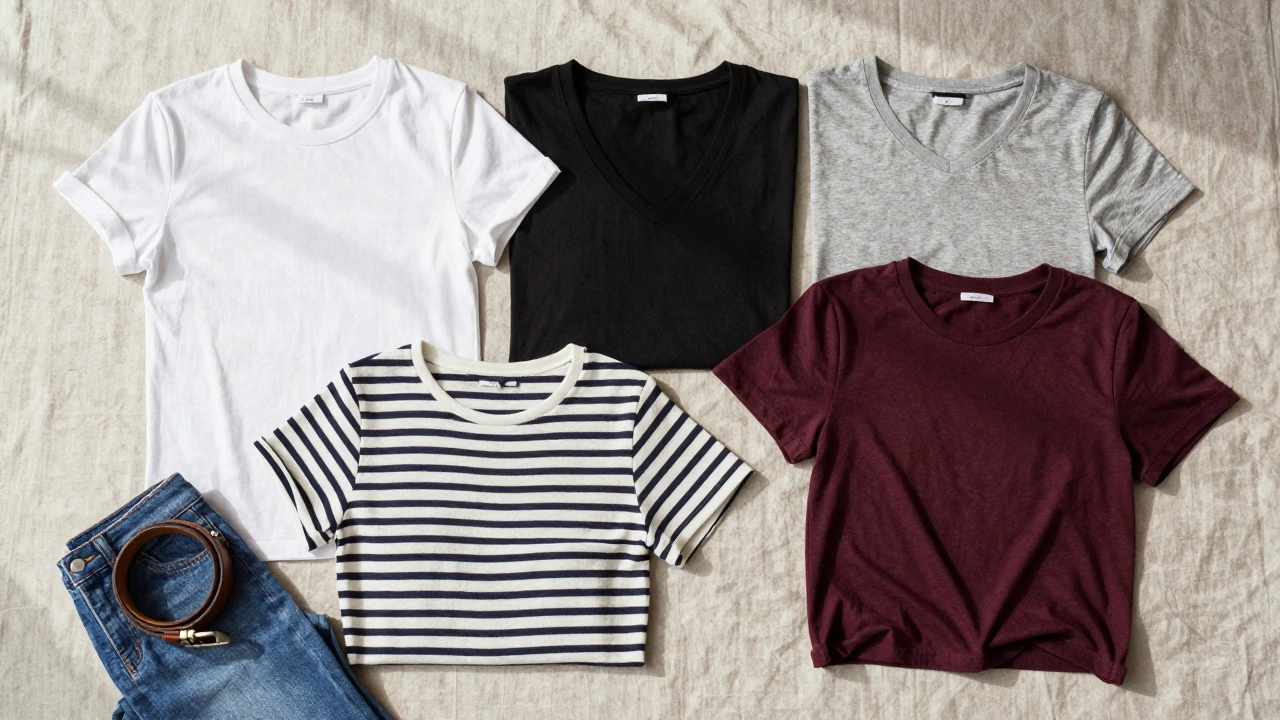
You don’t need fifty t-shirts to look good. You need five perfect ones. Start with a crisp white crew neck for versatility. Add a black V-neck for evening or slimming effects. Include a gray heather tee for casual days, a striped Breton top for a nautical touch, and a colored tee in your favorite hue for personality. Rotate these with different bottoms and layers, and you’ll always have something flattering to wear.
How do I know if a t-shirt is too big?
If the shoulder seams drop below your actual shoulder bone, the shirt is too large. Additionally, if the fabric bunches excessively at the waist or the sleeves extend past your biceps, it’s likely an ill-fitting size.
Are cropped t-shirts flattering for everyone?
Not necessarily. Cropped tees work best with high-waisted bottoms to maintain proportion. If you have a longer torso, a crop that ends above the waistband may create awkward gaps. Stick to standard or longline lengths if you’re unsure.
What is the best fabric for a durable t-shirt?
Pima or Supima cotton is ideal due to its softness and durability. Look for a GSM (grams per square meter) between 180-220 for a balance of comfort and structure. Avoid thin synthetics that pill easily.
Should I tuck in my t-shirt?
It depends on your body type and the shirt length. Tucking defines the waist and elongates legs, especially for petite frames. For a relaxed look, leave it untucked but ensure the hem hits mid-hip to avoid cutting off your leg line.
Can oversized tees make me look thinner?
Yes, if styled correctly. An oversized tee paired with fitted bottoms creates a balanced silhouette. The key is intentionality-ensure the shoulders aren’t drowned out and the length complements your height.