What Is the Difference Between Athleisure and Sportswear?
- Cleo Fairchild
- 1 March 2026
- 0 Comments
Athleisure or Sportswear Finder
This tool helps you determine if a piece of clothing is designed for athletic performance (sportswear) or everyday comfort (athleisure). Select the features you see to get personalized results.
Results
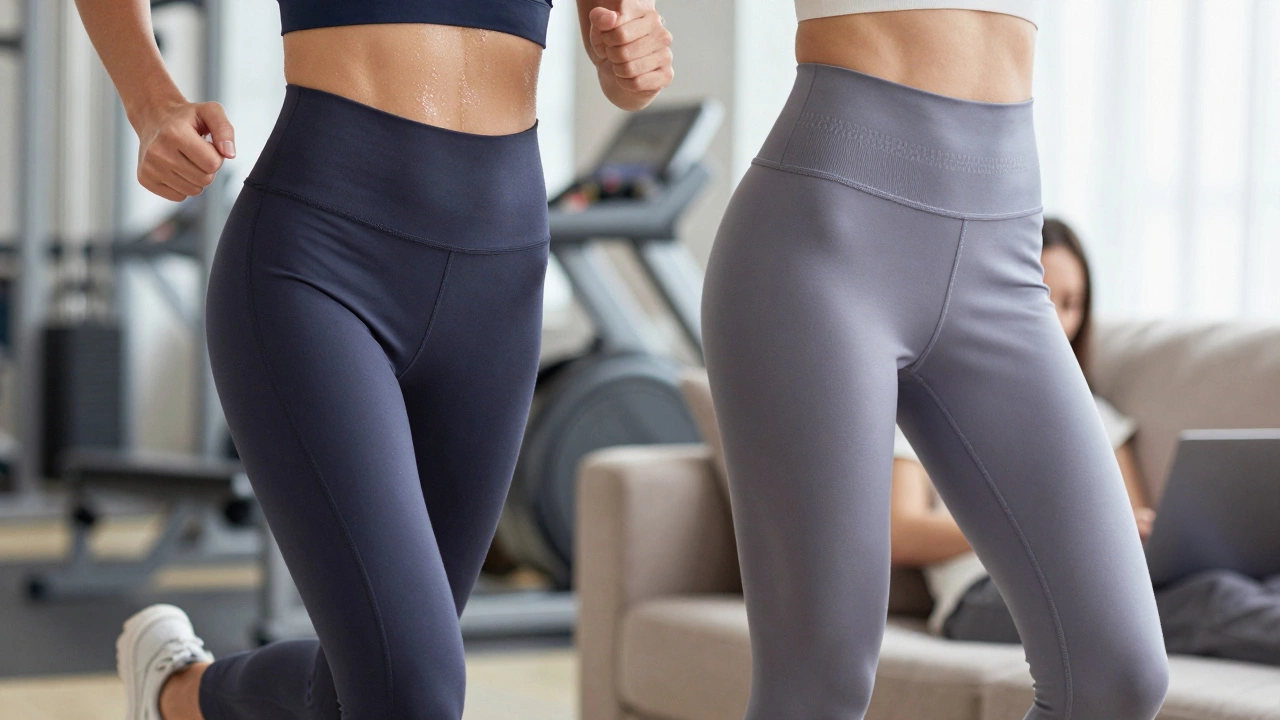
Ever looked at your leggings and wondered if you’re wearing workout gear or just stylish pants? You’re not alone. Athleisure and sportswear look similar - both are stretchy, comfy, and often black - but they serve totally different purposes. One is built for the gym. The other is built for the grocery store. And mixing them up could cost you performance, comfort, or even your confidence.
What Is Sportswear?
Sportswear is gear designed for physical activity. It’s not about looking good on Instagram. It’s about helping your body move better, stay dry, and avoid injury. Think of it as equipment - like cleats for soccer or a helmet for biking. It’s engineered for performance, not fashion.
Brands like Nike, Under Armour, and Adidas make sportswear with specific materials and cuts. For example, running tights use flatlock seams to stop chafing. Gym shorts have moisture-wicking mesh panels. Bras have adjustable straps and high-impact support. These aren’t design choices - they’re science.
A 2023 study from the American College of Sports Medicine found that athletes who wore properly fitted sportswear reduced muscle fatigue by up to 22% during high-intensity workouts. That’s because sportswear is built around biomechanics. The fabric stretches where your muscles expand. The cut doesn’t ride up during squats. The zippers don’t dig into your armpits during sprints.
If you’re doing HIIT, lifting weights, or playing basketball, sportswear is non-negotiable. It’s not optional. It’s part of your toolkit.
What Is Athleisure?
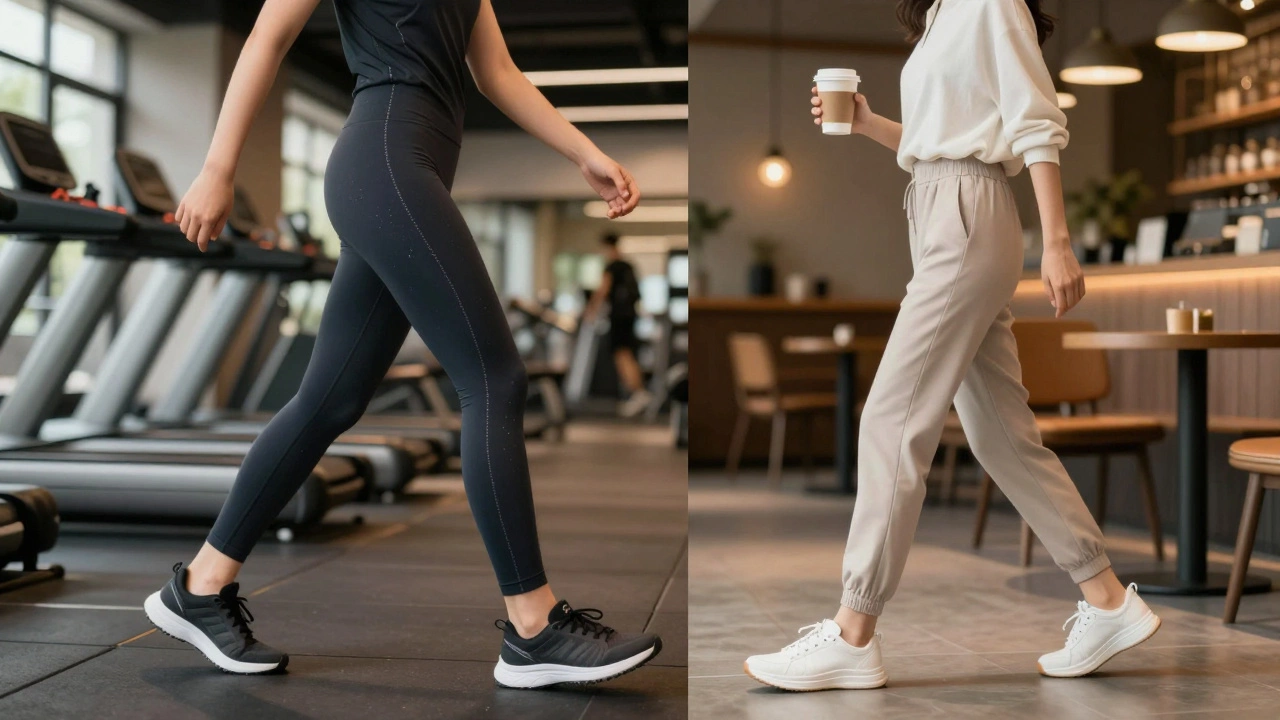
Athleisure is sportswear that’s been repurposed for everyday life. It’s the hoodie you wear to coffee, the leggings you wear to work, the sneakers you wear to the mall. It borrows the comfort of athletic gear but drops the function.
The term was coined in the early 2010s, but it exploded after 2020. With remote work and casual office policies, people stopped changing out of their yoga pants. Brands like Lululemon, Alo Yoga, and Sweaty Betty leaned into it. They started making leggings with higher waistbands, softer fabrics, and subtle logos - all designed to look polished, not sweaty.
Athleisure doesn’t need to wick sweat. It doesn’t need to hold up under 100 burpees. It just needs to look good while you’re scrolling on the couch or walking the dog. The fabric might be cotton-blend instead of polyester. The seams might be decorative, not reinforced. The waistband might be wide and soft - not for support, but for a “no dig” vibe.
According to market data from Statista in 2025, athleisure accounted for 58% of all activewear sales in the U.S. That’s more than sportswear. People aren’t just buying it - they’re living in it.
Key Differences You Can Actually See
Here’s how to tell them apart - no label needed.
- Fit: Sportswear fits snugly to reduce movement. Athleisure fits looser for comfort.
- Fabric: Sportswear uses technical synthetics (polyester, spandex, nylon). Athleisure leans into cotton, bamboo, or modal for softness.
- Seams: Sportswear has flatlock or bonded seams. Athleisure often has visible stitching or decorative topstitching.
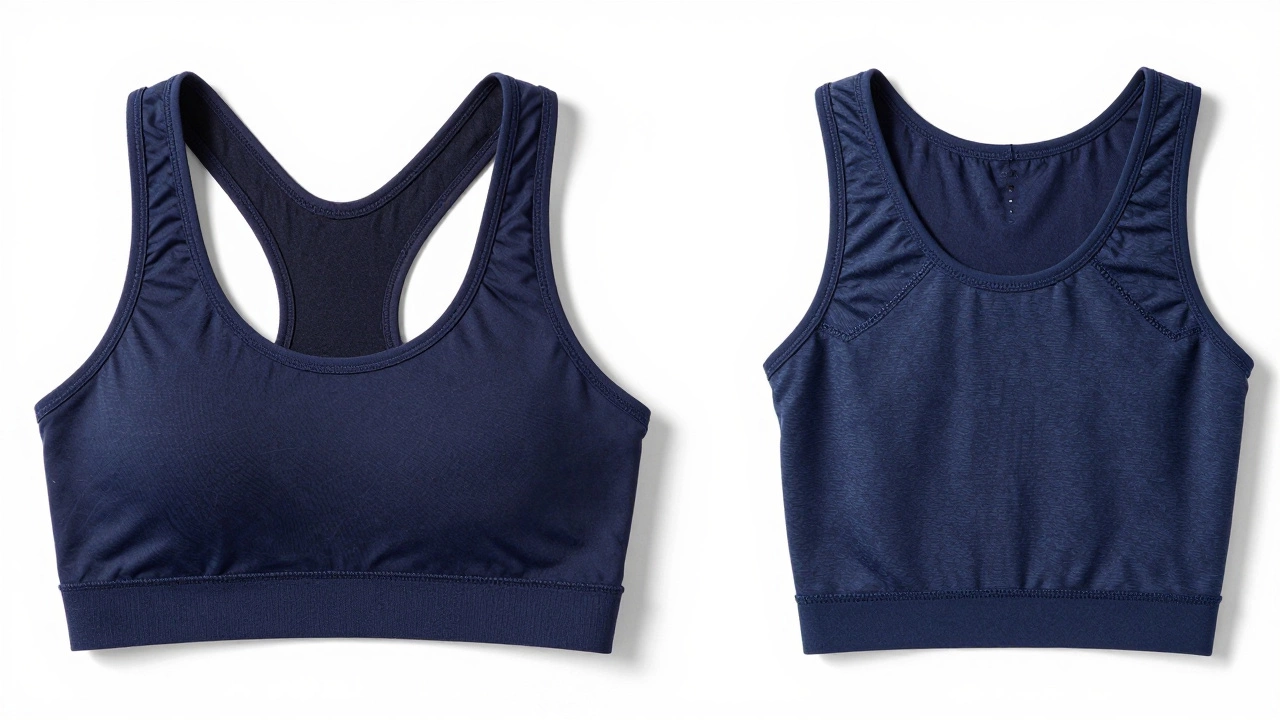
- Support: Sportswear bras have underwire or compression. Athleisure bras are more like crop tops - no structure, just coverage.
- Design: Sportswear is minimal. Athleisure has logos, patterns, or color-blocking.
Take a pair of leggings. If you can’t tell if they’re for running or lounging, look at the waistband. If it’s 3 inches wide and has a drawstring? That’s athleisure. If it’s 1.5 inches, seamless, and stays put during lunges? That’s sportswear.
When to Wear Which?
You wouldn’t wear flip-flops to hike. Don’t wear athleisure to sprint.
Wear sportswear when:
- Running, cycling, or doing cardio
- Weightlifting or strength training
- Playing team sports
- Working out in hot or humid conditions
Wear athleisure when:
- Working from home
- Running errands
- Going to the café or a casual meeting
- Walking the dog or lounging
Here’s a real example: Sarah, 32, used to wear her Lululemon leggings to spin class. She noticed her knees felt sore after every session. Turns out, the fabric had broken down from 18 months of washing. She switched to a pair of Nike training tights with reinforced knee panels. Her knee pain vanished. Her leggings? Still great for Zoom calls.
Why It Matters
Wearing the wrong thing isn’t just about looking silly. It can hurt your body.
Wearing athleisure during a heavy lift? The waistband rolls. The fabric bunches. You lose stability. That’s how you pull a hamstring.
Wearing sportswear to a wedding? It looks out of place. It screams “I just came from the gym.” And sometimes, that’s not the vibe you want.
Plus, there’s value in knowing what you’re buying. Sportswear costs more because it’s engineered. Athleisure costs less because it’s styled. If you’re paying $120 for leggings and never going near a gym, you’re overpaying. If you’re paying $30 for leggings and doing 50 burpees in them? You’re underdressed.
What to Look For When Buying
Don’t just grab the black leggings. Ask yourself:
- What am I doing in these? If it’s exercise, prioritize sweat-wicking and support.
- How many washes will they survive? Sportswear lasts 2-3 years with regular use. Athleisure starts pilling after 6 months.
- Do I need structure? If you’re jumping, squatting, or running, you need compression. If you’re sitting, you need softness.
- What’s the return policy? Many athleisure brands let you return worn items. Sportswear brands rarely do - because they expect you to use them.
Bottom line: Your clothes should match your activity. Not your mood.
Common Myths Debunked
- Myth: “Athleisure is just sportswear with a logo.”
Truth: The fabric, seam construction, and fit are fundamentally different. You can’t turn a yoga pant into a running tight by adding a logo. - Myth: “You can wear athleisure to the gym.”
Truth: You can - but you’ll feel it. The fabric won’t breathe. The waistband will roll. You’ll be distracted. - Myth: “Sportswear isn’t stylish.”
Truth: Modern sportswear has clean lines, minimal branding, and color palettes that match athleisure. You don’t have to choose between function and fashion - if you pick the right brand.
| Feature | Athleisure | Sportswear |
|---|---|---|
| Primary Purpose | Everyday comfort and style | Performance during physical activity |
| Typical Fabric | Cotton blends, modal, bamboo | Polyester, spandex, nylon |
| Seam Construction | Decorative stitching | Flatlock or bonded seams |
| Waistband Design | Wide, soft, non-compressive | Narrow, high-support, non-roll |
| Moisture Management | Basic wicking | Advanced sweat-wicking |
| Price Range | $30-$80 | $60-$150 |
| Best For | Working from home, errands, casual outings | Running, lifting, HIIT, sports |
Final Thought: It’s Not About Labels - It’s About Fit
You don’t need to be a fitness expert to know what your body needs. If you’re sweating, jumping, or pushing hard - you need sportswear. If you’re sitting, walking, or scrolling - athleisure is fine.
Stop trying to make one thing do two jobs. Your body will thank you. And your laundry basket? It’ll thank you too.
Can I wear athleisure to the gym?
Yes, but you might not perform as well. Athleisure lacks the compression, moisture control, and seam reinforcement needed for intense workouts. You’ll likely experience chafing, fabric bunching, or waistband roll. For serious training, sportswear is the better choice.
Is sportswear too expensive?
It costs more upfront, but it lasts longer. A pair of quality sportswear leggings can handle 200+ workouts before breaking down. Athleisure often pills or loses shape after 50 washes. If you work out regularly, sportswear saves money over time.
Are all leggings athleisure?
No. Many leggings are designed for sport. Look for features like a high, non-roll waistband, flat seams, and fabric labeled as “performance” or “moisture-wicking.” If it’s labeled “yoga” or “lounge,” it’s likely athleisure.
Can I wear sportswear outside the gym?
Absolutely. Modern sportswear is designed with clean lines and neutral colors. Many people wear running tights or compression tops to work, coffee, or travel. The key is choosing pieces that don’t look overly technical - like a simple black tank or slim joggers.
Why do some brands sell both?
Because the market demands both. People want to transition from workout to errand without changing. Brands like Lululemon and Nike now have dedicated lines: one for performance, one for lifestyle. It’s not confusion - it’s strategy.