Are leather shoes ruined if they get wet? What to do when your leather shoes get soaked
- Cleo Fairchild
- 1 December 2025
- 0 Comments
Leather Shoe Drying Guide
Leather shoes are built to last - that’s why people pay more for them. But when rain hits or you step in a puddle, panic sets in. Leather shoes get wet - does that mean they’re ruined? The short answer: no, not if you act fast. But if you ignore them, you could end up with cracked leather, stinky interiors, and warped shapes. It’s not magic. It’s maintenance.
What happens when leather gets wet?
Leather is a natural material. It breathes, it stretches, and yes - it absorbs water. When moisture hits the surface, it pulls into the fibers. That’s normal. The problem isn’t the water itself. It’s what happens after.
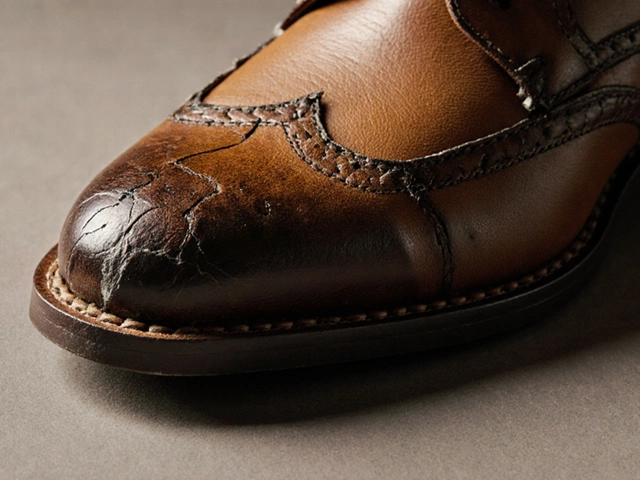
As the water evaporates, it pulls natural oils out of the leather. Those oils are what keep the material soft and flexible. Lose too many of them, and the leather becomes stiff. Then it cracks. That’s when your $200 shoes start looking like they’ve been through a war.
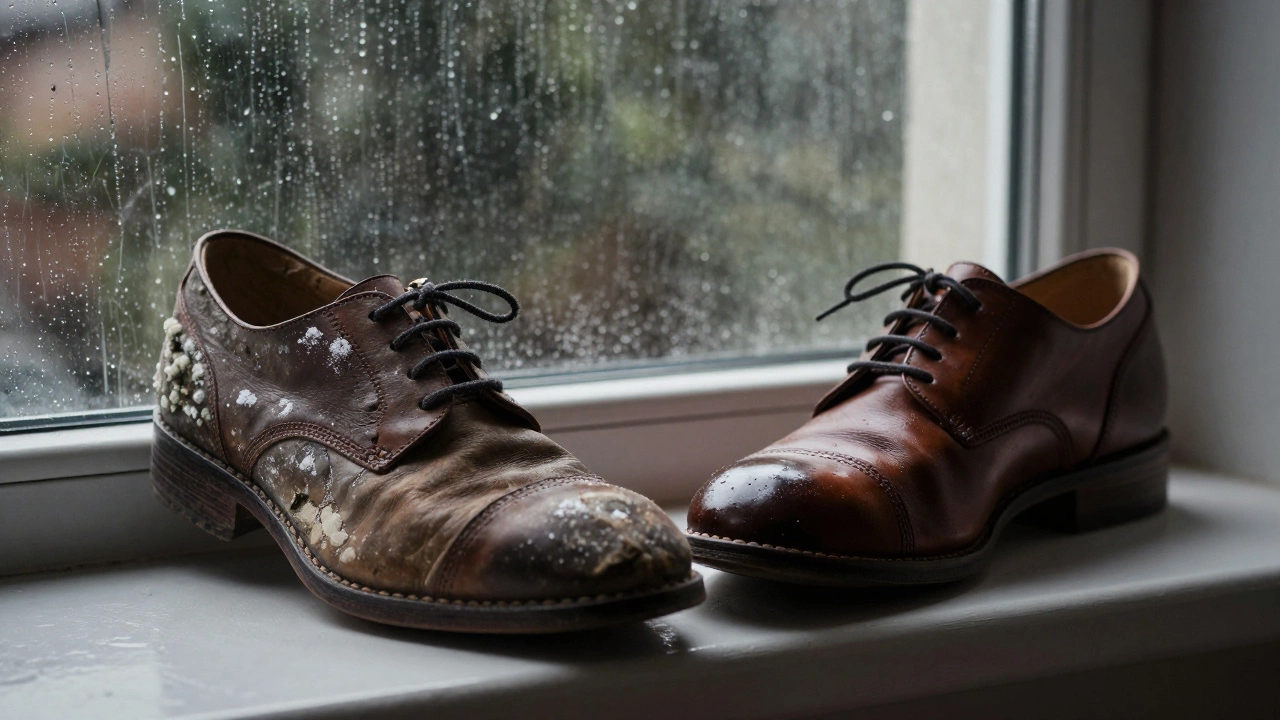
Wet leather also swells. If it dries too fast - say, near a radiator or in direct sunlight - it shrinks unevenly. That’s how shoes get misshapen. The heel might lean sideways. The toe box crumples. Suddenly, they don’t fit right anymore. And mold? That’s the silent killer. Damp leather left in a closet for days turns into a breeding ground for fungus. You’ll smell it before you see it.
What to do right after your leather shoes get wet
Time matters. The first 30 minutes after they get soaked are the most important.
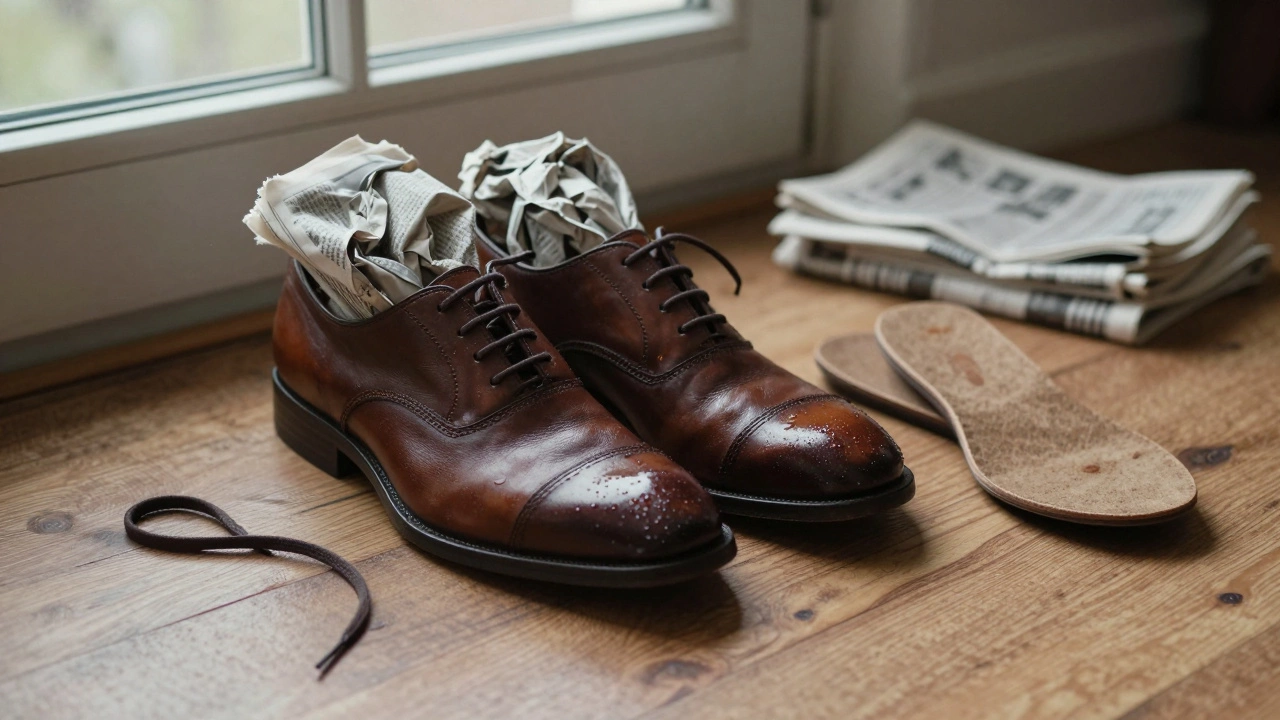
- Take out the insoles. This lets air flow through the whole shoe.
- Remove the laces. It helps the shoe breathe and lets you reach inside to wipe moisture.
- Stuff them with newspaper or paper towels. Don’t use tissue - it falls apart. Crumpled newsprint works best because it absorbs water without leaving lint. Replace the paper every 2-3 hours until it stops getting wet.
- Let them air dry at room temperature. No heaters. No hairdryers. No sunlight. Direct heat cooks the leather. It dries the surface too fast while trapping moisture inside, which leads to cracking.
- Wait at least 24 hours before wearing them again. Rushing this step is the #1 mistake people make.
Pro tip: Use cedar shoe trees if you have them. They absorb moisture, hold the shape, and naturally fight odor. If you don’t have any, rolled-up towels work in a pinch.
How to restore leather after it dries
Drying is only half the battle. Once your shoes are dry, they need nourishment.
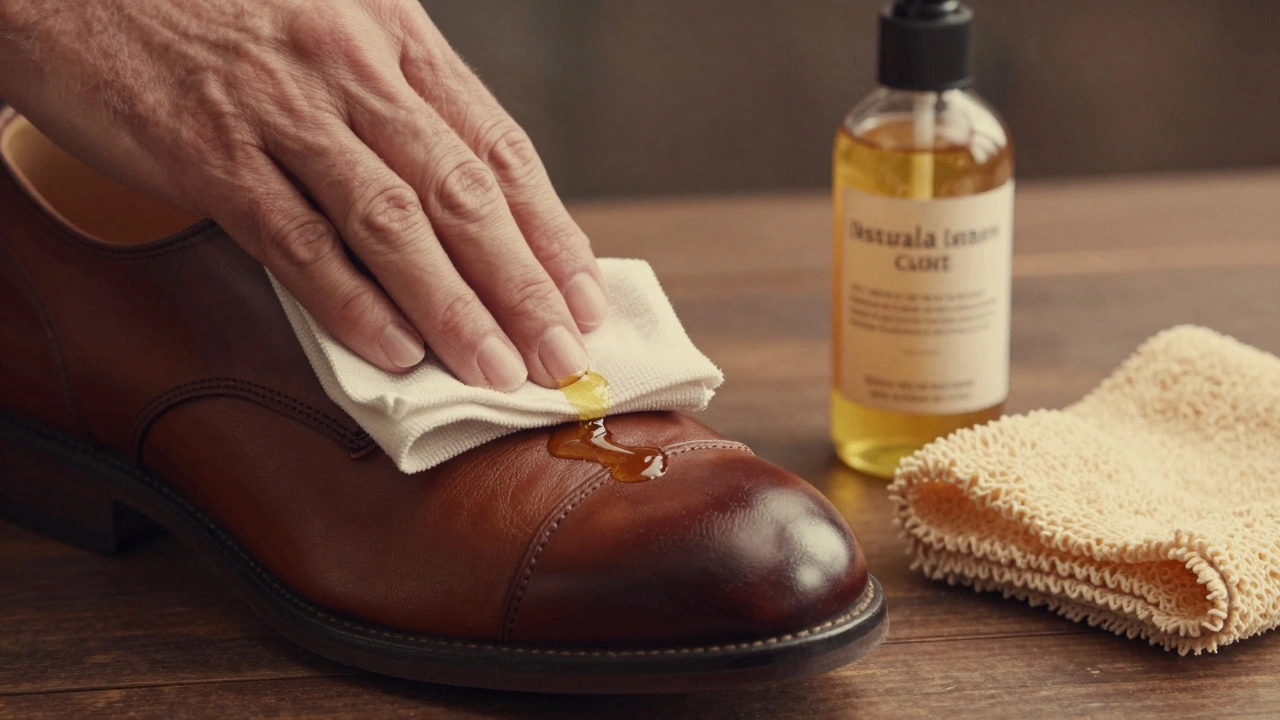
Leather loses its natural oils when wet. You need to replace them. Use a quality leather conditioner - not just any cream. Look for products with natural ingredients like beeswax, lanolin, or neatsfoot oil. Avoid silicon-based sprays. They sit on top and trap moisture, which makes things worse over time.
Apply the conditioner with a soft cloth. Rub it in gently, covering the whole surface. Let it sit for 15-20 minutes, then buff with a dry cloth. You’ll notice the color come back. The leather will feel supple again. Do this every time your shoes get wet, even if they look fine.
For scuffs or white marks from salt or water, use a damp cloth to wipe them gently. Then condition. Salt is especially nasty - it draws moisture and leaves stains. Clean it off fast.
What not to do
People try to fix wet leather in ways that make it worse. Here’s what you should never do:
- Don’t put them in the dryer. Even on low heat. Leather shrinks, cracks, and can melt glue.
- Don’t use a hairdryer. The hot air dries the surface too fast and dehydrates the inner fibers.
- Don’t leave them in the sun. UV rays break down the tanning agents in leather. It fades and becomes brittle.
- Don’t use olive oil, coconut oil, or Vaseline. These clog the pores and turn rancid over time. They might seem like a quick fix, but they’ll ruin your shoes faster than water ever could.
- Don’t ignore them. Even if they look okay, damp leather hides mold. Check the inside lining after 3 days. If it smells musty, clean it with a vinegar-water mix (1:1) and let it dry completely.
Can you prevent leather shoes from getting wet?
Yes - and it’s easier than you think.
Apply a waterproofing spray every 6-8 weeks. Choose one made for leather - not fabric. Products like Saphir Medaille d’Or or Nikwax Leather Waterproofer work well. Spray from 6-8 inches away. Let it dry overnight. Reapply after heavy rain or snow.
Don’t overdo it. Too much spray can clog the leather’s pores. One thin coat is enough. And always test it on a small spot first.
Wear them wisely. Leather shoes aren’t snow boots. Avoid deep puddles, muddy trails, and heavy downpours. If you live somewhere rainy, keep a pair of waterproof boots for bad weather. Save your leather shoes for dry days and office walks.
When to call a professional
Not every problem can be fixed at home.
If your shoes have:
- Deep cracks that won’t heal with conditioner
- Separating soles or loose stitching
- Strong mold smell even after cleaning
- Severe warping or misshaping
Take them to a cobbler. A good one can recondition the leather, reattach soles, and even recolor faded areas. It costs $30-$80 - less than half the price of new shoes. And it’s worth it if you’ve had them for years.
Think of leather shoes like a good pair of jeans. They age with you. But only if you treat them right.
How often should you condition leather shoes?
It depends on use and climate.
- If you wear them 2-3 times a week in dry weather: condition every 2 months.
- If you wear them daily or in rainy/salty conditions: condition every 4-6 weeks.
- If they’ve been soaked: always condition after drying.
Keep a small bottle of conditioner in your closet. Make it a habit - like brushing your teeth. Five minutes a month keeps your shoes looking sharp for years.
What kind of leather handles water best?
Not all leather is the same.
- Full-grain leather: The toughest. It’s the top layer of the hide, with natural oils intact. It resists water better than other types and develops a beautiful patina over time.
- Top-grain leather: Sanded and treated. More uniform, but less durable. It absorbs water more easily.
- Split leather: The bottom layer. Often used in cheap shoes. It’s porous and soaks up water fast. Avoid if you want longevity.
- Patent leather: Glossy and coated. Water beads on top, but if it seeps under the coating, it can peel. Wipe it dry immediately.
If you’re buying new shoes, go for full-grain. It’s more expensive upfront, but it lasts longer and handles moisture better.
Can water permanently stain leather shoes?
Yes, if left untreated. Water can leave white rings or dark patches, especially from salt or hard water. Clean the area with a damp cloth as soon as possible, then condition. Deep stains may need professional cleaning, but most surface marks fade with proper care.
Do waterproof sprays make leather shoes completely waterproof?
No. Waterproof sprays add a protective layer that repels water for a while, but they’re not a force field. Heavy rain or standing water will still soak through over time. Sprays buy you time - not immunity. Always dry and condition after exposure.
Why do my leather shoes smell after getting wet?
The smell comes from bacteria and mold feeding on moisture trapped inside. Sweat mixes with water, creating a perfect environment. To fix it, remove insoles, dry thoroughly with newspaper, and clean the inside with a 50/50 vinegar-water solution. Let it air out for 24 hours. Use cedar shoe trees to prevent future odor.
Can I wear leather shoes in the snow?
Not without risk. Snow melts into water, and salt on sidewalks eats away at leather. If you must wear them, apply a heavy-duty waterproofing spray before heading out, wipe them clean when you come in, and condition immediately afterward. But for winter, dedicated snow boots are safer and warmer.
How long do leather shoes last if they get wet often?
With proper care - 5 to 10 years, even with regular exposure to moisture. Without care - maybe 6 months. The difference isn’t the water. It’s what you do after. Conditioning, drying, and avoiding heat are the three rules that separate long-lasting shoes from trash.
Final thought: Leather shoes aren’t fragile - they’re finicky
You don’t need to baby them. But you do need to respect them. A little attention goes a long way. Dry them right. Condition them regularly. Keep them away from heat. That’s it. No magic potions. No expensive gadgets.
Leather shoes that last aren’t lucky. They’re cared for. And if you treat yours right, they’ll walk with you for years - not just seasons.