What Is a Hoodie Slang? Understanding the Culture Behind the Term

- Cleo Fairchild
- 19 January 2026
- 0 Comments
You’ve heard it in songs, seen it in memes, maybe even caught someone calling their hoodie a "hoodie" like it’s some kind of inside joke. But what exactly does "hoodie slang" mean? It’s not just about the garment-it’s about the vibe, the history, and the way people use the word to say more than just "I’m wearing a sweatshirt with a hood."
It’s Not Just a Sweatshirt
A hoodie, at its core, is a sweatshirt with a hood. Simple. But in urban and streetwear culture, calling something a "hoodie" isn’t just describing clothing-it’s signaling identity. In the 1970s and 80s, hoodies became linked to hip-hop, skateboarding, and working-class youth in cities like New York, Los Angeles, and later, London. Wearing one wasn’t just about staying warm. It was about belonging. And over time, the word "hoodie" started carrying weight beyond fabric and stitching.
Today, when someone says "I’m in my hoodie," they’re not just reporting what they’re wearing. They’re saying they’re relaxed, unofficial, maybe even a little rebellious. It’s the uniform of the person who doesn’t care about dress codes. The student skipping class. The artist working late. The kid walking home after midnight, headphones on, hood pulled up.
Where Did the Slang Come From?
The term "hoodie" itself is a shortened form of "hooded sweatshirt," first appearing in print in the 1990s. But the slang didn’t come from fashion magazines-it came from the streets. In UK urban slang, especially in cities like Bristol, Manchester, and London, "hoodie" became shorthand for a whole set of cultural associations. It wasn’t just the garment. It was the attitude.
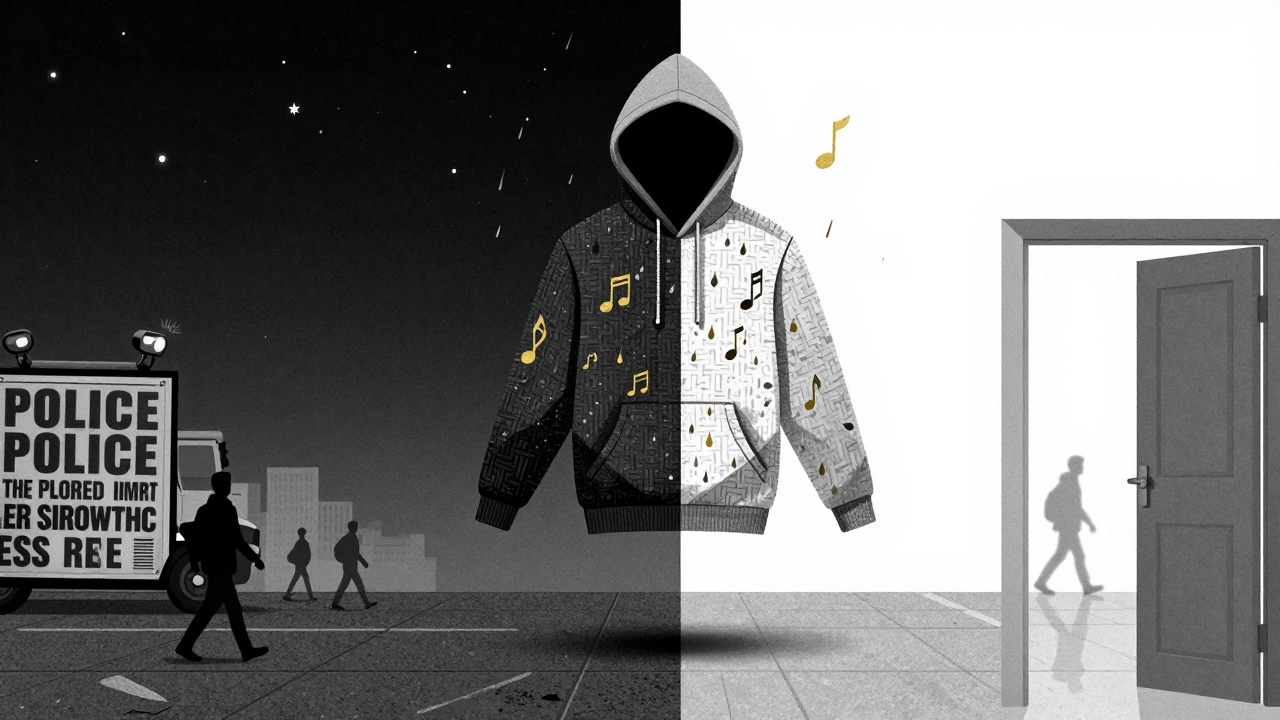
By the early 2000s, British tabloids started using "hoodie" to describe young people seen as troublesome. Headlines screamed about "hoodie gangs" and "hoodie crime." That’s when the word started splitting. To some, it became a stereotype. To others, it became a badge of resistance. Suddenly, wearing a hoodie wasn’t just practical-it was political.
That tension still exists. A hoodie can mean "I’m comfortable" or "I’m hiding." It can mean "I’m chill" or "I’m not here to be judged." The same word, same garment, totally different meanings depending on who’s saying it and why.
How People Use "Hoodie" as Slang Today
In 2026, "hoodie" as slang shows up everywhere. Here’s how it’s actually used in real conversations:
- "I’m just gonna stay in my hoodie all weekend." → Means: I’m not going out. I’m not dressing up. I’m not performing.
- "That track is a hoodie anthem." → Means: This song feels right for late nights, walking alone, headphones on.
- "He’s all hoodie and no shoes." → Means: He’s casual to the point of indifference. Maybe even sloppy-but in a cool way.
- "That’s a hoodie moment." → Used when someone does something quietly rebellious, like leaving a party early without explanation, or refusing to follow a trend.
It’s also common in music. Artists like Stormzy, Kendrick Lamar, and even Ed Sheeran have used "hoodie" in lyrics to signal authenticity, solitude, or street credibility. In UK drill music, "hoodie" often appears alongside "balaclava" or "beanie"-not because they’re all the same, but because they’re all part of the same visual language of anonymity and street life.
It’s Not Always About the Clothes
Here’s the thing: the slang isn’t about the hoodie itself. It’s about what the hoodie represents in a culture that’s constantly redefining what it means to be "real." In a world where people are pressured to look polished, curated, and always "on," the hoodie is the ultimate reset button.
It’s the garment you put on when you’re tired of pretending. When you need to breathe. When you’re not ready to be seen-not because you’re hiding, but because you’re choosing who gets to see you.
That’s why brands like Nike, Adidas, and even high-end labels like Balenciaga still sell hoodies like they’re sacred objects. They’re not selling fabric. They’re selling the idea of freedom. Of not having to explain yourself.
The Dark Side of the Slang
But let’s be real-there’s a flip side. The hoodie has been weaponized. In the UK, police have used "hoodie" as a code word for "suspect" in stop-and-search reports. Schools have banned them. Politicians have blamed them for crime.
That’s why some people now wear hoodies on purpose-to push back. To say: "I’m not a threat. I’m not a stereotype. I’m just wearing what’s comfortable." In 2025, the UK’s National Youth Agency ran a campaign called "Hoodie Not a Threat," featuring real teens in hoodies holding signs with their dreams: "I want to be a doctor," "I’m studying coding," "I’m the captain of my school team."
That’s the power of the word. It can be used to shut someone down-or to give them a voice.

Who Uses "Hoodie Slang" the Most?
If you want to hear "hoodie" used as slang, listen to:
- Teens and young adults (16-25) in urban areas
- Music producers and artists in hip-hop, drill, and grime scenes
- Artists, writers, and creatives who value privacy and comfort
- People who grew up in communities where clothing = identity
It’s less common among older generations unless they’re deeply plugged into youth culture. But even then, you’ll hear it in phrases like: "Back in my day, we called them sweatshirts. Now it’s all hoodie this, hoodie that."
That’s not just generational difference. It’s cultural evolution.
Why This Matters
Language changes with the times. "Hoodie slang" isn’t just a trend. It’s a reflection of how young people use clothing to claim space in a world that often tries to take it away. The hoodie is the most democratic piece of clothing ever made-it doesn’t care about your salary, your accent, or your skin color. But the word "hoodie"? That’s where the real story begins.
So next time someone says they’re "in their hoodie," don’t just picture a piece of clothing. Picture a mood. A mindset. A quiet act of self-definition.
What’s the Difference Between a Hoodie and a Sweatshirt?
Technically, a hoodie is a type of sweatshirt-with a hood. But in slang, the difference is bigger. A sweatshirt feels like gym gear. A hoodie feels like armor. One is functional. The other is emotional.
Do People Still Wear Hoodies in the Summer?
Yes. Especially in cities. Air conditioning is spotty. Nights stay cool. And sometimes, you just want to feel wrapped up. The hoodie doesn’t care about the season-it cares about how you feel.
Is "Hoodie" Only Used in the UK and US?
No. You’ll hear it in Australia, Canada, Germany, Japan, and Brazil. But the slang varies. In Japan, it’s often tied to Harajuku street style. In Germany, it’s linked to techno culture. The garment’s universal-but the meaning shifts with the culture.
Can a Hoodie Be Formal?
Not traditionally. But in 2026, some designers are making tailored hoodies in wool blends and silk linings. They’re worn with tailored pants and loafers. It’s not the same as the street hoodie-but it’s still called a hoodie. Language doesn’t always follow fashion rules.
Why Do People Pull Their Hoodie Over Their Head in Public?
It’s not always about hiding. Sometimes it’s about focus. Noise-canceling headphones don’t block everything. A hoodie over the head is a physical signal: "I’m not available right now." It’s a non-verbal boundary. And in crowded cities, that’s a survival tool.
Are Hoodies Still Popular in 2026?
More than ever. Global hoodie sales hit $38 billion in 2025. Why? Because comfort isn’t a trend-it’s a requirement. And in a world that never stops asking for more, the hoodie is the one thing that says: "I’m enough as I am."
What does it mean when someone says "I’m in my hoodie"?
It means they’re relaxing, not putting on a show. They’re not dressing up, not trying to impress. It’s a signal of comfort, privacy, and sometimes, quiet rebellion against social expectations.
Is "hoodie" slang only used by young people?
Mostly, yes. Teens and people under 30 use it most naturally. But older people who are into streetwear, music, or urban culture pick it up too. It’s not exclusive, but it’s rooted in youth expression.
Why do some people hate the word "hoodie"?
Because it’s been tied to negative stereotypes-especially in the UK and US media. In the 2000s, "hoodie" was used as code for "troublemaker." That stigma stuck for years, even though most people wearing hoodies are just trying to stay warm.
Can a hoodie be worn in a professional setting?
It depends. In creative industries-design, tech, media-it’s common. In law, finance, or government? Rare. But the lines are blurring. Some companies now allow "smart hoodies"-tailored, minimal, no logos-as part of casual Fridays or remote work policies.
Is "hoodie" slang going to disappear?
No. It’s too deeply tied to identity, comfort, and resistance. As long as people need a way to say "I’m not performing," the hoodie-and the word-will stay. It’s not a fad. It’s a feeling.
At the end of the day, the hoodie isn’t just clothing. It’s a quiet statement. And "hoodie slang"? That’s the language we use when words don’t feel enough.