What is the Difference Between a $100 Suit and a $1000 Suit? A Buyer's Guide
- Cleo Fairchild
- 30 July 2026
- 0 Comments
Suit Investment Calculator
Select a scenario to see how fabric quality and construction impact your wallet over time.
- Fused Construction (Glue)
- Polyester Blend Fabric
- Lasts ~2 Years
- Low Initial Cost
- Canvas Construction (Horsehair)
- Super 120s Wool
- Lasts ~10 Years
- Includes Tailoring
Walk into any department store, and you’ll see racks of suits that look nearly identical. One tag says $129. Another says $1,200. To the untrained eye, they might both just be "a black suit." But put them on, move around in them, and wear them for five years, and the difference becomes painfully obvious. It’s not just about brand prestige or marketing fluff. The gap between a $100 suit and a $1,000 suit is built on three invisible pillars: fabric quality, construction method, and the human hands that assembled it.
If you are standing at a register wondering if the extra cash is worth it, you need to know exactly what you are paying for. Is it better thread count? Is it how the lining hangs? Or is it just a logo? Let’s pull apart the jacket and look at the bones.
The Fabric: Wool Weight and Fiber Length
The most significant factor driving the price up is the cloth itself. In the suit industry, the quality of wool is measured by micron count and fiber length, metrics that determine softness, durability, and how well the fabric drapes over your body.
A $100 suit usually relies on synthetic blends-polyester, viscose, or rayon mixed with a small percentage of wool. These fabrics are cheap to produce and easy to care for, but they lack breathability. You will sweat more, and the fabric tends to hold heat against your skin. Worse, synthetic fibers don’t have memory. If you sit down, the fabric wrinkles. When you stand up, those creases stay. You’ll find yourself ironing the same trousers every morning because the material has lost its ability to spring back.
In contrast, a $1,000 suit uses high-grade worsted wool. Look for numbers like Super 120s, Super 150s, or even Super 180s. These numbers refer to the fineness of the wool fiber. Higher numbers mean softer, smoother fabric that feels like silk against the skin. However, there is a trade-off: higher super numbers are less durable. A Super 150s wool is luxurious but requires gentle handling. A mid-range Super 110s or 120s offers the best balance of durability and comfort for daily wear.
| Attribute | $100 - $300 Suit | $1,000+ Suit |
|---|---|---|
| Fiber Composition | Polyester blends, low-grade wool | 100% Worsted Wool, Cashmere blends |
| Breathability | Low (traps heat) | High (regulates temperature) |
| Wrinkle Resistance | Poor (holds creases) | Excellent (springs back) |
| Drape | Stiff, boxy | Fluid, follows body contours |
Construction: Fused vs. Canvas
This is where the real magic happens, and also where the biggest cost difference lies. How is the front of the jacket held together? Does it have structure, or is it glued?
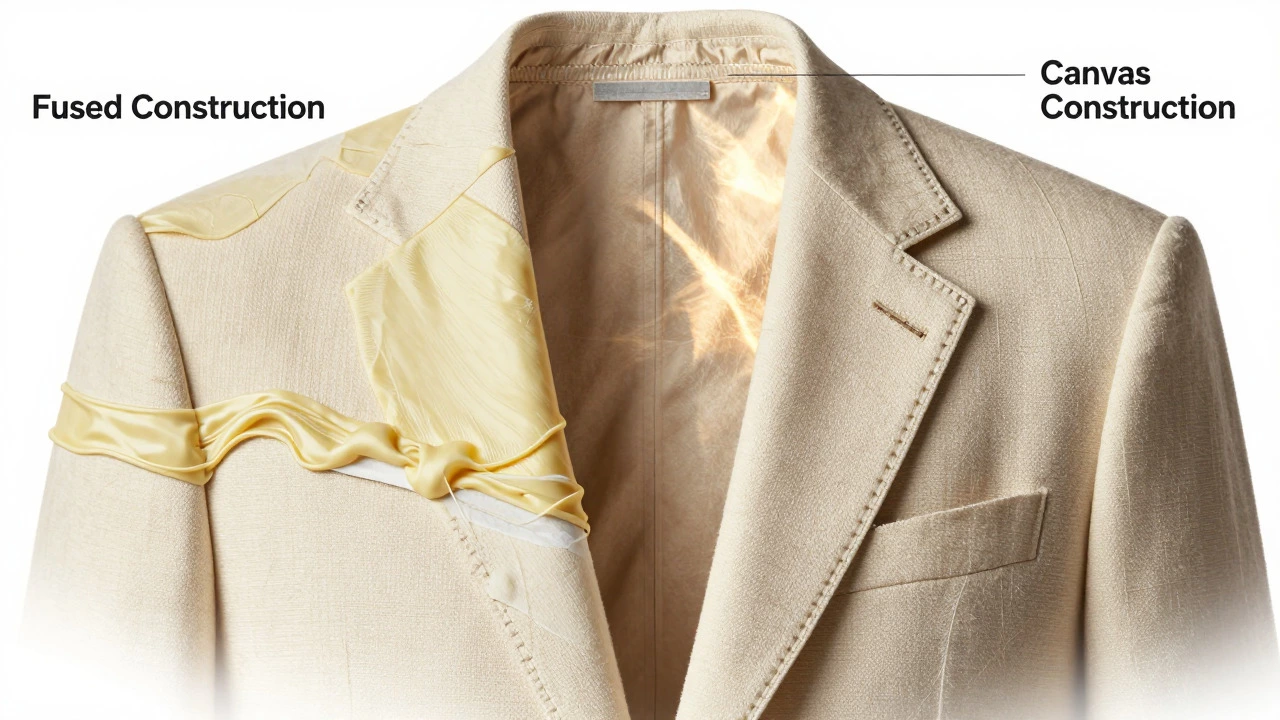
Cheap suits use a process called fusion. Fusing involves bonding the outer fabric to an interlining layer using heat-activated adhesive. Think of it like iron-on hem tape. It’s fast, it’s cheap, and it allows factories to pump out thousands of jackets a day. But glue fails. Over time, especially after dry cleaning, the adhesive breaks down. This causes "bubbling" or "blistering" on the chest of the jacket. Once that happens, the suit is ruined. There is no fixing a fused jacket that has bubbled.
Expensive suits use canvas construction. Canvas construction uses layers of horsehair canvas hand-stitched between the fabric and lining. This creates a living structure. The canvas moves with you. As you age, gain weight, or lose weight, the canvas molds to your specific shape. It doesn’t bubble because there is no glue. Instead, the jacket develops a natural drape that looks tailored specifically for you. A half-canvassed jacket sits in the middle ground, offering some structure without the full price tag of a full canvas.
The Cut and Pattern Matching
Have you ever noticed how some suits look slightly off? Maybe the stripes on the lapel don’t align perfectly with the stripes on the shoulder. That’s a sign of poor pattern matching. In mass-produced $100 suits, fabric is cut quickly to minimize waste. Stripes, checks, and plaids are often ignored during cutting, leading to misaligned patterns that scream "cheap" to anyone who knows what to look for.
In a $1,000 suit, the cutter takes extra time to align the pattern across all pieces. The buttonholes are hand-stitched rather than machine-bound, allowing for a cleaner finish and easier repair if a button falls off. Even the buttons themselves differ. Cheap suits use plastic buttons that crack under pressure. High-end suits use horn, corozo nut, or high-quality acetate buttons that have weight and texture.
Tailoring Potential
You can buy a $1,000 suit off the rack, but it won’t fit perfectly until you take it to a tailor. And here is the catch: you can only tailor a suit as much as the seam allowances allow. Cheap suits are cut with minimal extra fabric to save costs. There is no room to let out the waist or shorten the sleeves significantly. They are designed to fit a generic "average" body type, which rarely exists.
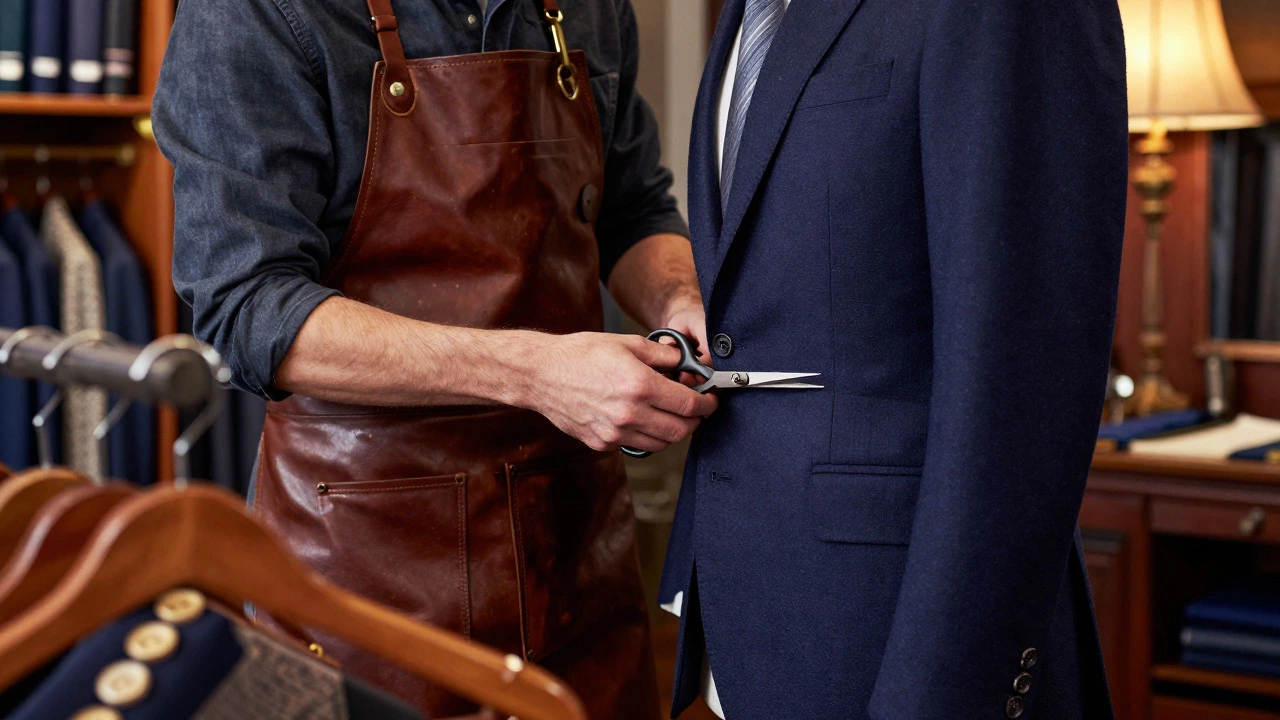
Higher-quality suits come with generous seam allowances. This means a skilled tailor can adjust the shoulders (slightly), the waist, the sleeve length, and the trouser break to create a custom fit. If you plan to wear a suit regularly, the cost of tailoring should be factored into your budget. A $1,000 suit plus $150 in alterations often fits better than a $2,000 ready-to-wear suit from a designer brand that doesn’t offer good base sizing.
When to Buy Which
So, which one should you choose? It depends entirely on your lifestyle and how often you’ll wear the suit.
- Buy the $100-$300 suit if: You need a suit for a one-time event like a wedding, a funeral, or a job interview where you won’t wear it again for months. It’s also fine if you work in a casual office and only dress up occasionally. Just expect to replace it within 2-3 years.
- Buy the $800-$1,500 suit if: You wear suits weekly for work. The investment pays off in longevity, comfort, and professional appearance. The fabric breathes, so you stay comfortable during long days. The construction ensures it lasts 5-10 years with proper care.
Don’t fall for the trap of buying multiple cheap suits. Three $200 suits will never look as good as one $1,000 suit that fits you perfectly. Quality concentrates your style; quantity dilutes it.
Maintenance Matters
Even a $1,000 suit will fail if you treat it poorly. Wool needs rest. Never wear the same suit two days in a row. Hang it on a wide wooden hanger to maintain the shoulder shape. Air it out after wearing before putting it back in the closet. Dry clean only when necessary-excessive cleaning strips the natural oils from the wool and accelerates wear. For minor stains, spot clean with a damp cloth.
Can you tell the difference between a cheap suit and an expensive suit just by looking?
Yes, if you know what to look for. Check the buttonholes: hand-stitched ones have loose threads inside, while machine-made ones are tight and uniform. Look at the vent: high-end suits have hand-finished edges inside the vent, while cheap suits have raw, frayed edges. Also, check the pattern alignment on plaid or striped fabrics. Misalignment indicates rushed, low-cost production.
Is a polyester suit ever a good choice?
Polyester suits are durable and wrinkle-resistant, making them suitable for travel or very casual settings. However, they lack breathability and drape poorly compared to wool. For professional environments, wool is superior. If you must buy synthetic, look for a blend with at least 50% wool to improve comfort and appearance.
How long does a $1,000 suit last?
With proper care, a well-constructed wool suit can last 10 years or more. If worn weekly and rotated properly, it may show signs of wear after 5-7 years, such as thinning elbows or knees, but these areas can often be patched or reinforced by a skilled tailor.
Should I get a suit tailored?
Absolutely. Off-the-rack suits are made for average body shapes, which few people have. Tailoring adjusts the jacket waist, sleeve length, and trouser fit to your specific proportions. Budget $100-$200 for alterations on a new suit. It transforms a generic garment into something that looks custom-made.
What is the best color for a first expensive suit?
A medium grey or navy blue suit is the most versatile choice. Grey pairs well with almost any shirt and tie combination and works for both business and social events. Navy is classic for business settings. Avoid black unless you need it for formal evening wear, as it can look too severe for daytime business attire.