How to Tell if Leather Shoes Are High Quality: A Buyer's Guide
- Cleo Fairchild
- 27 August 2026
- 0 Comments
Leather Shoe Quality Checker
Answer the questions below based on what you see or read about a pair of shoes. Get an instant quality assessment with a score out of 100.
Buying a pair of leather shoes is often seen as an investment. You want them to last for years, not just seasons. But walking into a store or scrolling through an online shop can feel like trying to read tea leaves. The price tag doesn't always tell the truth, and "genuine leather" is a term that has been diluted so much it means very little these days.
So, how do you actually know if you're getting a premium pair or a cheap imitation? It comes down to looking at specific details that manufacturers rarely hide if they are proud of their craft. From the type of hide used to the way the sole is attached, every part of the shoe tells a story about its durability and comfort. This guide breaks down exactly what to look for, so you can stop guessing and start buying with confidence.
Understanding Leather Grades: The Foundation of Quality
The material itself is the most critical factor. Not all leather is created equal, and the grade determines how the shoe will age, smell, and hold up over time. When you see the label "full-grain leather," you are looking at the top tier. This is the outermost layer of the hide, including the natural grain. It hasn't been sanded down or covered by a synthetic coating. Because of this, full-grain leather develops a unique patina over time, becoming more characterful rather than worn out.
In contrast, you might see terms like "top-grain" or "corrected grain." Top-grain leather is also high quality but has had its surface sanded to remove imperfections like scars or insect bites. It is then embossed with a uniform pattern. While still durable, it lacks the natural breathability and aging characteristics of full-grain. Corrected grain goes a step further; it is heavily sanded and coated with a plastic-like finish to make it look perfect right off the shelf. This coating can crack after a few years of wear, leading to peeling.
Then there is split leather, which is the lower layer of the hide once the top layers are removed. It is usually bonded together and painted to look like real leather. If you buy a pair labeled simply as "genuine leather" without specifying the grade, it is likely corrected grain or even split leather. Always ask for or check the product description for "full-grain" if you want longevity.
| Leather Grade | Surface Treatment | Durability | Aging Characteristic |
|---|---|---|---|
| Full-Grain | Natural, minimal finishing | High (10+ years) | Develops rich patina |
| Top-Grain | Sanded, light coating | Medium-High (5-7 years) | Fades slightly, less patina |
| Corrected Grain | Heavy sanding, thick coating | Medium (3-5 years) | Coating may crack/peel |
| Split Leather | Bonded, painted | Low (1-3 years) | Wears thin quickly |
Construction Methods: How the Sole Stays On
If the leather is the body, the construction is the skeleton. The way the upper (the leather part) is attached to the sole dictates whether your shoe can be resoled or if it’s disposable once the bottom wears out. The gold standard here is the Goodyear welt. In this method, the upper is stitched to a strip of leather called the welt, which is then stitched to the insole. Finally, the outsole is stitched to the welt. This creates a sturdy, water-resistant structure that allows cobblers to remove the outsole and replace it without damaging the upper.
Look for the phrase "Goodyear welted" or "stitched welt" on the product page. If you see "cemented construction," it means glue was used to attach the sole. While cemented shoes are lighter and often cheaper, they are harder to repair. Once the glue fails, the shoe is usually done. For a long-term investment, stitching is always superior to gluing.
Another method to watch for is Blake stitching. This involves stitching directly from the inside of the shoe through the insole to the outsole. It results in a sleeker, more flexible shoe but is less water-resistant than a Goodyear welt because the stitches create tiny holes that let moisture in. However, Blake-stitched shoes are also resoleable, making them a solid mid-range option for those who prioritize style and flexibility over waterproofing.
Material Details: Lining, Insoles, and Soles
Once you’ve checked the exterior leather and construction, flip the shoe over and look inside. The lining should be made of leather, not fabric or synthetic materials. Leather linings wick away moisture and allow the foot to breathe, reducing odor and blisters. Synthetic linings tend to trap heat and sweat, which can break down the internal structure of the shoe faster.
Next, examine the insole. High-quality shoes often feature a removable leather insole. This is crucial because it allows you to swap it out for custom orthotics if you need arch support, or simply replace it when it compresses over time. If the insole is glued permanently to the midsole, you lose this flexibility. Check the thickness too; a thin insole offers less cushioning and protection for your feet.
Finally, inspect the outsole material. Rubber soles are common and provide good traction, but look for high-density rubber rather than soft, flimsy compounds. Leather soles are traditional and elegant, offering a distinctive sound and feel, but they wear down faster on rough pavement and get slippery when wet. If you live in a rainy or snowy climate, a rubber sole is generally the practical choice. For formal occasions or dry climates, leather soles are acceptable if you plan to rotate your shoes frequently.
Stitching and Finishing: The Small Things That Matter
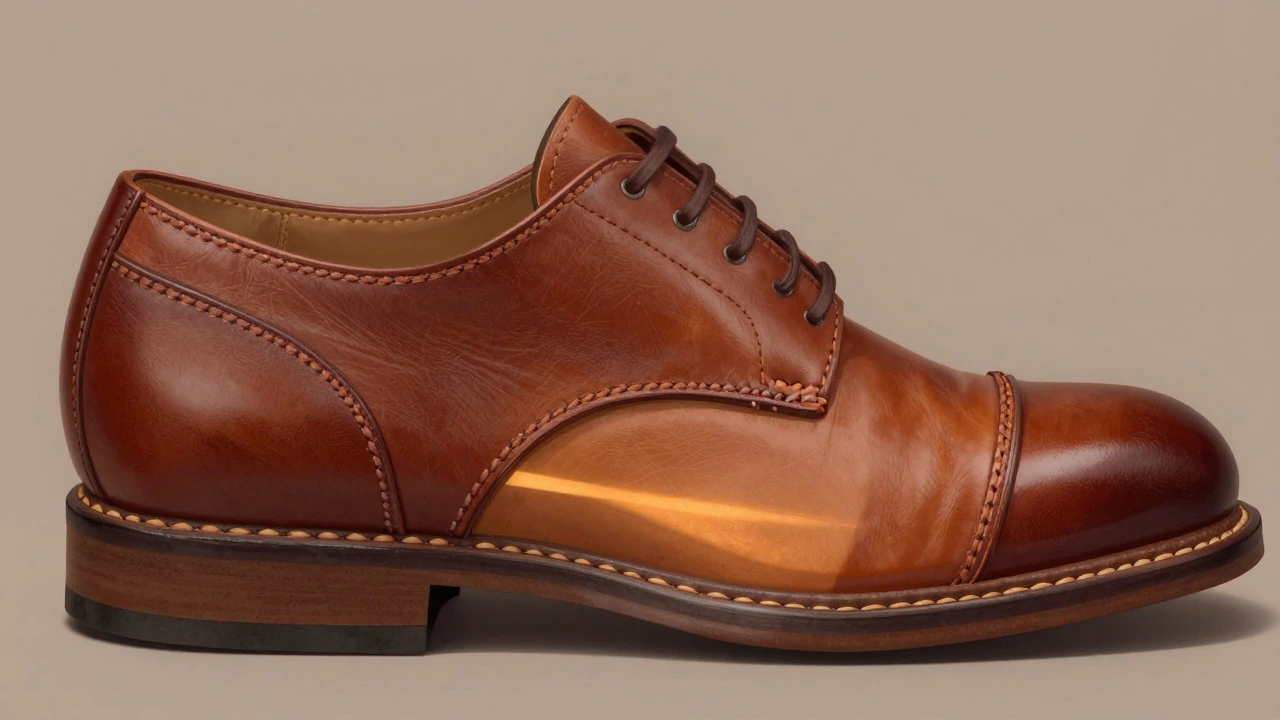
Quality is often revealed in the details. Look closely at the stitching. It should be even, consistent, and free of loose threads. Hand-stitched seams are the pinnacle of craftsmanship, though machine stitching is perfectly acceptable if done well. Irregular spacing or skipped stitches indicate poor quality control. Pay attention to the toe cap and heel counter areas; these parts take the most stress during walking. If the stitching here looks sloppy, the rest of the shoe likely isn’t worth your money.
Also, check the edges of the leather panels. In high-end shoes, the edges are burnished, meaning they are polished and sealed to prevent fraying and give a smooth, rounded look. Unburnished edges look raw and may fray over time. The heel counter should be rigid enough to support your foot but flexible enough to bend slightly. Press your thumb into the heel area; if it feels rock hard or completely mushy, it’s not calibrated correctly for comfortable walking.
Common Red Flags to Avoid
Before you hand over your cash, keep an eye out for these warning signs. First, avoid shoes with excessive branding. While a logo is fine, high-quality brands often rely on subtle detailing rather than giant logos plastered across the side. Second, be wary of extremely low prices for "full-grain" leather. Real full-grain leather is expensive due to the cost of the hide and the labor involved in processing it. If a pair costs less than $150, double-check the leather grade and construction method.
Third, check for symmetry. Hold the two shoes up and compare them. They should look nearly identical in shape and color. Significant differences suggest inconsistent manufacturing processes. Lastly, smell the shoes. Strong chemical odors can indicate the use of harsh tanning agents or poor ventilation during production. While some leather scent is normal, a pungent, artificial smell is a sign of lower quality materials.
Practical Tips for Buying Online vs. In-Store
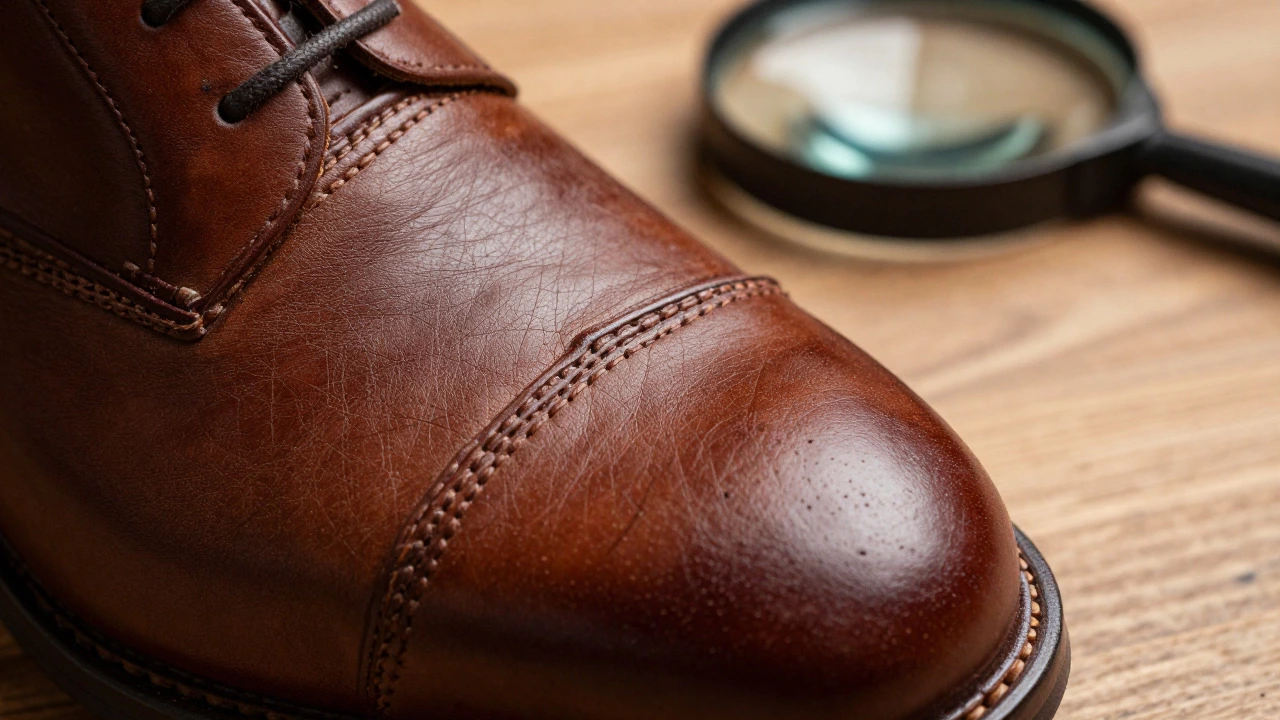
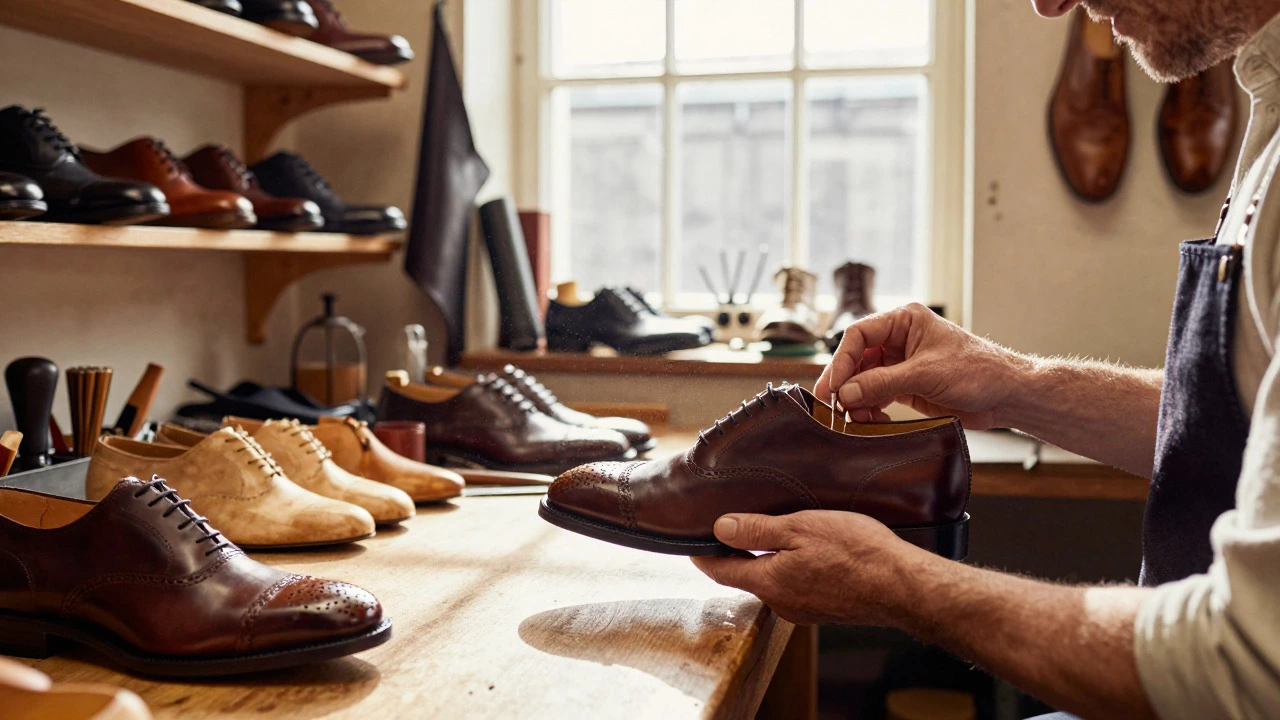
If you are buying in-store, bring a magnifying glass or use your phone’s zoom feature to inspect the grain and stitching. Sit down and try the shoes on with the socks you intend to wear with them. Walk around the store for at least five minutes to test the fit and comfort. If you are buying online, read reviews carefully, specifically looking for comments about sizing, stiffness, and durability. Look for photos uploaded by other customers rather than professional studio shots, as these often reveal flaws hidden in marketing images. Check the return policy before purchasing, as leather shoes can take several weeks to break in properly.
Frequently Asked Questions
What is the difference between full-grain and top-grain leather?
Full-grain leather retains the natural surface of the hide, including imperfections, and ages with a patina. Top-grain leather is sanded to remove imperfections and then coated, making it more uniform but less breathable and less capable of developing character over time.
Are Goodyear welted shoes worth the extra cost?
Yes, for long-term use. Goodyear welting allows the soles to be replaced multiple times, extending the life of the shoe significantly. Cemented shoes are cheaper upfront but often cannot be repaired economically once the sole wears out.
How can I tell if leather shoes are genuine?
Check the grain pattern under magnification. Real leather has irregular pores and fibers, while synthetic materials have a uniform, plastic-like texture. Also, real leather smells distinctively of animal hide, whereas fakes often smell like chemicals or plastic. Bend the material; real leather creases naturally, while synthetics may crack or show a shiny sheen.
Which is better: leather soles or rubber soles?
It depends on your environment. Leather soles are elegant, quiet, and traditional, ideal for formal settings and dry weather. Rubber soles offer better traction, waterproofing, and durability on rough surfaces, making them better for daily wear in varied conditions.
How long do high-quality leather shoes last?
With proper care, such as rotating pairs, using cedar trees, and conditioning regularly, high-quality full-grain leather shoes with Goodyear welt construction can last 10 to 20 years or more. Regular resoling helps maintain their structural integrity.