What Is a T-Shirt in Slang? Meaning, Origins, and Usage

- Cleo Fairchild
- 9 November 2026
- 0 Comments
T-Shirt Slang Decoder
Not sure what to call that shirt? Select a scenario below to find the most appropriate term.
Quick Reference Guide
| Term | Best Used For | Avoid If... |
|---|---|---|
| Tee | Everyday casual wear, friends, retail. | You are in a formal meeting or discussing high-end couture. |
| Jersey | Sports uniforms (especially UK/Aus), team loyalty. | You are wearing a plain cotton shirt with no team logo. |
| Undershirt | White cotton layers worn under suits/shirts (US). | The shirt is visible as outerwear. |
| Top | Vague descriptions, gender-neutral fashion talk (UK). | You need specific technical details about the fabric. |
| Graphic Tee | Shirts with printed designs/logos. | The shirt is plain/blank. |
| Blank | Plain shirts used for DIY printing/screen printing. | You are describing a finished product to a customer. |
You walk into a pub in Bristol, order a pint, and your mate says, "Nice tee." You look down. It’s just a cotton shirt with a logo. Why call it a "tee"? Is it short for something? Or is there a hidden code you’re missing?
Here’s the truth: t-shirt isn’t really slang in the way "cheers" or "mate" is slang. But the words we use to describe them-like "tee," "jersey," or even "undershirt"-carry weight depending on who you ask, where you are, and what year it is. If you’ve ever wondered why some people get offended when you call their expensive streetwear a "basic tee," this guide breaks down exactly what these terms mean, where they come from, and how to use them without sounding like a tourist.
The Core Definition: What Exactly Is a T-Shirt?
Before we get into the slang, let’s clear up the actual object. A T-shirt is a style of unlined fabric upper garment with a round neckline (crew neck) and short sleeves, named after its T-shaped silhouette when laid flat. Unlike a polo shirt, it has no collar. Unlike a tank top, it covers the shoulders and arms partially.
In standard English, "T-shirt" is the formal term. It’s what you see on labels, receipts, and fashion magazines. But language evolves faster than dictionaries. In everyday conversation, especially among younger demographics and in specific subcultures, the word "T-shirt" often feels too stiff, too long, or too generic. That’s where the variations kick in.
Think of it like cars. Technically, it’s an automobile. But if you drive a Ford Mustang, you don’t say, "I’m driving my automobile." You say, "I’m driving my pony car" or just "the Mustang." Same logic applies here. The specific type of T-shirt dictates the slang used.
"Tee": The Universal Shortening
The most common "slang" alternative is simply Tee. This is a colloquial abbreviation of T-shirt, widely accepted in both American and British English across all age groups. It’s not rude. It’s not exclusive. It’s just efficient.
Why do we use it? Because saying "T-shirt" requires two syllables and a hyphen pause. "Tee" is one quick sound. In fast-paced environments like retail stores, gyms, or social gatherings, speed matters. When a shop assistant asks, "Do you want that in a blue tee?", they aren’t being informal; they’re being practical.
However, context changes everything. In high-fashion circles, calling a designer piece a "tee" can sometimes feel reductive. A $500 Balenciaga shirt is technically a T-shirt, but fans might prefer "graphic knit" or "logo top." Still, for 95% of daily interactions, "tee" is the safest, most natural word to use. It signals you’re relaxed and familiar with casual dress codes.
Regional Differences: US vs. UK Slang
If you’re reading this in the UK (like I am, sitting in a café in Clifton), you’ll notice distinct differences compared to our friends across the Atlantic. American English tends to stick closer to "T-shirt" or "tee." British English has a richer, more varied vocabulary for basic garments.
| Term | Region | Connotation | Best Used For |
|---|---|---|---|
| Tee | Global | Neutral, Casual | Everyday conversation, retail |
| Jersey | UK/Australia | Sporty, Team-oriented | Football shirts, athletic wear |
| Undershirt | US/Traditional UK | Functional, Hidden layer | White cotton basics worn under suits |
| Top | UK/Fashion | Vague, Gender-neutral | When describing outfits broadly |
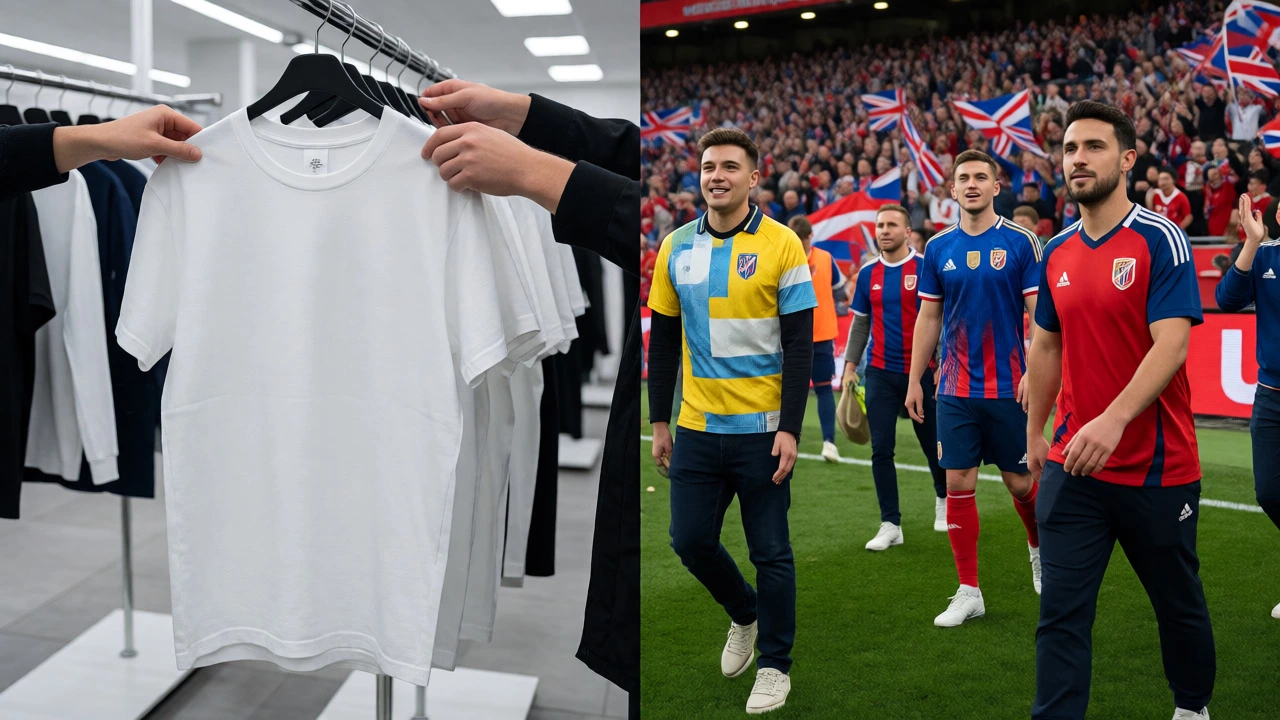
In the UK, the word Jersey is frequently used for sports-related T-shirts. If you’re wearing a Bristol City FC shirt, you wouldn’t typically call it a "tee." You’d call it your "kit" or your "jersey." This distinction matters because it separates casual fashion from team loyalty. Wearing a jersey implies you support the team. Wearing a tee just means you needed a shirt.
Americans rarely use "jersey" for casual cotton shirts unless it’s explicitly basketball or football gear. They might use "undershirt" for thin, white cotton tees meant to be worn under button-downs. In the UK, this is often just called a "vest" (which confuses Americans, as a vest in the US is a waistcoat).
Subculture Slang: Streetwear and Vintage
Dig deeper into niche communities, and the slang gets weirder. In streetwear culture, particularly influenced by hip-hop and skateboarding scenes, the term "tee" is still king, but modifiers matter immensely.
- Graphic Tee: Refers specifically to shirts with printed designs. Calling a plain black shirt a "graphic tee" will get you laughed at.
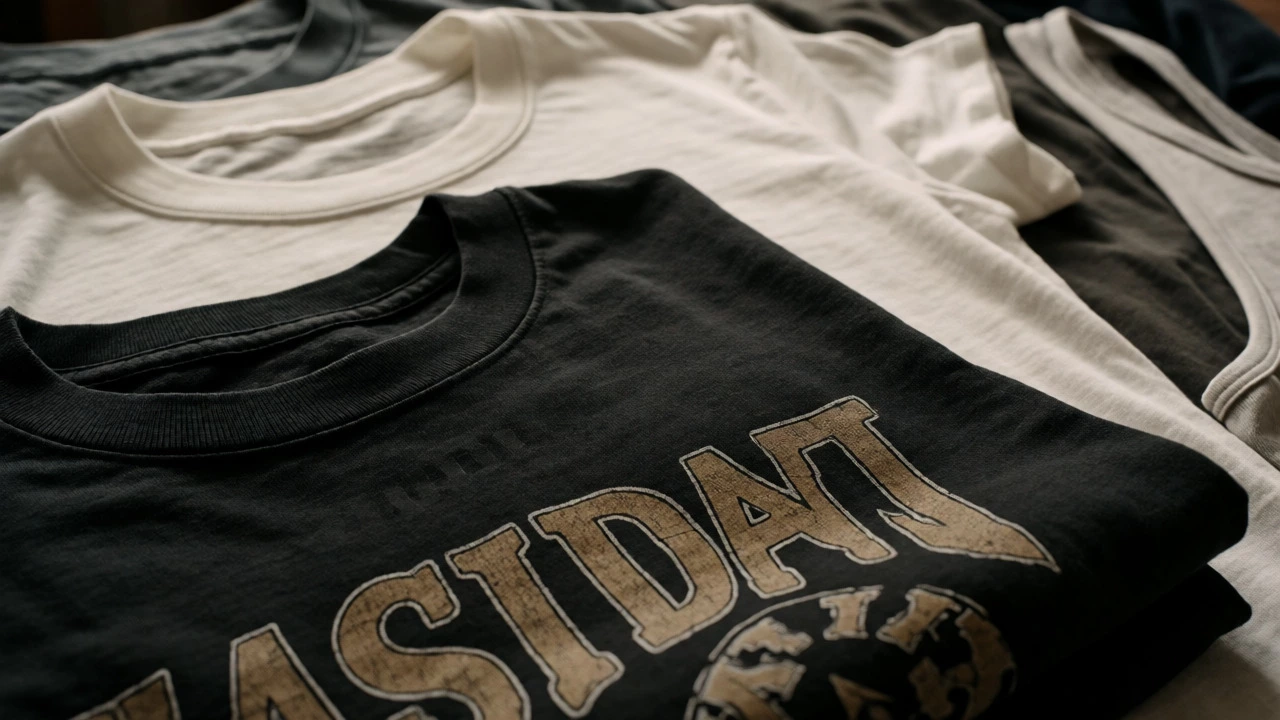
- Heavyweight: Not a noun, but a descriptor treated like a status symbol. "That’s a nice heavyweight" implies quality fabric (usually 180-240 GSM). Cheap, see-through tees are dismissed as "thin" or "flimsy."
- Blank: A blank tee is a plain, unprinted shirt used as a canvas. Artists and printers love this term. To a regular person, it’s just a plain shirt.
- Vintage: Often shortened to "vintie" in ironic contexts, though usually just "vintage tee." This refers to shirts from previous decades, valued for faded prints and softness.
There’s also the term "band tee." This isn’t slang per se, but a cultural category. A band tee is any shirt featuring a music artist’s name or album art. Even if you bought it today, if it features a 1990s Nirvana print, it’s classified as a band tee. The slang usage here is about identity signaling. Saying "I’m wearing a band tee" tells people you listen to rock music, regardless of whether you actually own a vinyl collection.
Is "T-Shirt" Ever Insulting?
Rarely. But context is key. If someone spends three hours styling an outfit and you say, "Nice T-shirt," they might feel you reduced their effort to a commodity. Using "tee" feels slightly more appreciative of the casual aesthetic. Using the full "T-shirt" can sound clinical, like you’re reading a product description aloud.
Conversely, in professional settings, calling a colleague’s attire a "T-shirt" when they’re wearing a smart-casual knit polo can be seen as dismissive. It suggests you think they’re dressed down too far. Precision in language helps avoid these minor social friction points.
Another trap: confusing a T-shirt with a Henley. A Henley has buttons at the neck. Calling a Henley a T-shirt is factually wrong. Fashion-conscious folks notice. If you want to sound knowledgeable, check for buttons. No buttons? It’s a tee. Buttons? It’s a Henley.
How to Use These Terms Correctly
You don’t need to memorize every variation. Just follow these simple rules of thumb based on who you’re talking to:
- With Friends/Family: Use "tee." It’s natural, short, and universally understood. "Pass me my grey tee" sounds normal.
- In Retail/Online Shopping: Use "T-shirt" or "Tee" interchangeably. Search engines treat them similarly, but filters often separate "Plain Tees" from "Graphic Tees." Be specific if you have a preference.
- In Sports Contexts: Use "Jersey" or "Kit" if it’s team-branded. Use "Training Top" if it’s gym-wear. Avoid "T-shirt" for performance fabrics (polyester blends), as it implies cotton.
- In Formal/Business Casual: Avoid using slang entirely. Refer to it as a "polo shirt," "knit," or "casual top." Calling a suit-wearer’s inner layer a "tee" might raise eyebrows about professionalism.
Remember, language serves communication, not just correctness. If everyone understands you, you’re doing it right. But knowing the nuances lets you blend in better, whether you’re chatting with a skater in London or a banker in New York.
Common Misconceptions About T-Shirt Slang
Many people think "T-shirt" is modern slang itself. It’s not. The term dates back to World War II. US Navy sailors wore them as undershirts. The shape looked like a 'T'. Hence, T-shirt. It became mainstream in the 1950s thanks to Marlon Brando in A Streetcar Named Desire. Before that, men wore collared shirts exclusively in public.
Another myth: that "tee" is only for teenagers. False. Adults in their 60s and 70s use "tee" constantly. It’s become the default neutral term. Sticking to "T-shirt" can actually make you sound older or overly formal, depending on the region.
Finally, some believe "singlet" is slang for T-shirt. In the UK, a singlet is a sleeveless undershirt (what Americans call a tank top). In Australia, a singlet can refer to a running vest. Don’t mix these up. If you call a sleeveless shirt a "tee," people will correct you immediately.
Is "tee" considered proper English?
Yes, "tee" is widely accepted in informal and semi-formal contexts. While "T-shirt" remains the standard dictionary entry, "tee" is recognized in major dictionaries as a valid abbreviation. It is not slang in the sense of being non-standard; it is simply a shortened form commonly used in speech and writing.
What is the difference between a T-shirt and a jersey?
A T-shirt is typically made of cotton and designed for casual wear. A jersey is often made of synthetic materials (like polyester) or wool, designed for sports or team representation. In the UK, "jersey" specifically refers to sports uniforms, while in the US, it may refer to basketball or football tops. The cut and fabric purpose differ significantly.
Why do people call it a T-shirt?
The name comes from the shape of the garment when laid flat. The body forms the vertical line of the 'T', and the sleeves form the horizontal crossbar. This naming convention originated in the early 20th century within the US military and became popular globally after WWII veterans brought them home.
Is it rude to call a designer shirt a "tee"?
Not necessarily rude, but potentially reductive. High-end fashion brands often market their products as "knits," "tops," or "garments" to emphasize craftsmanship. Calling a $300 shirt a "tee" might imply you view it as basic. However, many luxury brands themselves use "T-shirt" in their official descriptions, so context matters more than the word itself.
What is a "blank tee"?
A blank tee is a plain, unprinted T-shirt sold without any logos or graphics. It is primarily purchased by screen printers, artists, or DIY enthusiasts who intend to add their own design later. Blanks are usually sold in bulk and come in various colors and weights.