How to Stop Feet Hurting When Standing All Day: Work Shoe Guide
- Cleo Fairchild
- 1 October 2026
- 0 Comments
Work Shoe & Standing Comfort Checker
Answer the questions below to evaluate your current setup and receive tailored advice to stop feet hurting when standing all day.
You know that feeling. It’s 3 PM, you’ve been on your feet since 8 AM, and every step sends a sharp jolt up through your arches. Your calves feel like concrete blocks, and the soles of your feet are burning. If this sounds familiar, you’re not alone. For nurses, retail staff, warehouse workers, and chefs, standing all day isn’t just part of the job; it’s a physical endurance test.
The good news? You don’t have to suffer in silence or buy expensive orthotics immediately. Most foot pain from prolonged standing comes down to three things: bad shoes, poor posture, and zero recovery strategy. Here is how to fix them without spending a fortune or quitting your job.
Your Shoes Are Probably the Problem (But Not How You Think)
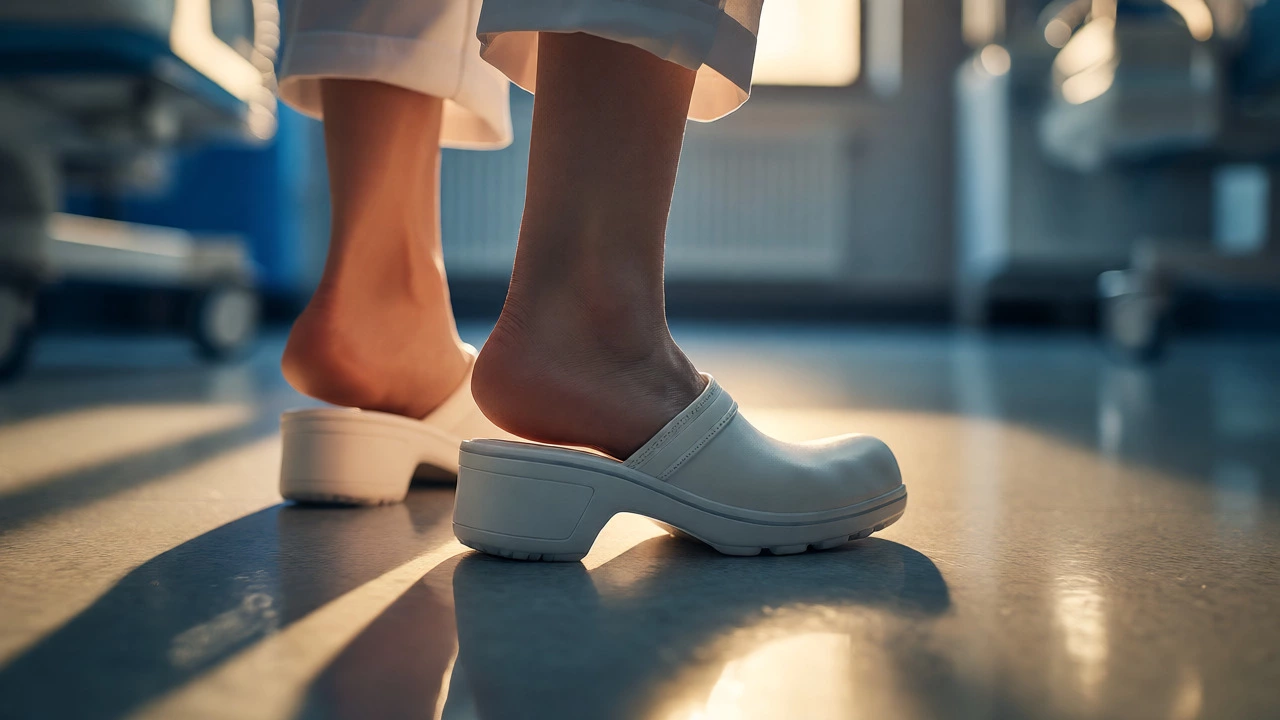
Most people think they need "soft" shoes. They buy the squishiest sneakers they can find, thinking cushioning equals comfort. That’s a trap. Soft foam compresses quickly. After two hours, that cloud-like sole turns into flat cardboard. What you actually need is support, not just softness.
Look for a firm midsole with a distinct heel drop. A slight elevation (around 8-12mm) takes pressure off your Achilles tendon and reduces strain on the lower back. Avoid completely flat shoes like Converse or Vans if you stand for eight hours straight. They offer zero shock absorption for your heels.
| Shoe Type | Cushioning Level | Support Structure | Best For | Lifespan (Hours Stood) |
|---|---|---|---|---|
| Running Sneakers | High (initially) | Low to Medium | Short shifts, walking | ~400-600 miles |
| Clogs (e.g., Birkenstock) | Medium | High (Arch Support) | Kitchens, static standing | 2-3 years |
| Leather Work Boots | Low (stiff) | Very High | Construction, uneven ground | 5+ years |
| Flat Fashion Shoes | None | None | Not recommended for 8+ hours | N/A |
Rotate your shoes. Seriously. Foam materials need time to decompress. If you wear the same pair every day, the cushioning breaks down permanently within months. Buy two pairs and alternate them. This simple switch can double the life of your work shoes and keep your feet happy longer.
The Magic of Anti-Fatigue Mats
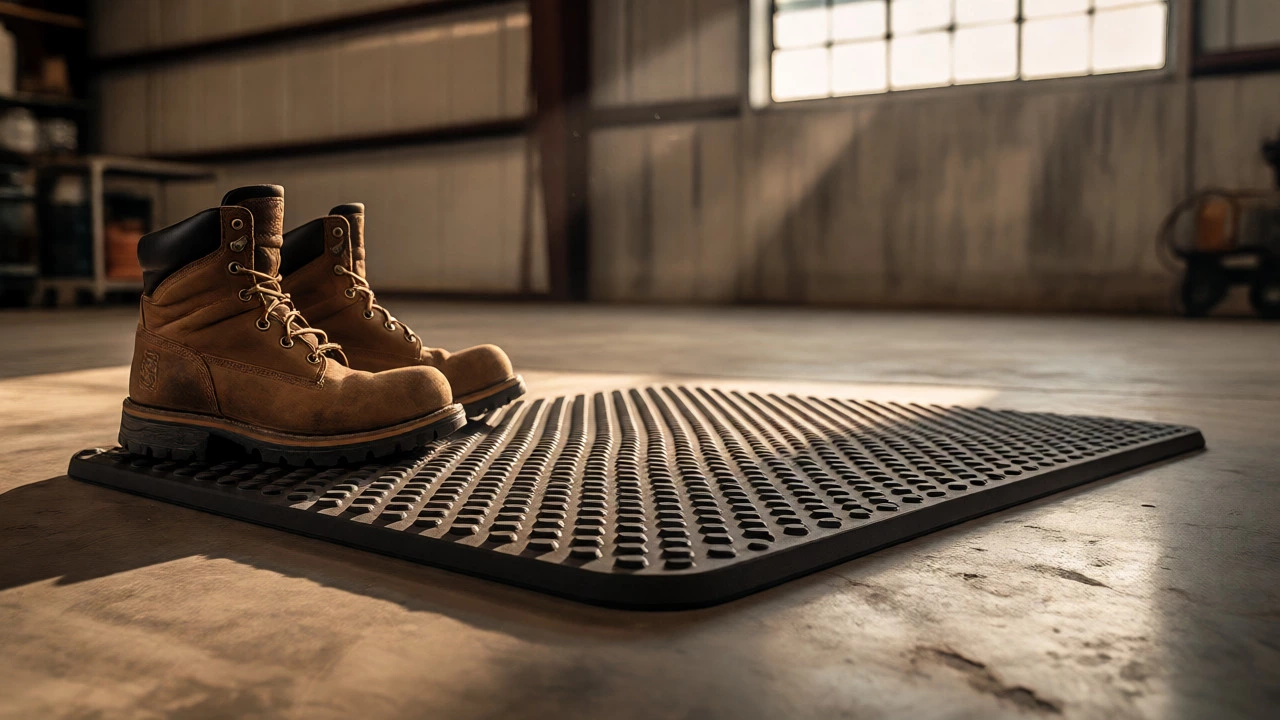
If your workplace allows it, ask about an anti-fatigue mat. If you’re in retail or hospitality, this might be a hard sell, but explain the science. Hard floors reflect impact energy straight back up your legs. A high-quality rubber or foam mat absorbs some of that shock.
Don’t just buy any mat from a hardware store. Look for ones with a textured surface. The bumps encourage micro-movements in your feet, which keeps blood flowing. Static standing pools blood in your lower limbs, causing swelling and fatigue. Movement-even tiny shifts-acts as a pump to push blood back toward your heart.
Socks Matter More Than You Realize
You can have the best shoes in the world, but if you’re wearing thin cotton socks, you’ll still hurt. Cotton holds sweat, leading to blisters and friction. It also loses its shape quickly, bunching up inside your shoe.
Switch to synthetic blends or wool. Merino wool is fantastic because it regulates temperature and wicks moisture away from the skin. Even better? Compression socks. They aren’t just for elderly relatives or marathon runners. Graduated compression socks squeeze your ankles tighter than your calves, helping veins return blood upward. Many nurses swear by knee-high compression stockings to prevent varicose veins and reduce evening throbbing.
Change Your Posture While Standing
Standing like a statue is terrible for your body. Humans weren’t designed to stay perfectly vertical for eight hours. You need to shift your weight constantly.
- The Rocking Technique: Shift your weight from heel to toe periodically. This engages your calf muscles, which act as a second heart to pump blood.
- Use a Footrest: If you’re at a counter or desk, use a small box or rail to rest one foot on. Alternate feet every few minutes. This changes the angle of your pelvis and relieves lower back tension.
- Keep Knees Soft: Never lock your knees. Slightly bent knees absorb shock better than straight, rigid joints.
Try the "90-degree rule." Keep your hips, knees, and ankles aligned. If you lean forward to look at a screen or counter, you’re putting massive strain on your lumbar spine, which eventually travels down to your feet.
Recovery Routine for Home
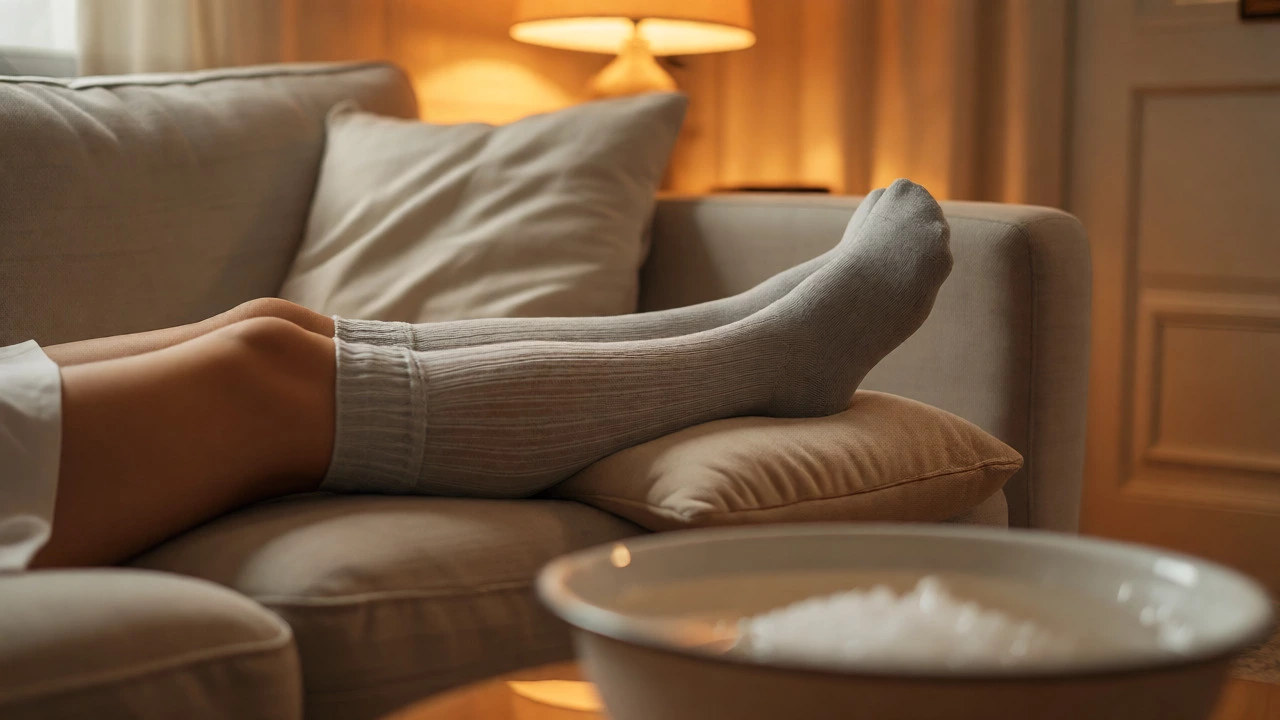
What you do after work determines how you feel the next morning. Don’t just collapse on the sofa. Spend ten minutes doing these three things:
- Epsom Salt Soak: Magnesium sulfate helps relax muscles. Fill a basin with warm water and add half a cup of Epsom salts. Soak for 15 minutes. The warmth increases circulation, while magnesium aids muscle recovery.
- Tennis Ball Roll: Place a tennis ball (or lacrosse ball for deeper pressure) under your foot. Roll it slowly from heel to toe. Focus on the arch. This releases tightness in the plantar fascia, the thick band of tissue running along the bottom of your foot. Do this for two minutes per foot.
- Calf Stretching: Tight calves pull on your heel bone, causing plantar fasciitis. Stand facing a wall, put one foot back, keep the heel down, and lean forward until you feel a stretch in the calf. Hold for 30 seconds per leg.
When to See a Doctor
Soreness is normal. Sharp, stabbing pain isn’t. If you feel a sharp sting when you take your first steps in the morning, you likely have plantar fasciitis. If your toes go numb or tingle, check your shoe width. Swelling that doesn’t go down overnight could indicate circulation issues or venous insufficiency.
Don’t ignore persistent pain. It leads to compensatory injuries-hurting your knee because you’re favoring your foot, then hurting your hip because you’re limping. Catch it early with proper footwear and stretching.
Do I really need to replace my work shoes every year?
If you stand for 8+ hours daily, yes. The midsole foam compresses and loses elasticity long before the outsole wears through. Once the tread looks worn or the shoe feels flat, it no longer supports your arches effectively, regardless of how new it looks.
Are barefoot shoes good for standing all day?
Generally, no. Barefoot shoes require strong foot muscles and gradual adaptation. If you already have weak arches or existing pain, switching abruptly to minimal footwear can worsen conditions like plantar fasciitis. Stick to supportive shoes unless you are actively training your feet over several months.
Why do my feet swell more in hot weather?
Heat causes vasodilation, meaning blood vessels expand to cool the body. This allows more fluid to leak into surrounding tissues, especially in the extremities due to gravity. Wearing breathable shoes and staying hydrated helps mitigate this effect.
Can insoles fix painful old shoes?
Insoles can help temporarily, but they cannot restore collapsed midsole foam. If your shoe structure is broken down, adding an insole often makes the fit too tight, cutting off circulation. Replace the shoes rather than trying to salvage them with inserts.
Is it better to sit or stand during breaks?
Elevate your feet. Sitting normally still keeps blood pooled in your legs. During breaks, lie down or prop your feet up above heart level for 10-15 minutes. This uses gravity to drain fluid and reset circulation.