How to Look Stunning in an Evening Dress: A Complete Style Guide
- Cleo Fairchild
- 30 April 2026
- 0 Comments
Evening Dress Style Finder
Answer a few questions to get your personalized style recommendations based on professional fashion guidelines.
Your Style Recommendations
-
-
Главные секреты идеального образа (Quick Takeaways)
- Prioritize fit over trend; a tailored mid-range dress beats an ill-fitting luxury gown.
- Balance your proportions: if the bottom is voluminous, keep the top streamlined.
- Invest in the right undergarments to create a smooth foundation.
- Choose colors based on your skin undertone to avoid looking washed out.
- Confidence comes from comfort-if you can't breathe or walk, you won't look relaxed.
Matching the Silhouette to Your Frame
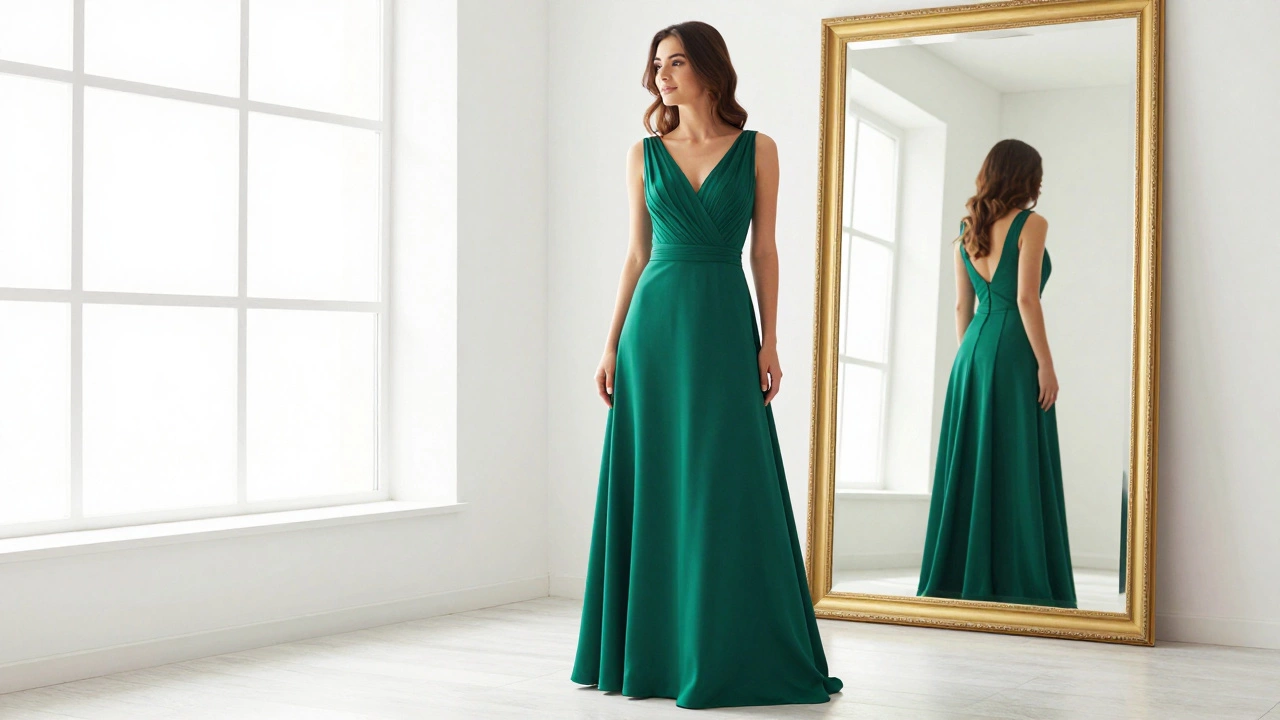
The cut of your dress is the most powerful tool you have. When you pick the wrong silhouette, you're fighting against the fabric. When you pick the right one, the dress does the work for you. A-Line is a silhouette that is fitted at the waist and flares out gradually toward the hem, resembling the letter A. It is widely considered the most universally flattering cut because it cinches the narrowest part of the torso and skims over the hips.
If you have an hourglass figure, a Mermaid Cut is a form-fitting gown that hugs the body through the hips and thighs and flares out dramatically at the knee can emphasize your curves. However, if you're more rectangular, a sheath dress or a belted empire waist can create the illusion of curves where there are none. The key is balance. If you choose a massive ballgown skirt, a tight, structured bodice prevents you from looking like you're being swallowed by tulle.
| Body Shape | Recommended Cut | Why it Works |
|---|---|---|
| Pear | A-Line / Empire Waist | Balances wide hips by drawing attention upward. |
| Apple | Empire / Shift | Skims the midsection while highlighting the legs. |
| Hourglass | Mermaid / Sheath | Accentuates a natural waist-to-hip ratio. |
| Rectangle | Fit and Flare / Belted | Creates a defined waistline. |
The Foundation: Undergarments and Structure
You can spend thousands on a designer gown, but if the underwear is visible or the support is wrong, the whole look collapses. The secret to that "red carpet" smoothness isn't always a small waist; it's often high-quality Shapewear, which includes compression garments like bodysuits and slips designed to smooth the silhouette and provide support.
For backless dresses, avoid the struggle with sticky tape that peels off halfway through the night. Instead, look for built-in cups or specialized adhesive bras. If you're wearing a heavy fabric like velvet or thick satin, a seamless slip prevents the dress from clinging to your legs as you walk. Remember, the goal of shapewear isn't to change your size, but to provide a clean canvas for the fabric to glide over. If you feel like you can't take a full breath, the garment is too tight, and it will actually create more bulges than it hides.
Color Theory and Fabric Choice
Not all black dresses are created equal, and not all reds are the same. Your skin's undertone dictates which colors make you glow and which make you look tired. If you have cool undertones (veins look blue), jewel tones like emerald green, sapphire blue, and silver will look stunning. If you have warm undertones (veins look greenish), lean toward gold, coral, mustard, or olive.
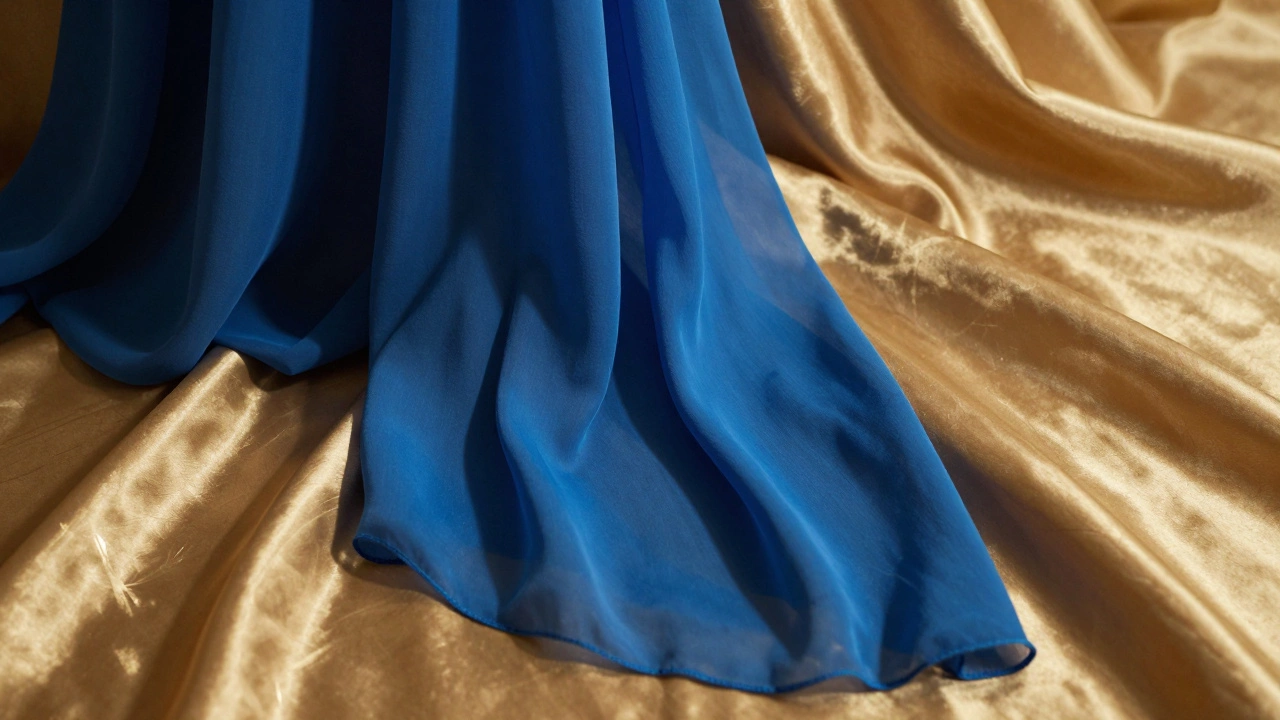
Fabric also plays a massive role in how a dress behaves. Chiffon is a lightweight, sheer plain-woven fabric typically made from silk or nylon. It's great for a romantic, airy feel and hides imperfections well because it flows. On the other hand, Satin is a fabric woven with a satin weave that creates a glossy surface and a dull back. While it looks incredibly luxurious, satin is unforgiving. It highlights every seam of your underwear and every ripple of fabric. If you're worried about transparency or lumps, stick to heavier crepes or matte jerseys.
Accessories: The Art of Not Overdoing It
One of the biggest mistakes people make is treating an evening dress as a starting point for as much jewelry as possible. If your dress has a lot of detail-like sequins, heavy beading, or a complex pattern-keep your accessories minimal. A pair of simple studs and a sleek clutch are enough. If you're wearing a minimalist, solid-colored gown, that's your chance to make a statement with a chunky necklace or dramatic chandelier earrings.
Shoes are the final piece of the puzzle. While stilettos are the classic choice, you have to be able to walk in them. There's nothing less elegant than a person wobbling across a room. A block heel or a sophisticated wedge can give you the height you need for a long gown without the physical pain. Ensure your hemline is adjusted specifically for the height of the shoe you plan to wear; a dress that is an inch too long becomes a tripping hazard, while one that's too short looks like it shrunk in the wash.
Final Polish and Confidence
The most overlooked part of looking good in a dress is posture. You can have the perfect fit, but if you're slouching, the fabric won't drape the way it's supposed to. Imagine there's a string pulling the top of your head toward the ceiling. Roll your shoulders back and keep your chin parallel to the floor. This naturally opens up the chest and lets the dress flow from the shoulders down.
Finally, do a "movement test" before you leave the house. Sit down in the dress. Lean over to pick something up. Dance. If you're constantly tugging at the neckline or pulling down the skirt, you'll look anxious, not elegant. If a dress requires constant maintenance, it's not the right dress for you, regardless of how it looks in a still photo. Comfort is the secret ingredient to confidence, and confidence is what actually makes people notice you.
What is the best length for an evening dress?
The best length depends on the formality of the event and your height. Floor-length gowns are the gold standard for white-tie or black-tie events. For semi-formal evenings, a midi length (hitting mid-calf) is a sophisticated choice. If you are petite, a high-low hemline or a shorter cocktail length can prevent the fabric from overwhelming your frame.
How do I hide a stomach bulge in a tight dress?
The best approach is a combination of high-waisted compression shapewear and choosing fabrics with a bit of structure. Avoid thin, clingy jerseys. Instead, look for dresses with ruching or draping across the midsection, which naturally masks bulges. A-line cuts are also your best friend here as they bypass the stomach area entirely.
Can I wear a black dress to every evening event?
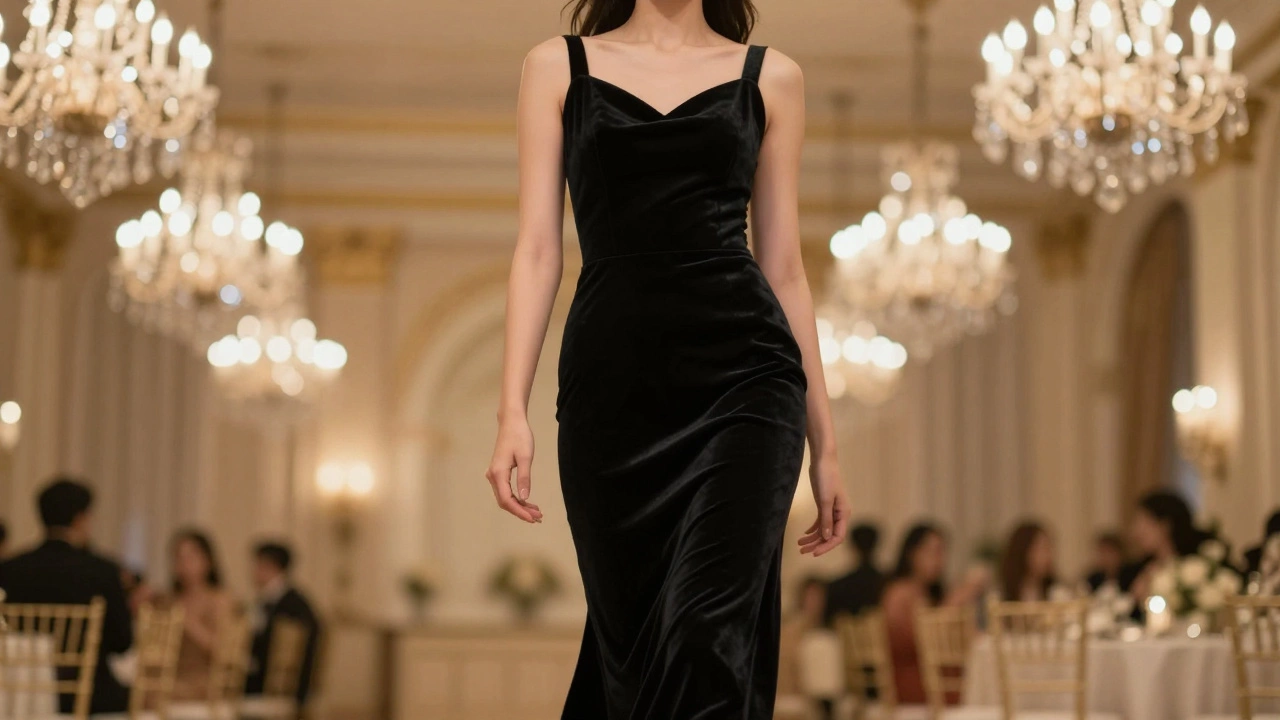
Yes, a black dress is a timeless safe bet, but it can sometimes feel uninspired. To make it look high-end, focus on the texture. A black velvet gown looks very different from a black sequins dress. Pair it with a pop of color in your shoes or a bold lipstick to ensure you don't disappear into the background.
How do I choose the right neckline for my bust size?
For larger busts, V-necks and scoop necks are great because they break up the chest area and create a vertical line. For smaller busts, high necks, boat necks, or dresses with ruffles and embellishments on the bodice can add volume and create a more balanced look.
What should I do if my dress is slightly too big?
If the dress is slightly too large, a tailor is your best investment. Simple alterations to the waist or side seams can transform a "baggy" dress into a custom-fit gown. If you can't get to a tailor, a high-quality belt can cinch the waist and create a more defined shape.
Next Steps for Your Evening Look
Once you've picked your dress, the next step is to plan your grooming and beauty routine. Consider how your hair will interact with the neckline; for example, an updo looks best with a high neck or detailed shoulder work, while loose waves complement strapless or V-neck styles. Finally, do a full dress rehearsal-shoes, jewelry, and undergarments included-at least three days before the event. This gives you time to spot any missing pieces or required tweaks to the fit, ensuring you can actually enjoy your night instead of worrying about your wardrobe.