What Qualifies as a Sundress? The Ultimate Guide

- Cleo Fairchild
- 26 October 2026
- 0 Comments
Sundress Authenticity Checker
Not sure if that flowy number in your closet is a true sundress? Answer the questions below to find out.
Criteria Breakdown
You’re standing in front of your wardrobe, holding up a flowy cotton number. Is it a sundress? Or is it just a regular day dress that happens to be light? It’s a question that pops up more often than you’d think, especially when you’re trying to pack for a holiday or decide what to wear to a garden party. The term sundress is thrown around loosely, but there are actual criteria that separate a true sundress from any other lightweight garment.
Here’s the thing: not every sleeveless dress is a sundress. And not every floral print qualifies either. To understand what makes a sundress a sundress, we need to look at fabric, cut, functionality, and social context. If you’ve ever felt unsure about whether an outfit fits the "sundress" vibe for a specific event, this breakdown will clear up the confusion once and for all.
The Core Definition: More Than Just Sleeveless
At its most basic level, a sundress is a lightweight, informal dress designed specifically for warm weather. The name itself gives away the primary function: it’s meant to be worn while enjoying the sun. This implies breathability, ease of movement, and a general lack of structure compared to formal wear. However, simplicity doesn’t mean sloppy. A good sundress balances comfort with style, allowing you to stay cool without looking like you just rolled out of bed.
Think of it this way: if you wouldn’t wear it to a winter wedding because you’d freeze, but you also wouldn’t wear it to a black-tie gala because it’s too casual, you’re probably in sundress territory. It occupies that sweet spot between pajamas and evening gowns. It’s the uniform of leisure, beach walks, brunches, and outdoor markets.
Fabric Matters: Breathability is Non-Negotiable
If there is one rule you cannot break, it’s the fabric choice. You can have the perfect cut, but if the material traps heat, it fails the sundress test. Synthetic fabrics like polyester or nylon often fail here unless they are specifically engineered for moisture-wicking performance. They tend to cling and create a sauna effect on humid days.
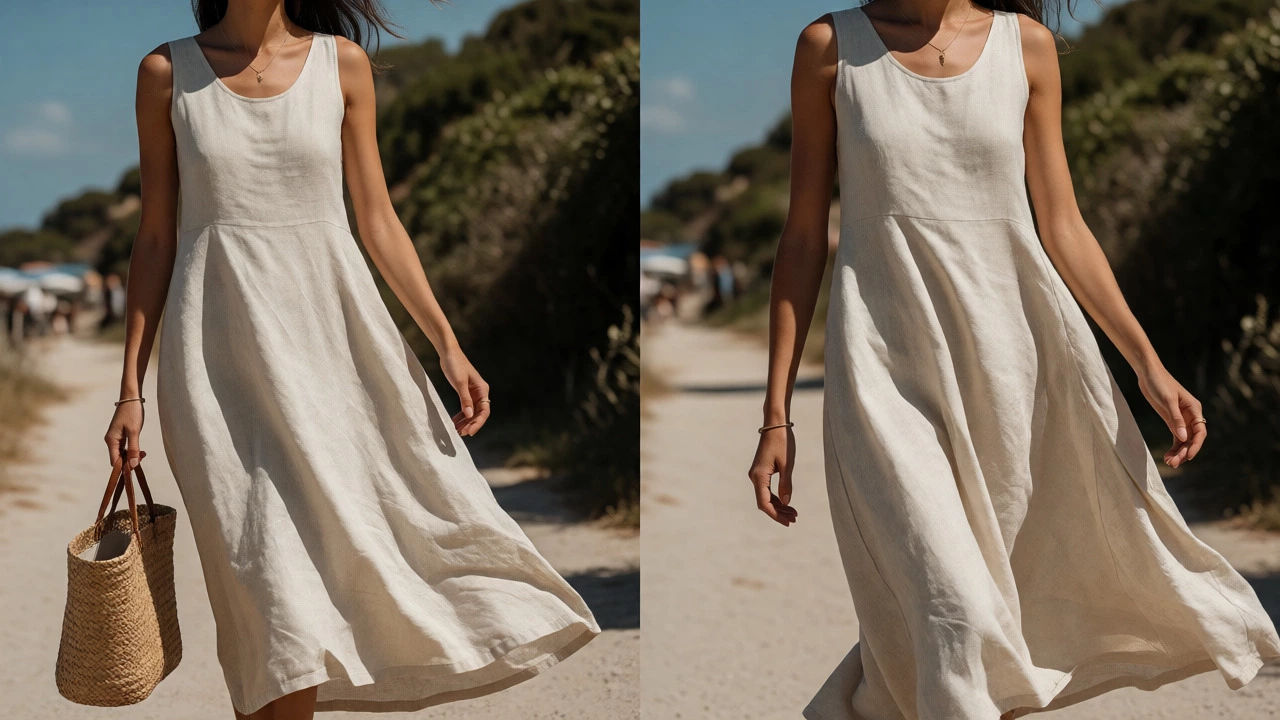
Instead, look for natural fibers. Cotton, linen, and rayon (viscose) are the holy trinity of sundress materials. Linen, in particular, has become iconic for this category. Why? Because it allows air to circulate freely against your skin. Yes, it wrinkles easily, but that rumpled look is part of the charm. It signals relaxation. Cotton offers durability and softness, making it ideal for everyday wear. Rayon provides a silky drape that feels cool to the touch, which is great for hotter climates.
Avoid heavy denim or thick wool blends. While a denim shirt-dress might look cute, if it’s made from rigid, heavy denim, it’s technically a shirt-dress, not a sundress. For it to qualify, the denim needs to be ultra-lightweight, almost gauzy, or blended with other breathable fibers.
Cut and Silhouette: The Shape of Summer
The silhouette of a sundress is typically loose and forgiving. Tight bodycon dresses rarely qualify because they restrict airflow and movement. The goal is to let the breeze hit your skin. Common cuts include:
- A-line: Fitted at the waist and flaring out towards the hem. This is the classic sundress shape, flattering on almost everyone.
- Shift: Straight up and down, hanging from the shoulders. Great for minimalists who hate fussing with belts.
- Maxi: Long lengths that sweep the ground. Despite covering the legs, these are quintessential sundresses because the fabric is usually so light it barely registers as weight.
- Midi: Knee-to-calf length. Perfect for semi-casual settings where you want a bit more coverage but still want to keep cool.
Sleeves are another key indicator. True sundresses are sleeveless, spaghetti-strapped, or have short flutter sleeves. Cap sleeves are acceptable if they are very light. Anything with long sleeves usually pushes a dress into the "spring/fall" category, unless the sleeves are sheer lace or chiffon. Even then, purists might argue it’s a "summer dress" rather than a strict "sundress," though the lines blur in modern fashion.
Prints and Patterns: The Visual Language
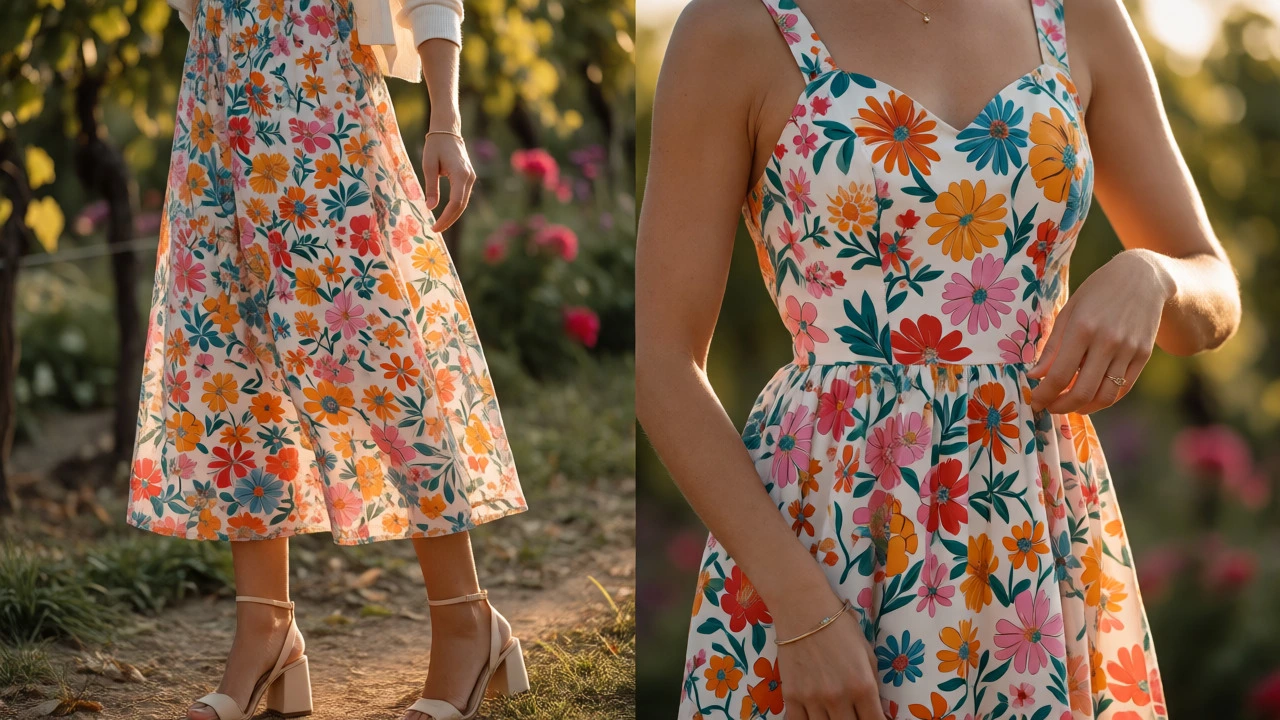
While solid colors work perfectly fine, prints are the visual shorthand for sundresses. Floral patterns are the most obvious association, but stripes, polka dots, and geometric prints also fit the bill. The key is the vibe. The pattern should feel playful, vibrant, or relaxed.
Dark, somber colors like deep charcoal or heavy burgundy can still work, provided the fabric is light and the cut is airy. However, pastels, brights, and white dominate the sundress palette for a reason-they reflect sunlight rather than absorbing it. Wearing a neon yellow linen maxi dress isn’t just a style choice; it’s practical thermodynamics.
| Feature | Sundress | Standard Day Dress |
|---|---|---|
| Fabric Weight | Lightweight, breathable (Cotton, Linen) | Medium to Heavy (Polyester blends, Wool) |
| Sleeves | Sleeveless, Spaghetti, Flutter | Short, Long, Puff, Structured |
| Structure | Loose, Flowy, Unstructured | Fitted, Tailored, Lined |
| Occasion | Beach, Brunch, Casual Outings | Office, Dinner, Semi-Formal |
| Seasonality | Late Spring to Early Autumn | All Year (depending on fabric) |
Context and Etiquette: When Does It Count?
Here is where things get tricky. Context changes everything. A dress that qualifies as a sundress at a beach bar might be inappropriate at a corporate office. Generally, sundresses are considered casual to smart-casual attire. They are never appropriate for formal events, business meetings, or funerals (unless specified otherwise).
Consider the setting. Are you going to a vineyard tour? A sundress is perfect. Are you going to a job interview in London? Probably not, unless the company culture is extremely relaxed. The line between "cute sundress" and "too casual" often depends on accessories. Pair a simple linen shift dress with heels and structured jewelry, and it elevates to smart-casual. Pair it with flip-flops and a tote bag, and it stays firmly in the casual camp.
In the UK, where I live, the definition shifts slightly due to our unpredictable weather. We might call a heavier cotton dress with three-quarter sleeves a "summer dress," reserving "sundress" for those rare hot days when we actually see the sun. But globally, the terms are used interchangeably. Don’t stress too much about the semantics; focus on the feeling. If you feel free, light, and ready to enjoy the outdoors, you’re wearing a sundress.
Common Misconceptions About Sundresses
Let’s bust a few myths. First, sundresses aren’t just for young women. Women of all ages wear them. The key is choosing a cut that suits your body type and a length that makes you comfortable. A midi linen dress looks sophisticated on anyone over 50.
Second, sundresses don’t have to be floral. I see people assume that if it’s not flowers, it’s not a sundress. Wrong. A solid white cotton maxi is the ultimate minimalist sundress. A striped nautical shift is a classic preppy sundress. Color and pattern are secondary to fabric and cut.
Third, you can wear a sundress in the evening. Many people stop wearing them after sunset. But with the right accessories-like a denim jacket, leather sandals, and bold earrings-a sundress transitions seamlessly from day to night. The fabric remains cool, which is helpful if the evening air hasn’t cooled down yet.
How to Style Your Sundress for Maximum Impact
Since the dress itself is simple, styling is where you add personality. Footwear choices define the formality level. Sandals keep it casual. Espadrilles add a rustic, European flair. White sneakers make it sporty and youthful. Block heels elevate it for dinner dates.
Layering is essential for variable weather. In Bristol, we might have sunshine at noon and rain by 4 PM. A light cardigan, a denim jacket, or a linen blazer works well over a sundress without ruining the aesthetic. Avoid heavy coats; they overwhelm the delicate nature of the dress.
Accessories should complement the lightness of the fabric. Straw hats, woven bags, and simple gold jewelry are natural partners. Avoid chunky, heavy metals or large handbags that weigh down the visual profile of the outfit.
Can a sundress have pockets?
Absolutely! In fact, many modern sundress designs prioritize functional pockets. Since sundresses are often worn for casual outings like shopping or walking, having pockets for keys, phones, or sunglasses adds significant utility. Look for side-seam pockets in maxi or midi styles, as they maintain the clean silhouette better than patch pockets.
Is a sundress appropriate for a wedding?
It depends entirely on the venue and time of day. For a daytime outdoor or beach wedding, a high-quality silk or linen sundress in a tasteful color is often perfectly acceptable. However, avoid white, cream, or anything too revealing. For evening or church weddings, a sundress is usually too casual unless the invitation explicitly states "beach formal" or "garden party." Always check the dress code first.
What is the difference between a sundress and a summer dress?
The terms are often used interchangeably, but there is a subtle distinction. A "summer dress" is a broader category that includes any dress suitable for the season, potentially including heavier fabrics or longer sleeves for cooler evenings. A "sundress" specifically implies lightweight, breathable fabric and a sleeveless or strap design intended for direct sun exposure. All sundresses are summer dresses, but not all summer dresses are sundresses.
Can men wear sundresses?
Traditionally, no, but fashion norms are evolving. Some modern designers are creating unisex or male-oriented versions of similar garments, such as kilts or wide-leg trousers that mimic the flow of a dress. However, in mainstream Western fashion, the term "sundress" remains gendered toward women. Men seeking similar warmth-relief options often opt for linen shirts and shorts.
How do I care for a linen sundress?
Linen gets softer with each wash. Machine wash on a gentle cycle with cold water to prevent shrinking. Tumble dry on low or hang to dry. Iron while damp for a crisp look, or embrace the natural wrinkles for a more relaxed, authentic sundress vibe. Avoid bleach, which can weaken the fibers over time.