What is the Most Formal Evening Dress Code? White Tie vs Black Tie
- Cleo Fairchild
- 2 November 2026
- 0 Comments
Evening Dress Code Decoder
1. Analyze Your Invitation
2. Recommended Attire
Analyzing...Checklist:
Enter your invitation details to see what you should wear.
You receive an invitation to a gala in Bristol. The card says "Formal Attire Requested." You stare at your closet, panic rising. Is that a suit? A cocktail dress? A tuxedo? If you guess wrong, you risk being the most underdressed person in the room-or worse, overdressed and looking like you tried too hard. The confusion stems from one simple truth: "formal" is vague. But there is a hierarchy. At the very top sits White Tie, the most formal evening dress code, characterized by tailcoats for men and full-length ball gowns for women. It’s stricter than Black Tie, rarer than business formal, and steeped in centuries of tradition. Knowing the difference isn’t just about fashion; it’s about respect for the event and its hosts.
The Hierarchy of Evening Wear
Before we dissect White Tie, let’s map the landscape. Most people mix up Black Tie and White Tie. They aren’t interchangeable. Think of them as different tiers of a pyramid. At the base is Business Casual, moving up to Business Formal, then Cocktail, then Black Tie, and finally, White Tie at the peak. Each step demands more precision, higher quality fabrics, and stricter adherence to rules. There is no improvisation at the top. If the invitation says "White Tie," you don’t show up in a dark suit. You don’t show up in a long dress with bare shoulders unless you add a wrap or shawl. You follow the script exactly.
Why does this matter? Because etiquette is a language. When you adhere to the code, you signal that you understand the occasion’s gravity. When you ignore it, you break the social contract. In cities like London or New York, where diplomatic events and high-society galas happen weekly, getting this right is a basic social skill. For those of us in Bristol, attending a charity ball or a university formal hall might be the closest encounter. The rules remain the same whether you’re at Buckingham Palace or a historic manor house in Somerset.
Decoding White Tie: The Gold Standard
White Tie, also known as Full Evening Dress or Evening Full Dress, originated in the early 19th century. It was the standard for upper-class evening wear until World War I shifted norms toward slightly less rigid styles. Today, it survives primarily in state dinners, royal weddings, and elite balls. Let’s look at what it actually entails for men first, because the details are non-negotiable.
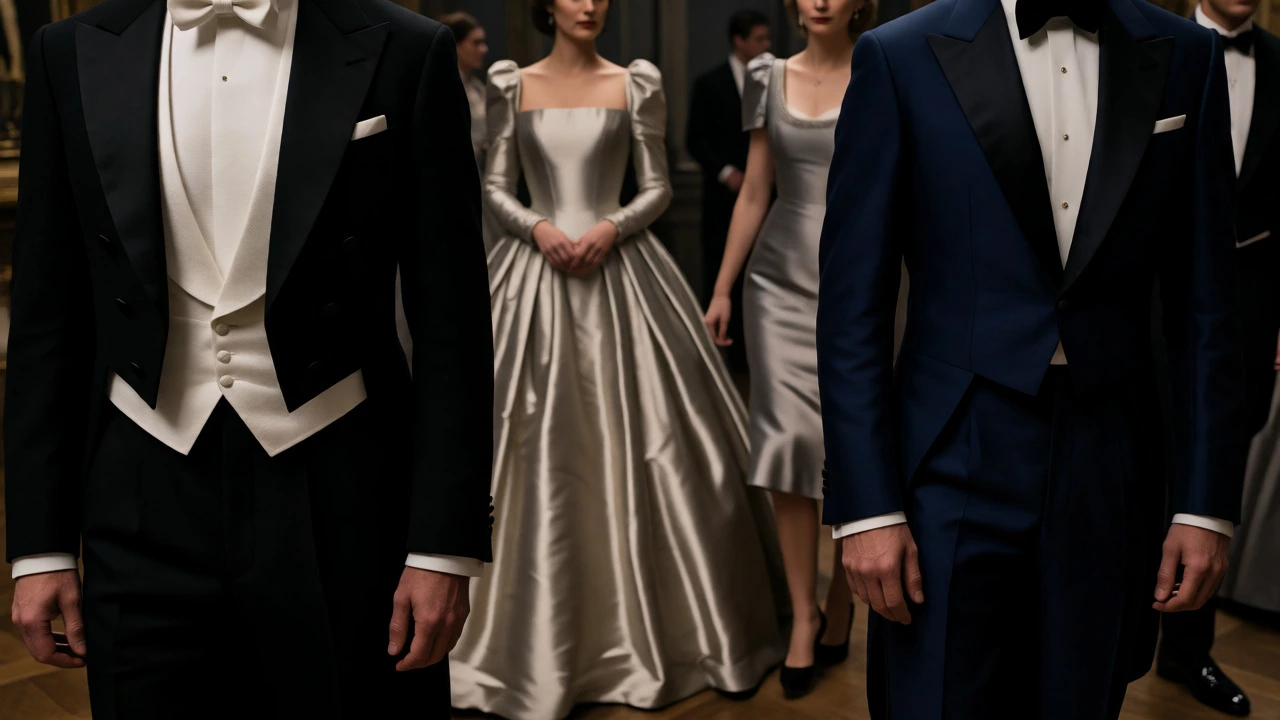
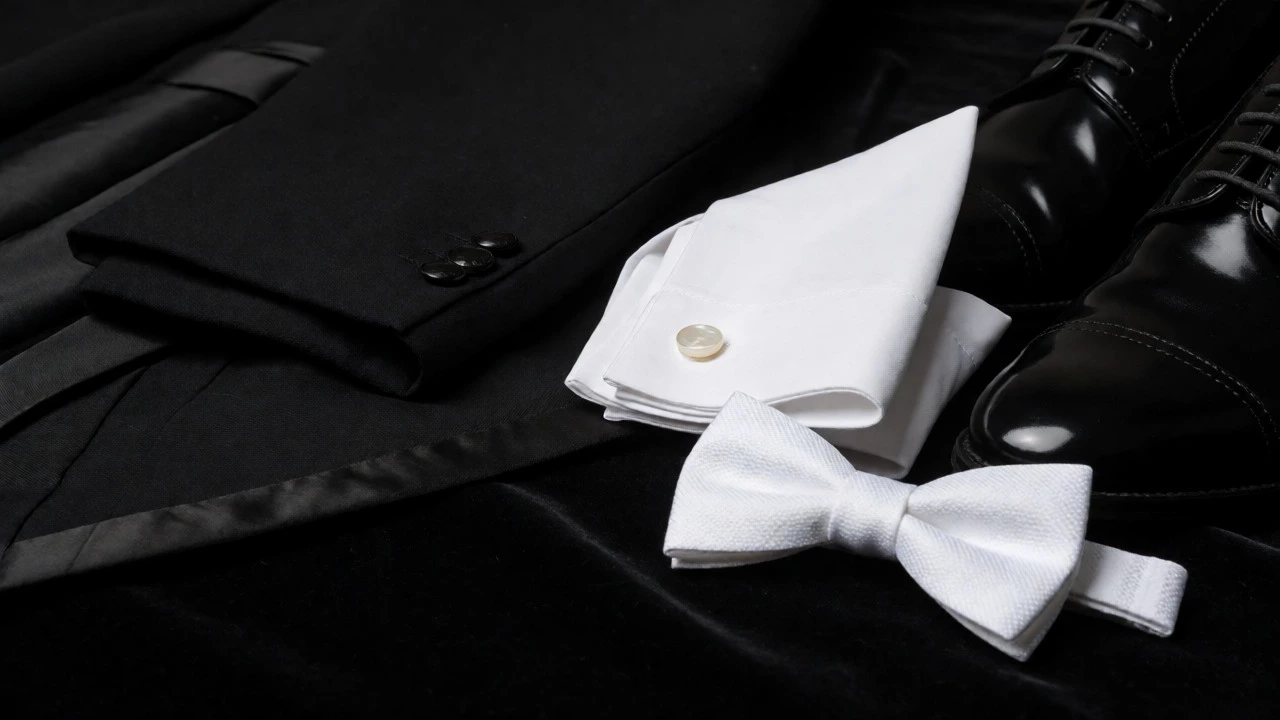
Men must wear a black tailcoat. Not a tuxedo jacket. A tailcoat has cutaway fronts and long tails at the back. Underneath, you wear a white wing-collar shirt. Yes, the collar points stick out horizontally. This requires specific stiffened collars, often detachable. You pair this with a white marcella waistcoat (vest) and a white bow tie. The trousers are black, high-waisted, and feature two vertical satin stripes down each side. Shoes are black patent leather oxfords. No loafers. No boots. Patent leather only. Gloves are optional but traditionally carried, not worn indoors.
For women, White Tie means a floor-length ball gown. This isn’t just any long dress. It implies volume, structure, and opulence. Fabrics should be rich-silk, satin, velvet, or heavy lace. The silhouette can be anything from a classic A-line to a dramatic mermaid style, but the hemline must touch the floor. No slits above the knee. Accessories include opera-length gloves (if the dress is sleeveless), fine jewelry, and elegant heels. A clutch bag is preferred over a shoulder bag. Hair is typically styled up, showcasing earrings and necklines. Makeup is polished but not overly trendy. The goal is timeless elegance, not runway experimentation.
Black Tie: The Close Second
If White Tie feels intimidating, Black Tie is its more accessible cousin. Introduced in the late 1800s as a less formal alternative to tailcoats, it became the standard for dinner parties and theater outings. By the 1930s, it had largely replaced White Tie for most evening events. If the invitation says "Black Tie," you have more flexibility, but still strict boundaries.
Men wear a tuxedo (dinner jacket). It can be black or midnight blue. Midnight blue is actually a pro tip-it looks darker than black under artificial light. The lapels are faced with satin or grosgrain silk. You wear a black bow tie (never a long tie), a cummerbund or low-cut waistcoat, and a pleated or piqué front shirt. Shoes remain black patent leather or highly polished calfskin. Women have more freedom here. A floor-length gown is traditional, but a sophisticated cocktail dress (knee-length or midi) is increasingly acceptable if it’s made of luxurious fabric. Jumpsuits in high-end materials are also gaining ground. The key is avoiding casual fabrics like cotton or jersey.
| Feature | White Tie | Black Tie |
|---|---|---|
| Men's Jacket | Black Tailcoat | Tuxedo / Dinner Jacket |
| Men's Bow Tie | White | Black |
| Men's Shirt Collar | Wing Collar | Turn-down or Wing |
| Women's Hemline | Floor-Length Only | Floor-Length or Long Cocktail |
| Gloves | Opera Length (Optional) | Short or None |
| Occasions | State Dinners, Royal Events | Galas, Weddings, Opera |
When Does White Tie Actually Happen?
You might wonder, "Do I ever need to buy a tailcoat?" Probably not. Unless you’re in politics, royalty, or extreme high society, White Tie is rare. In the UK, you’ll see it at the Lord Mayor’s Banquet, certain college formals at Oxford or Cambridge, and state visits. In the US, think of the Met Gala (though they often add themes) or the Nobel Prize Banquet. For most people, Black Tie is the ceiling. However, knowing White Tie exists helps you interpret ambiguous invitations. If an invite says "Formal," call the host. Ask specifically: "Is this Black Tie or White Tie?" Don’t assume.
There’s also "Creative Black Tie," a modern twist. This allows for color in tuxedos (burgundy, emerald green) or unique patterns on bow ties. Women can experiment with bold prints or unconventional cuts. But note: Creative Black Tie is never White Tie. You don’t wear a colored tailcoat to a White Tie event. That’s a faux pas.
Pitfalls to Avoid
Even well-meaning guests make mistakes. Here are the most common ones when navigating formal evening codes.
- The Wrong Shoe: Wearing brown shoes with a black tuxedo. Stick to black. Always.
- The Long Tie: Men wearing a necktie instead of a bow tie with a tuxedo. It looks like you forgot the rule.
- Over-Accessories: Too many bracelets, rings, or watches. Formal wear relies on simplicity. One statement piece is enough.
- Ignoring Fit: A $500 tuxedo that fits poorly looks worse than a $100 one tailored perfectly. Go to a tailor.
- Wrong Fabric: Choosing polyester blends that shine cheaply under lights. Opt for wool, silk, or velvet.
Another trap is assuming gender norms are fixed. Modern etiquette is evolving. More men are wearing skirts or kilts with tailcoats. More women are wearing tuxedos. As long as the formality level matches the code, personal expression is welcome. Just ensure the outfit reads as "evening wear," not "daywear dressed up."
How to Interpret Ambiguous Invitations
Invitations rarely say "White Tie" anymore. They use euphemisms. Here’s how to decode them:
- "Formal Attire": Usually means Black Tie for men, long dress for women. Check the time. After 6 PM = Evening Wear.
- "Black Tie Optional": You can wear a tuxedo or a dark suit with a tie. Tuxedo is safer if you want to look sharp.
- "Cocktail Attire": Knee-length dresses for women, suits for men. Less formal than Black Tie.
- "Business Formal": Daytime equivalent. Suits and conservative dresses. No sequins.
If you’re unsure, err on the side of formality. It’s better to be slightly overdressed than underdressed. You can always remove a jacket or a shawl. You can’t magically produce a tailcoat mid-event.
Caring for Your Formal Wear
Formal garments require maintenance. Dry clean sparingly. Over-cleaning damages fibers. Store tuxedos on padded hangers to maintain shoulder shape. Use garment bags for travel. For women, store gowns flat or hung properly to avoid creases in delicate fabrics. Steam, don’t iron, unless necessary. Check buttons and seams before every event. Nothing ruins a formal look like a missing button or a split seam discovered upon arrival.
Investment pieces last decades. A good tuxedo bought today will serve you through weddings, anniversaries, and career milestones. Same goes for a classic little black dress or a navy suit. Quality beats quantity every time. In a world of fast fashion, formal wear remains a bastion of durability and craftsmanship.
Is White Tie really more formal than Black Tie?
Yes, absolutely. White Tie is the highest level of evening formality. It requires tailcoats and wing-collar shirts for men, and full ball gowns for women. Black Tie is one step down, allowing tuxedos and shorter dresses.
Can I wear a long tie with a tuxedo?
Traditionally, no. Black Tie etiquette dictates a bow tie. While some modern interpretations allow slim ties, sticking to a bow tie is the safest and most correct choice for formal events.
What shoes go with White Tie?
Black patent leather oxfords are the standard. They should be highly polished. Loafers, boots, or suede shoes are inappropriate for White Tie.
Is a jumpsuit acceptable for Black Tie?
Yes, provided it is made of luxurious fabric like silk or velvet, features elegant detailing, and has a formal silhouette. Avoid casual materials like denim or cotton.
What does 'Formal' mean on an invitation?
It usually implies Black Tie for evening events. Men should wear tuxedos or dark suits, and women should wear long dresses or sophisticated cocktail attire. Always check the time of day and venue to confirm.