What is the Most Flattering Dress Length for Your Body Type?
- Cleo Fairchild
- 24 September 2026
- 0 Comments
Flattering Dress Length Finder
Stop guessing. Use your measurements to find the hemline that creates perfect visual balance.
Recommended Style:
You stand in front of the mirror, holding a beautiful evening dress against your body. It looks stunning on the hanger, but once it’s on, something feels off. The hemline cuts you in half, or worse, it drags around your ankles like a sack. You’re not imagining it-dress length is one of the most powerful tools in fashion, yet it’s often ignored in favor of color or fabric. The truth? There is no single "perfect" length that works for everyone. The most flattering length depends entirely on your height, leg proportions, and where you want to draw attention.
The Myth of One-Size-Fits-All Hemlines
Fashion magazines love to declare a specific year the era of the mini or the maxi. But if you’ve ever bought a trend-driven dress only to feel uncomfortable or disproportionate, you know the problem. Trends change; your bone structure doesn’t. A hemline that elongates a petite frame might shorten a tall woman’s legs. The goal isn’t to follow a rulebook-it’s to create visual balance. This concept relies on breaking up the body into pleasing proportions, often using the golden ratio or simple thirds. When a dress hits at the right spot, it creates a seamless line from shoulder to toe. When it hits wrong, it chops your silhouette into unflattering blocks.
| Hemline Style | Best For | Visual Effect | Risk Factor |
|---|---|---|---|
| Mini (Mid-Thigh) | Petite frames, long torsos | Lengthens legs by exposing more skin | Can look too casual for formal events |
| Knee-Length | Average heights, classic styles | Balanced, professional, safe | Can cut the calf muscle if uneven |
| Midi (Below Knee to Ankle) | Tall frames, curvy figures | Elegant, sophisticated coverage | High risk of shortening legs if paired with flat shoes |
| Maxi (Floor-Length) | All heights (with tailoring) | Creates a continuous vertical line | Tripping hazard; can overwhelm small frames |
Understanding Your Body’s Geometry
Before you buy another dress, grab a tape measure. You need to know two numbers: your total height and your inseam (the distance from your crotch to the floor). Why? Because two women who are both 5'6" can have completely different leg-to-torso ratios. If you have long legs and a short torso, you can pull off a midi dress that ends mid-calf because your legs provide the necessary extension. If you have a longer torso and shorter legs, that same midi might make you look stumpy unless you wear heels or choose a slit.
This is where the concept of visual weight comes in. Dark colors recede, light colors expand, but hemlines dictate where the eye stops. If you want to appear taller, you need to keep the vertical line uninterrupted. A high-low hem or a side slit achieves this by revealing the leg without breaking the outer silhouette. Conversely, if you want to minimize the appearance of large hips, a hemline that falls just below the widest part of your thigh can be distracting. It draws the eye downward rather than smoothing over the curve.
Navigating Evening Dress Specifics
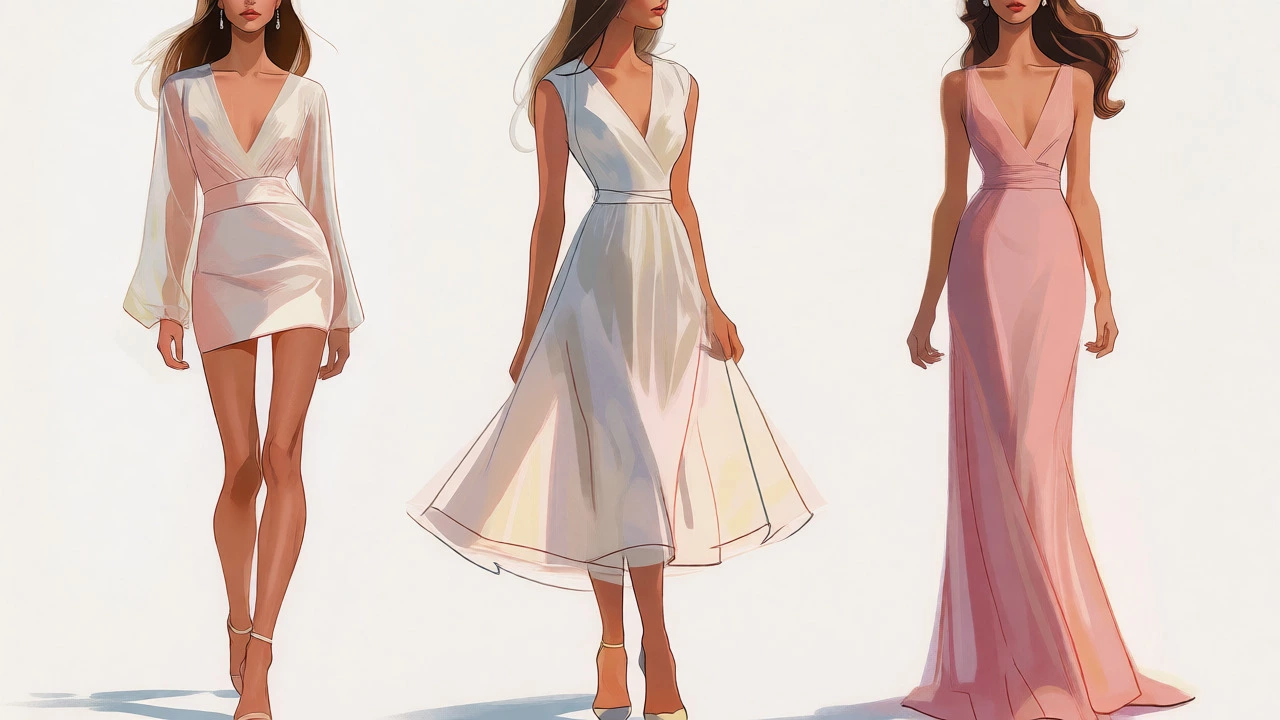
When we talk about formal attire, the stakes are higher. A wrong hemline here isn’t just unfashionable; it can look sloppy. For black-tie events, the expectation is usually floor-length. However, "floor-length" is tricky. Does it touch the ground? Does it pool slightly? In Bristol, where the weather can turn rainy quickly, dragging silk on wet pavement is a recipe for disaster. Aim for a hem that grazes the top of your shoe heel when standing still. This allows for movement without tripping and keeps the fabric clean.
For cocktail parties or semi-formal weddings, the rules loosen up. Here, a tea-length dress (ending mid-calf) is making a huge comeback in 2026. It’s vintage-inspired but modernized with sharper cuts. The key to making tea-length work today is pairing it with pointed-toe heels. The sharp point of the shoe extends the line of the foot, counteracting the potential shortening effect of the mid-calf hemline. Avoid round-toe flats with this length unless you are very tall, as they blunt the line and make your feet look larger.
Height-Specific Strategies
If you are under 5'4", your biggest enemy is horizontal lines. Every time a hemline cuts across your body, it visually shortens you. Therefore, monochromatic looks help, but so does strategic exposure. A mini dress that shows more leg actually makes you look taller because it removes the barrier between your waist and your feet. If you prefer coverage, go full maxi. A continuous column of fabric from shoulder to toe is incredibly slimming and heightening. Just ensure the dress fits perfectly through the shoulders and bust; excess volume will swamp you.
For those over 5'9", you have the luxury of playing with proportions. You can handle a maxi skirt with a crop top because you have the height to carry the volume. However, beware of hemlines that hit exactly at the ankle bone. This is the thinnest part of your leg, but if the fabric bunches there, it adds bulk. Instead, let the dress skim the floor or end just above the ankle bone. Tall women also benefit from asymmetrical hems, which add dynamic interest to their longer frames.
The Shoe Connection
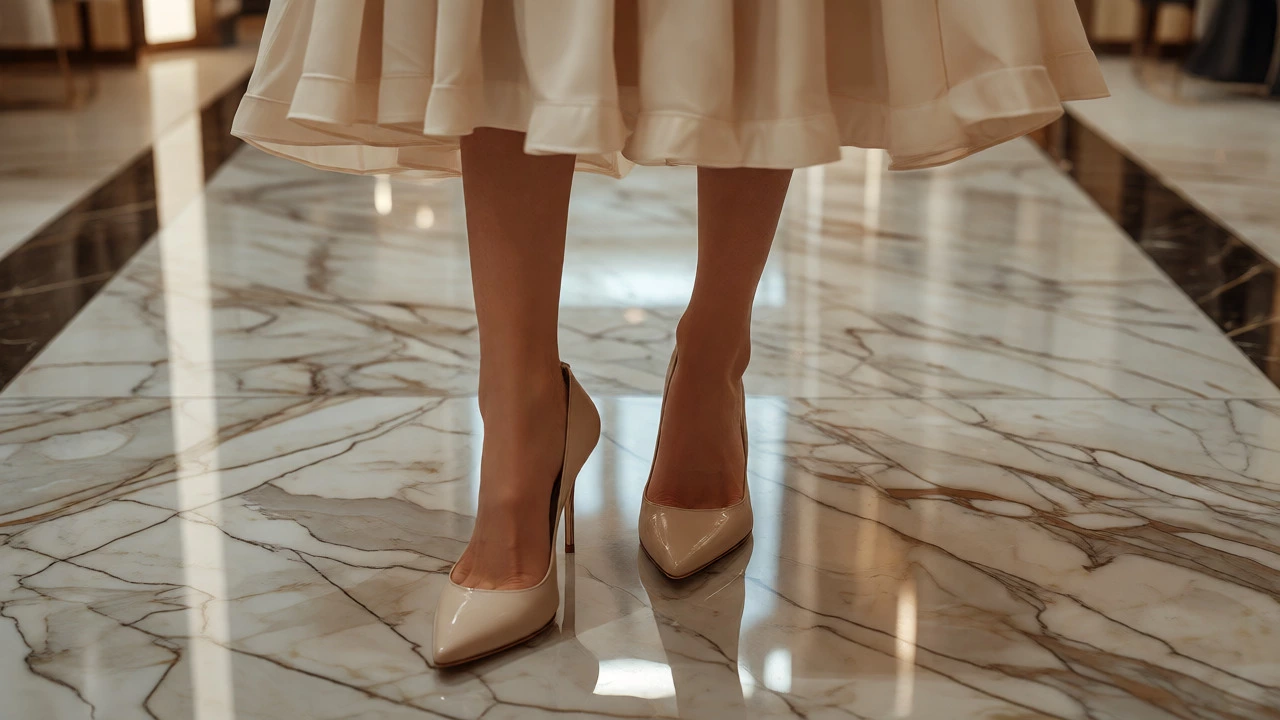
You cannot judge a dress length in isolation. You must try it on with the shoes you plan to wear. This is the most common mistake people make. They buy a dress thinking it’s a midi, then put on 3-inch heels, and suddenly it’s a knee-length dress that cuts awkwardly. Or vice versa-they wear a maxi expecting to wear heels, but switch to sneakers, and now they’re stepping on the train.
- Heels: Raise the hemline effectively. A dress that touches the floor in bare feet will float an inch above the ground in heels.
- Flats: Lower the effective hemline. Ensure the dress doesn’t drag. If it does, get it shortened, don’t just fold it up.
- Boots: If wearing boots under a dress, check the clearance. A tight boot shaft hitting a narrow midi hem can look cluttered. Leave at least two inches of gap or go fully covered.
Practical Alterations and Fit Checks
Don’t be afraid to alter a dress. Buying off-the-rack means buying for a standard model, not your unique geometry. If a dress is perfect in every way except the length, tailor it. A skilled seamstress can adjust the hem in under an hour. When fitting, stand naturally. Don’t suck in your stomach or hold your breath. Walk around. Sit down. Dance a little. If you sit and the dress rides up significantly, it’s too short for comfort. If you walk and trip, it’s too long. Comfort equals confidence, and confidence is the ultimate accessory.
Remember, lighting matters. What looks modest in fluorescent store lights might look sheer or too short in dim evening light. Always check the transparency of the fabric when sitting. And finally, trust your gut. If you feel self-conscious all night, adjusting your posture won’t fix it. Choose the length that lets you forget you’re wearing a dress, so you can focus on enjoying the event.
Is midi length always unflattering?
No, but it requires careful styling. Midi lengths can shorten the leg if they hit the widest part of the calf. To make them flattering, pair them with nude heels that match your skin tone to create a continuous line, or choose a dress with a high slit to reveal the leg and break up the fabric block.
How do I determine my ideal dress length?
Measure your inseam and total height. Calculate your leg-to-torso ratio. If you have long legs, you can experiment with shorter hemlines or mid-calves. If you have a longer torso, opt for minis or maxis to avoid cutting your body in half. Always test the length while wearing your intended footwear.
What is the best dress length for petite women?
Petite women generally look best in either mini dresses (mid-thigh) or full maxi dresses. These options preserve the vertical line. Mid-length dresses that hit at the knee or calf can chop the body visually, making you appear shorter unless paired with high heels and monochromatic colors.
Should evening dresses touch the floor?
Traditionally, yes, for black-tie events. However, modern etiquette allows for a slight break. Ideally, the hem should graze the top of your shoe heel. This prevents tripping and keeps the fabric clean, especially outdoors. Pooling fabric is acceptable for red carpets but impractical for dancing venues.
Do patterns affect how dress length looks?
Absolutely. Large prints can overwhelm a shorter dress, while vertical stripes on a maxi can enhance height. Horizontal stripes on a hemline can emphasize width. For a flattering effect, align pattern breaks with your natural curves or use solid colors to maintain a sleek, uninterrupted silhouette.