What Is a Good Amount of Money to Spend on a Suit?
- Cleo Fairchild
- 4 December 2025
- 0 Comments
Suit Cost Calculator
Your Suit Usage
Recommendation
Select your usage pattern above to see recommendations
Tip: Always budget £50-£100 for tailoring - it's not an extra cost, it's part of the purchase.
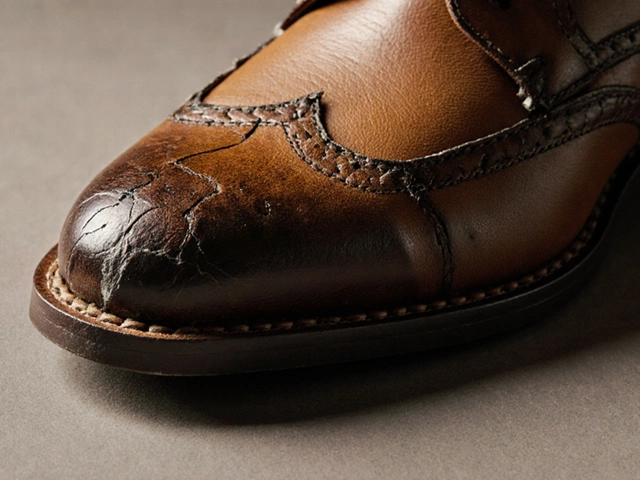
Buying a suit isn’t just about looking sharp-it’s about building something that lasts. Too many men buy a suit on sale for £150, wear it once to a wedding, and then it starts to pill, the shoulders sag, or the lining comes loose. A year later, they’re back at the store, confused why their suit doesn’t hold up. The truth? A good suit isn’t cheap, but it doesn’t have to break the bank either. The right amount to spend depends on how often you’ll wear it, where you’ll wear it, and what you expect it to do for you.
What You Get for £200-£350
This is the entry point for real tailoring. Brands like H&M, Zara, or Topman offer suits in this range that look fine on the hanger. But here’s the catch: they’re often made with synthetic blends-65% polyester, 35% wool-and stitched with cheap, machine-sewn seams. The lapels flop. The buttons pull. The fabric doesn’t breathe. You’ll sweat through a 90-minute meeting in summer, and the suit won’t recover its shape after hanging for a week.
But if you’re on a tight budget and need a suit for one or two events a year, this range works. Just know what you’re getting: a temporary solution. A £300 suit from a high-street brand might look good in photos, but it won’t survive three seasons of wear. If you’re a student, job hunting, or attending a single formal event, this is acceptable. But if you’re wearing it monthly, you’re setting yourself up for regret.
Where the Real Value Begins: £400-£700
This is the sweet spot for most working men. At this price, you’re starting to get real wool-70% or more-and better construction. Brands like Moss Bros, Suitsupply, and even J.Crew offer fully canvassed suits here. That means the chest area has a layer of horsehair and wool canvas between the outer fabric and the lining. It gives the suit structure, lets it drape naturally, and molds to your body over time.
These suits also have proper buttonholes, hand-sewn lapels, and real horn buttons. They’ll last five years if you take care of them. I’ve seen men in Bristol wear the same £550 suit to interviews, client meetings, and weddings for nearly six years. The fabric has faded slightly, sure-but it still looks polished. That’s because the construction holds up.
At this level, you’re not just buying fabric-you’re buying durability. A suit in this range will survive dry cleaning three times a year, occasional rain, and the natural wear of daily use. It’s the first suit you should think of as an investment.
£800-£1,500: The Gold Standard
If you work in finance, law, or any field where your appearance directly impacts credibility, this is where you should aim. Suits in this range come from Italian mills like Loro Piana, Ermenegildo Zegna, or British weavers like Fox Brothers. The wool is finer, softer, and more resilient. Some are made with superfine 150s or even 180s wool-so light you forget you’re wearing it, but strong enough to last decades.
These suits are often fully hand-canvassed. The stitching is done by skilled tailors who spend 15-20 hours on a single piece. The lining is silk or bemberg, not polyester. The pockets are hand-sewn. The lapels roll naturally because they’re not glued or fused.
One client I know-a solicitor in Bristol-bought a £1,200 suit in 2019. He’s worn it to court, board meetings, and his daughter’s wedding. He’s had it taken in twice, re-lined once, and dry-cleaned every four months. It still looks new. That’s the power of quality construction. You’re not just paying for a suit. You’re paying for a garment that adapts to you.
What You’re Really Paying For
Let’s break it down. When you pay more for a suit, you’re not just paying for the label. You’re paying for:
- Wool quality: 100% wool breathes. Blends trap heat and sweat. Look for labels that say "100% wool" or "super 120s+".
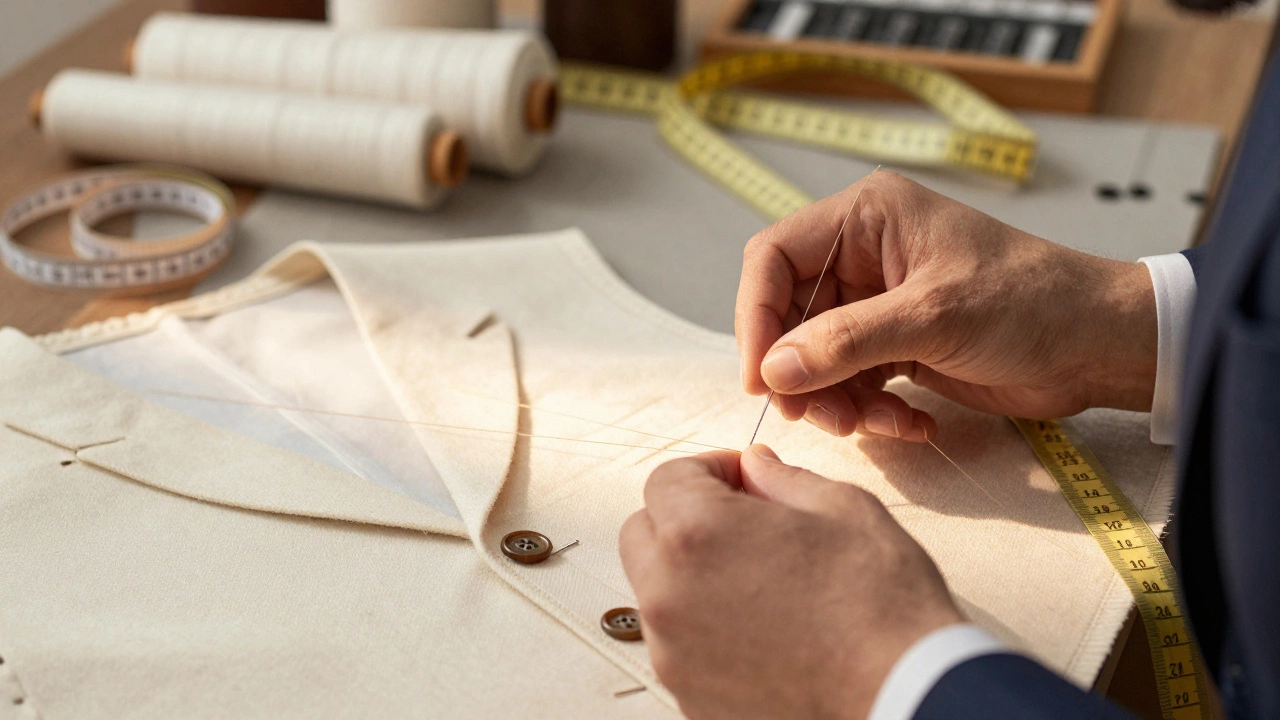
- Construction: Fused (glued) vs. canvassed (hand-stitched). Canvassed lasts longer and shapes to your body.
- Button quality: Real horn or mother-of-pearl buttons don’t crack or yellow. Plastic does.
- Stitching: Hand-stitched lapels and buttonholes mean the suit can be altered and repaired easily.
- Fit: A £600 suit that fits you perfectly is better than a £1,500 suit that doesn’t. Tailoring is non-negotiable.
Most men focus on the price tag. But the real value is in how the suit behaves over time. A £300 suit might cost you £600 over five years if you need to replace it twice. A £700 suit might cost you £140 a year-but it’ll still be in your closet in ten years.
When to Spend Less (and When to Skip the Suit Altogether)
Not everyone needs a traditional suit. If you work in tech, creative fields, or startups, a well-fitted blazer with dark chinos might be more appropriate-and more versatile. You don’t need to spend £700 on a full suit if you only wear it once a year.
For those rare occasions, consider renting. Companies like The Black Tux or local tailors in Bristol offer rental suits for £50-£80. You get a high-quality garment without the commitment. It’s smart if you’re attending a wedding, funeral, or formal event once every few years.
But if you’re interviewing for corporate roles, working in client-facing roles, or want to look authoritative in meetings, a suit is part of your professional toolkit. And like a good pair of shoes or a reliable watch, it should be something you own-not rent.
The One Rule That Matters
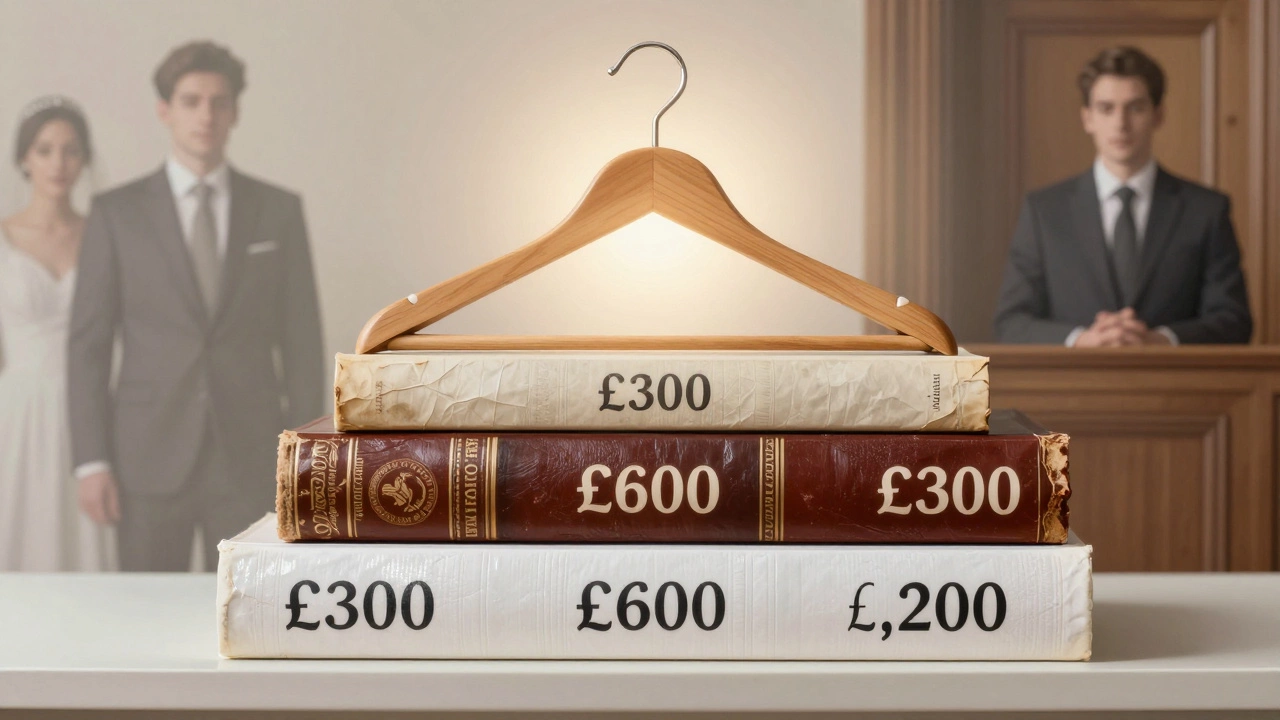
Here’s the simplest rule I’ve learned from tailors in Bristol and London: spend at least £500 if you plan to wear the suit more than five times in its life.
If you’re only wearing it twice? Rent or buy under £300. But if you’re wearing it monthly, quarterly, or for career advancement? Go for £500-£800. That’s the point where quality, durability, and fit start to align.
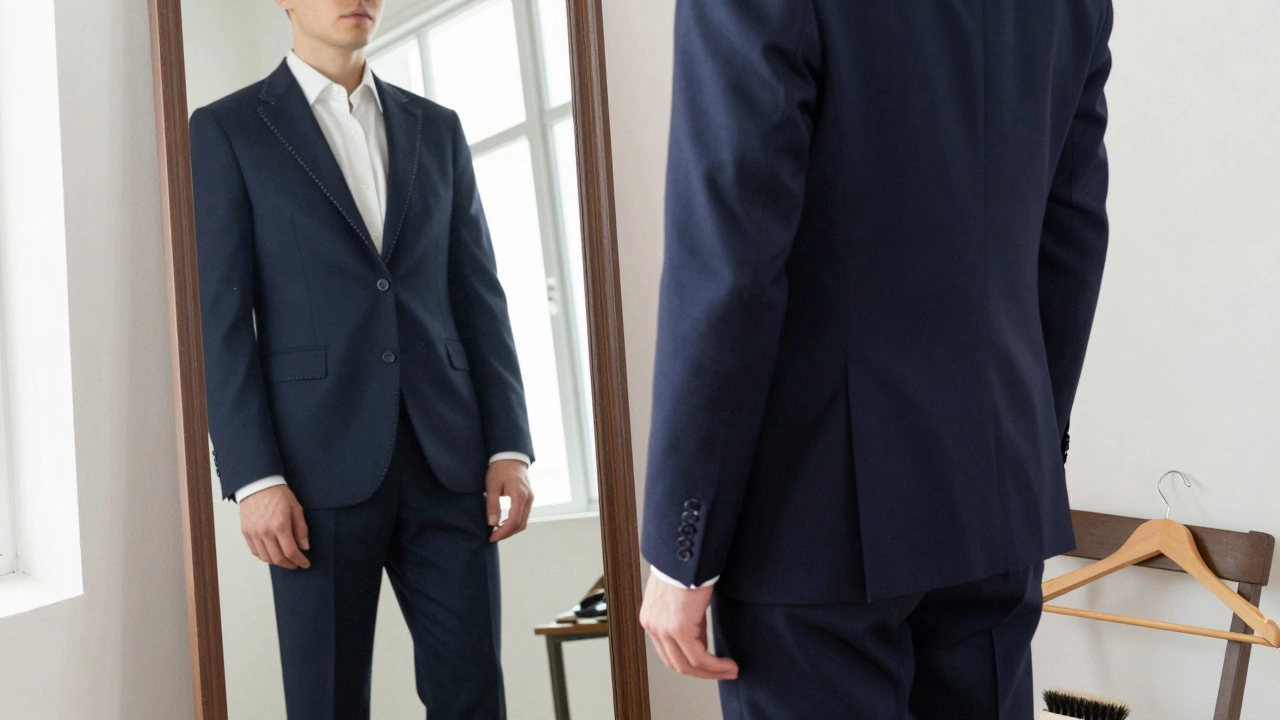
And don’t forget tailoring. Even the best suit off the rack needs adjustments. Budget an extra £50-£100 for taking in the waist, shortening the sleeves, and adjusting the shoulders. That’s not an extra cost-it’s part of the purchase.
Final Thought: It’s Not About the Price, It’s About the Plan
There’s no magic number. But there is a smart approach. Ask yourself: How often will I wear this? Where will I wear it? Will I need to replace it in two years? If the answer is "yes," then spend less. If the answer is "I want this to last," then spend more.
A suit is one of the few things in men’s fashion that improves with age. The more you wear it, the better it fits. The better it fits, the more confident you feel. And confidence? That’s priceless.
Is it worth spending over £1,000 on a suit?
Only if you wear it regularly-think weekly or biweekly-and you work in a field where your appearance directly affects your credibility, like law, finance, or high-end sales. Otherwise, £500-£800 gives you 90% of the benefit at a fraction of the cost. A £1,200 suit is an heirloom, not a necessity.
Can I get a good suit for under £200?
Yes, but only for one-off events. Suits under £200 are usually made with synthetic fabrics and fused construction, meaning they’ll lose shape after a few wears. They’re fine for a single wedding or interview, but don’t expect them to last. If you plan to wear it more than twice, skip this range.
Should I buy a suit online or in-store?
Buy in-store if you can. Fit is everything, and you need to feel the fabric, check the shoulder seam, and test the movement. But if you’re buying from a brand like Suitsupply or Indochino that offers free alterations and generous return policies, online can work. Just make sure you know your measurements and read reviews about fit.
What’s the most important part of a suit to get right?
The shoulders. If the shoulder seam doesn’t sit exactly where your arm meets your torso, nothing else matters. A suit with the wrong shoulder fit will look bulky, awkward, or off-balance-even if it’s made of the finest wool. Tailoring can fix the waist and length, but not the shoulders.
How often should I dry clean my suit?
Every 4-6 wears, max. Over-cleaning strips the natural oils from wool and wears out the fabric faster. Between cleanings, hang it on a wide wooden hanger for 24 hours after wearing to let it air out. Use a clothes brush to remove lint and dust. This keeps it looking fresh without the chemicals.
What color suit should I buy first?
Navy. It’s more versatile than black, works in both formal and business settings, and hides stains better than grey. It pairs with every shirt and tie you own. If you’re building your first suit, navy is the only smart choice.