What Shoes Are Allowed at Work? A Clear Guide for UK Offices and Jobs

- Cleo Fairchild
- 4 December 2025
- 0 Comments
Workplace Shoe Policy Checker
Check Your Shoe Compliance
Select your job type and shoe style to see if it meets UK workplace standards.
Select your job type and shoe style to see if they're allowed at work.
Ever shown up to work in your favourite sneakers, only to get a side-eye from HR? Or spent £80 on a pair of ‘professional’ shoes only to have your feet ache by 2 p.m.? You’re not alone. The question of what shoes are allowed at work isn’t just about style-it’s about safety, comfort, and fitting into a culture that doesn’t always spell it out.
There’s No One-Size-Fits-All Rule
What you can wear on your feet at work depends on your job, your industry, and your company’s actual written policy-if they even have one. A law firm in London won’t let you wear flip-flops, but a tech startup in Bristol might not care if you rock canvas sneakers. The truth? Most workplaces don’t have a detailed shoe policy. They just expect you to ‘look professional’.
That’s where confusion starts. ‘Professional’ means something different in a hospital than it does in a warehouse or a creative agency. So let’s break it down by real-world settings, not vague buzzwords.
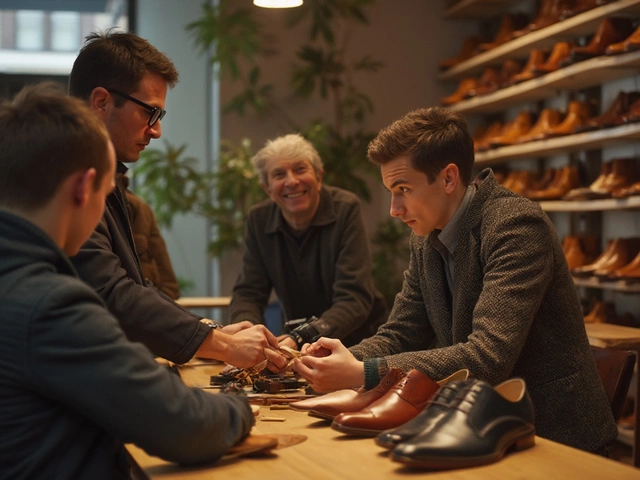
Office Jobs: Closed-Toe, Low-Heel, No Noise
If you sit at a desk all day, your shoe rules are usually relaxed-but not free-for-all. Most UK offices expect:
- Closed toes-no sandals, flip-flops, or open-back shoes
- Low or medium heels-2 inches or less is safe. Higher heels might be fine if you’re not on your feet all day, but they’re not required
- Minimal branding-no giant logos, neon colours, or sports shoes that look like you’re heading to the gym
- Clean and in good repair-scuffed loafers are okay. Worn-out trainers with holes? Not so much
Think: leather loafers, ballet flats, oxfords, or minimalist sneakers like Common Projects or Clarks Unstructured. These are the quiet winners. They look put together without shouting.
One manager in Manchester told me her team used to let people wear sneakers-until someone showed up in bright red Nike Air Jordans with glowing soles. The client meeting that day? Awkward. Now, sneakers are allowed only if they’re all-white or neutral, and no lights, no logos bigger than a postage stamp.
Healthcare and Labs: Safety First
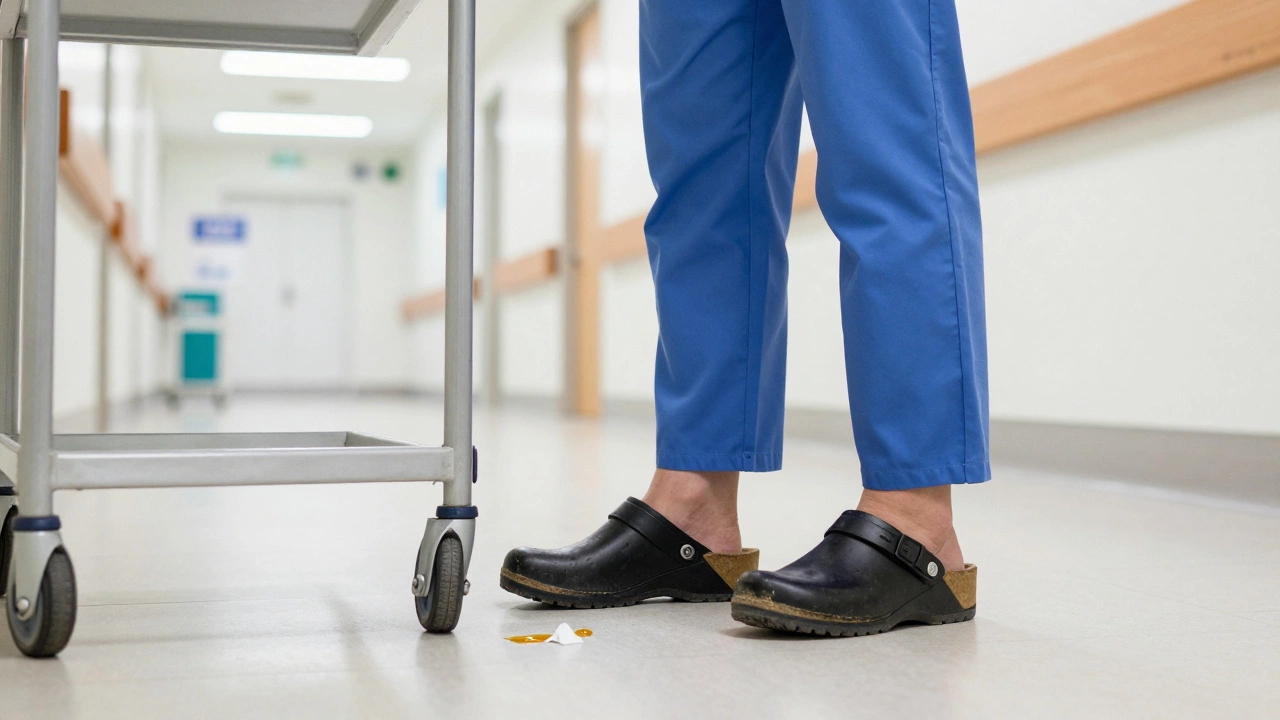
In hospitals, clinics, labs, or care homes, your shoes aren’t about fashion-they’re about survival. Here’s what’s required:
- Closed toes and closed backs-no slip-ons, even if they look smart
- Non-slip soles-you’re walking on wet floors, chemicals, or blood. Slippery soles = lawsuit waiting to happen
- Easy to clean-vinyl, rubber, or sealed leather. No fabric uppers that soak up fluids
- Steel or composite toe caps-if you’re in a hospital kitchen, lab, or moving heavy equipment
Brands like Crocs Professional, Birkenstock Pro, or Dansko are common. They’re not sexy, but they’re designed for 12-hour shifts. You’ll see nurses in them across the UK-and they’ll tell you, it’s not a trend. It’s a necessity.
One nurse in Bristol said: ‘I’ve worn the same pair of Dansko for five years. My feet don’t hurt. My hospital’s policy says ‘non-slip, closed-toe’. That’s it. I don’t need a 10-page guide.’
Warehouses, Factories, and Construction: Hard Hats, Hard Soles
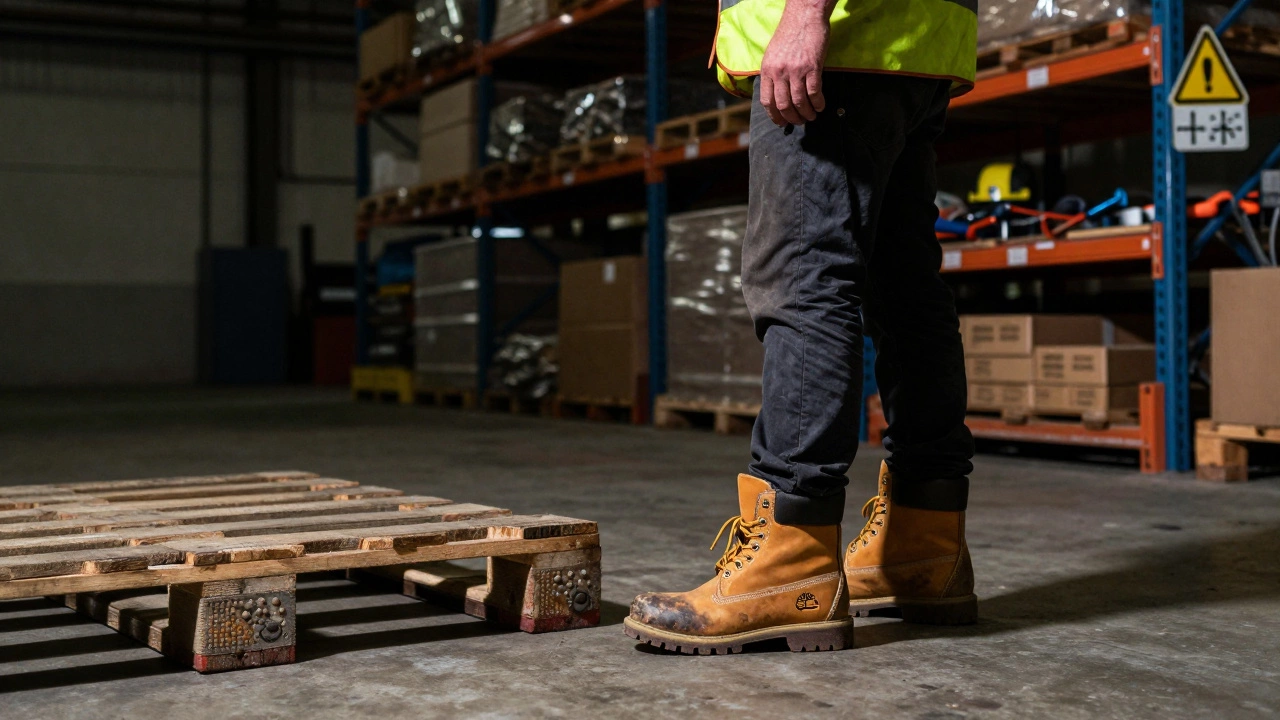
If you’re on a site, your shoes are part of your PPE-personal protective equipment. UK law (PUWER and PPE Regulations) requires:
- Steel or composite toe caps-to protect against falling tools or materials
- Penetration-resistant soles-no nails, glass, or sharp debris getting through
- Water-resistant or waterproof-especially if you’re outside or near liquids
- Electrical hazard resistance-if you’re working with wiring or machinery
Brands like Timberland PRO, Dr. Martens Industrial, or Keen Utility are standard. These aren’t fashion choices. They’re legally required. You won’t be allowed on site without them.
One warehouse supervisor in Birmingham said: ‘We’ve had people try to sneak in ‘cool’ boots. One guy had leather boots with a metal toe that looked like a cowboy boot. We said no. The toe was too narrow. It wouldn’t pass the impact test. He had to go buy the right ones.’
Restaurants and Retail: Clean, Safe, and Non-Slip
Whether you’re serving coffee or stocking shelves, your shoes need to handle spills, long hours, and constant movement.
- Non-slip soles-mandatory in kitchens and food prep areas
- Closed toes-no open sandals, even if it’s summer
- Easy to wipe clean-no suede, no fabric that stains
- Supportive-you’re on your feet 8+ hours. Cushioning matters
Many chains like Starbucks, Tesco, or Nando’s have their own uniform policies. Some provide shoes. Others just say: ‘Non-slip, closed-toe, black or navy only.’
One barista in Bristol said: ‘I bought three pairs of shoes before I got it right. The first pair had a rubber sole but was too stiff. The second had cushioning but the heel slipped. The third? A pair of Skechers Work, black, non-slip, and they’ve lasted two years.’
What’s Always a No?
Some shoes are banned almost everywhere, no matter the job:
- Flip-flops and thongs-too unsafe, too casual
- High stilettos-risk of injury on uneven floors or in emergencies
- Slippers or house shoes-even if they’re ‘fancy’
- Shoes with wheels-yes, they exist. No, you can’t wear them to work
- Boots with spikes or metal cleats-unless you’re on a construction site
Even if your company doesn’t say it outright, these are red flags. HR won’t say ‘no’-they’ll just ask you to change. And if you refuse? That’s a disciplinary issue.
How to Find Out What’s Allowed
Most people guess. That’s a mistake.
Here’s how to get the real answer:
- Check your employee handbook-if you have one. Look under ‘Dress Code’ or ‘Uniform Policy’
- Ask HR or your manager-don’t assume. Say: ‘Just to be safe, could you clarify the footwear policy?’
- Look at what others wear-not the boss’s shoes. Look at the people who’ve been there five years. What’s their go-to?
- When in doubt, choose conservative-black leather loafers or clean black sneakers are safe bets in 90% of UK workplaces
One new hire in a London design studio told me she asked HR about sneakers. They said: ‘As long as they’re not trainers from the gym, and they’re clean, you’re fine.’ She bought a pair of Allbirds. They’ve never been questioned.
Comfort Is Part of the Policy
Here’s something no one tells you: if your shoes hurt, you’re less productive. You make more mistakes. You’re more likely to take sick days.
Forward-thinking companies know this. Some now offer shoe allowances-£100-£200 a year-to buy supportive, safe footwear. Others have ‘shoe days’ where you can wear your own shoes if they meet safety standards.
Don’t just buy shoes because they look right. Buy them because they feel right. Look for:
- Arch support
- Cushioned midsole
- Roomy toe box
- Lightweight materials
Brands like Ecco, Clarks, and Rockport aren’t just for older people. They’re designed for people who stand for hours. You don’t need to spend £200-but don’t go for £20 either. Cheap shoes break fast and ruin your feet.
When Policies Change
Workplaces evolve. Hybrid work means some offices are loosening rules. Others are tightening them after an incident.
If your company suddenly bans sneakers, don’t assume it’s personal. Maybe someone slipped. Maybe a client complained. It’s not about you-it’s about risk.
Adapt. Buy one pair of compliant shoes. Keep your favourites for weekends. Your feet will thank you.
Final Rule: When in Doubt, Cover Your Toes
There’s no magic shoe that works everywhere. But there is one simple rule: if your toes are exposed, you’re probably breaking the rules.
Choose closed-toe, non-slip, clean, and neutral. That covers 95% of UK workplaces-from banks to bakeries, from offices to operating theatres.
Work shoes aren’t about looking fancy. They’re about showing up safely, comfortably, and professionally. And that’s worth more than any trend.
Can I wear sneakers to work in the UK?
Yes, in many UK workplaces-especially tech, creative, and hybrid offices-as long as they’re clean, all-black or neutral, and don’t look like gym shoes. Avoid loud logos, glowing soles, or worn-out soles. If your job involves walking on wet floors, heavy equipment, or client meetings, stick to closed-toe loafers or professional-style sneakers like Clarks or Ecco.
Are open-toe shoes ever allowed at work?
Rarely. Open-toe shoes are banned in healthcare, food service, construction, and most offices due to safety and professionalism rules. Even in summer, most UK workplaces expect closed toes. Some very casual startups or outdoor roles might allow them, but you’ll need to check the policy first. When in doubt, leave them at home.
Do I need to buy special work shoes?
It depends on your job. If you’re in an office, your regular leather shoes or clean sneakers are fine. If you’re in healthcare, warehousing, or retail, yes-you need shoes designed for safety and comfort. Look for non-slip soles, closed toes, and support. Brands like Dansko, Crocs Professional, or Timberland PRO are made for these roles. Spending £60-£100 on the right pair saves you from foot pain and injury.
Can my employer force me to buy specific shoes?
Yes, if the shoes are required for safety or health reasons (like steel-toe boots in construction or non-slip shoes in a kitchen). Employers must provide these if they’re classified as PPE. For general dress codes (like ‘black closed-toe shoes’), they can require you to buy them-but they must give you reasonable notice and time to comply. If they demand expensive branded shoes, you can ask if they offer an allowance.
What if I have a disability and need special footwear?
Under the UK Equality Act 2010, employers must make reasonable adjustments. If you need orthopaedic shoes, arch supports, or wider fits due to a disability, your employer must accommodate you. You may need a letter from your doctor, but you can’t be denied access to work because of your footwear needs. Most companies will work with you-especially if you explain how it affects your ability to do your job safely.