Should You Wear Socks With Leather Shoes? The Complete Guide to Comfort and Style
- Cleo Fairchild
- 28 June 2026
- 0 Comments
Leather Shoe Sock Compatibility Calculator
Wearing the wrong socks with leather shoes can lead to blisters, odor, and damaged footwear. Use this calculator to determine how well your current sock choice protects your feet and your investment.
There is a specific kind of horror that comes with peeling off your leather shoes footwear made from tanned animal hide known for durability and style after a long day. Your feet are slick with sweat, the inside of the shoe feels damp, and you can already smell the faint odor of regret. If you have ever debated skipping socks to keep things "cool" or "minimalist," you need to stop right there. Wearing socks isn't just a fashion rule; it is a biological necessity for keeping your feet healthy and your expensive footwear intact.
The Science of Sweat and Skin
Your feet are sweat factories. Each foot contains roughly 250,000 sweat glands. When you walk, run, or stand for hours, these glands pump out moisture to cool your body down. Without a barrier, that sweat goes directly into the lining of your leather shoes. Leather is porous. It absorbs moisture like a sponge. Once the leather gets saturated with sweat, two bad things happen: the material breaks down faster, and bacteria start to party.
Bacteria love warm, moist environments. They feed on the dead skin cells and sweat trapped in your shoes. This bacterial growth is what causes foot odor. It is not just "smelly feet"; it is a microbiome issue. By wearing socks, you create a sacrificial layer. The sock absorbs the sweat and traps the bacteria. At the end of the day, you throw the sock in the wash. The bacteria die. Your shoes stay dry. Your feet stay fresh. It is simple hygiene engineering.
Why No-Show Socks Are Not the Answer
You might be thinking, "But I hate seeing my ankle socks when I sit down." I get it. We all want that clean, sockless look. However, standard no-show socks low-cut socks designed to remain hidden inside shoes often fail at their primary job. Most cheap no-show socks are too short. They slip down into the shoe as you walk. Suddenly, your heel is rubbing directly against the leather. This friction causes blisters. It also means the back of your foot-the part that sweats the most-is exposed to the shoe interior.
If you must go the low-profile route, look for heel-grip socks socks with silicone strips to prevent slipping. These have a small band of fabric that covers the heel and stays put. But even then, they offer less protection than a standard crew sock. For formal occasions where appearance matters more than maximum comfort, they are a compromise. For daily wear, they are often insufficient.
Fabric Matters More Than Length
Not all socks are created equal. If you wear cotton socks with your leather shoes, you are setting yourself up for failure. Cotton absorbs moisture but does not dry quickly. It holds the wetness against your skin. This leads to maceration-when your skin turns white and wrinkly, becoming prone to fungal infections like athlete's foot.
You need materials that wick moisture away from the skin. Here is what works:
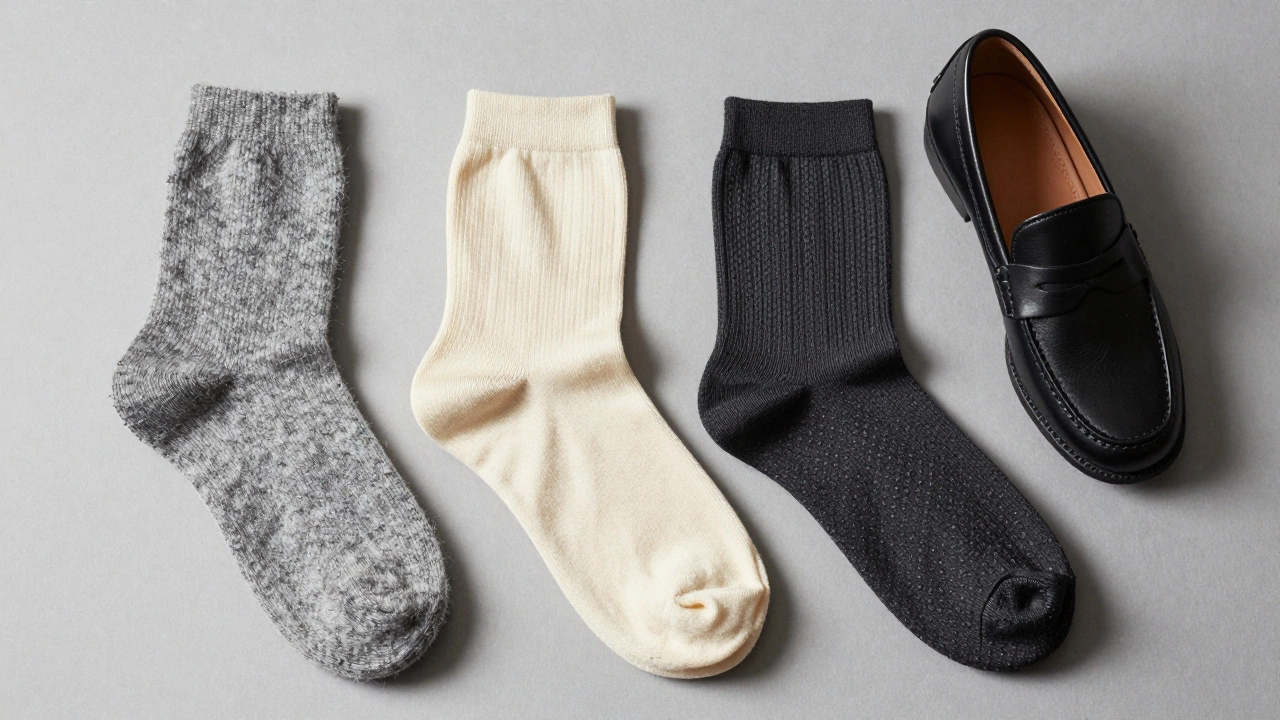
- Merino Wool: Yes, wool. Merino wool is temperature-regulating. It keeps your feet warm in winter and cool in summer. It naturally resists odors because it inhibits bacterial growth. A pair of thin merino wool socks can last days without smelling.
- Bamboo Viscose: Bamboo is incredibly soft and highly absorbent. It dries faster than cotton and has natural antimicrobial properties. It feels silky against the skin, reducing friction.
- Synthetic Blends: Look for socks with polyester or nylon mixed with spandex. These are great for active days. They pull sweat away from the foot and let it evaporate through the shoe (if the shoe allows).
Avoid 100% cotton for heavy-duty wear. Save the cotton for lounging around the house.
Protecting Your Investment
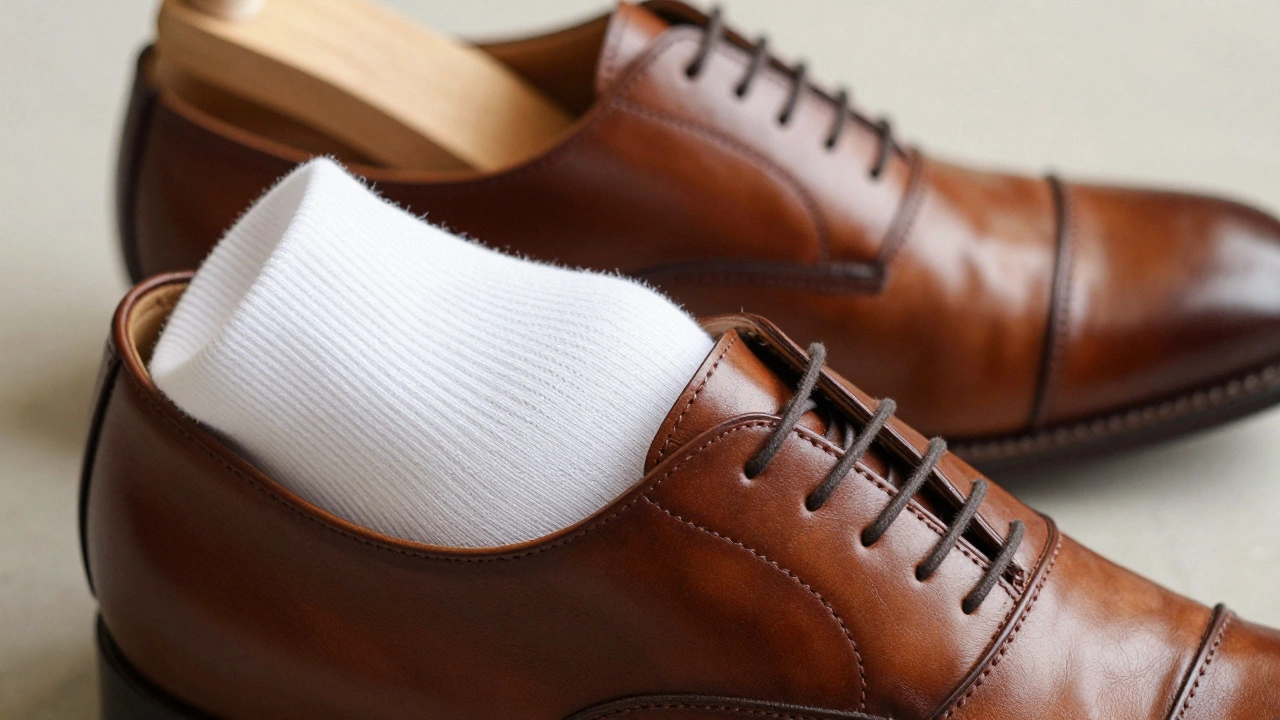
Leather shoes are an investment. A good pair of Oxford shoes or loafers can cost hundreds of pounds. They require care. One of the biggest enemies of leather is salt. In winter, road salt mixes with rain and snow, creating a corrosive paste. If you walk in salted streets without socks, that salt transfers to your feet and then into the shoe. Salt stains leather and makes it brittle over time.
Socks act as a filter. They catch the dirt, salt, and debris before it reaches the delicate inner lining of the shoe. Additionally, sweat contains acids. Over time, acidic sweat eats away at the stitching and the glue holding the sole to the upper. By managing moisture with proper socks, you extend the life of your shoes significantly. You will spend less on resoles and repairs.
| Material | Moisture Wicking | Odor Resistance | Best For |
|---|---|---|---|
| Merino Wool | Excellent | High | All-day wear, travel, variable weather |
| Bamboo | Very Good | Medium-High | Summer, sensitive skin, casual wear |
| Cotton | Poor | Low | Short durations, indoor use only |
| Synthetic Blend | Good | Medium | Active use, gym-to-work transitions |
The Social Aspect
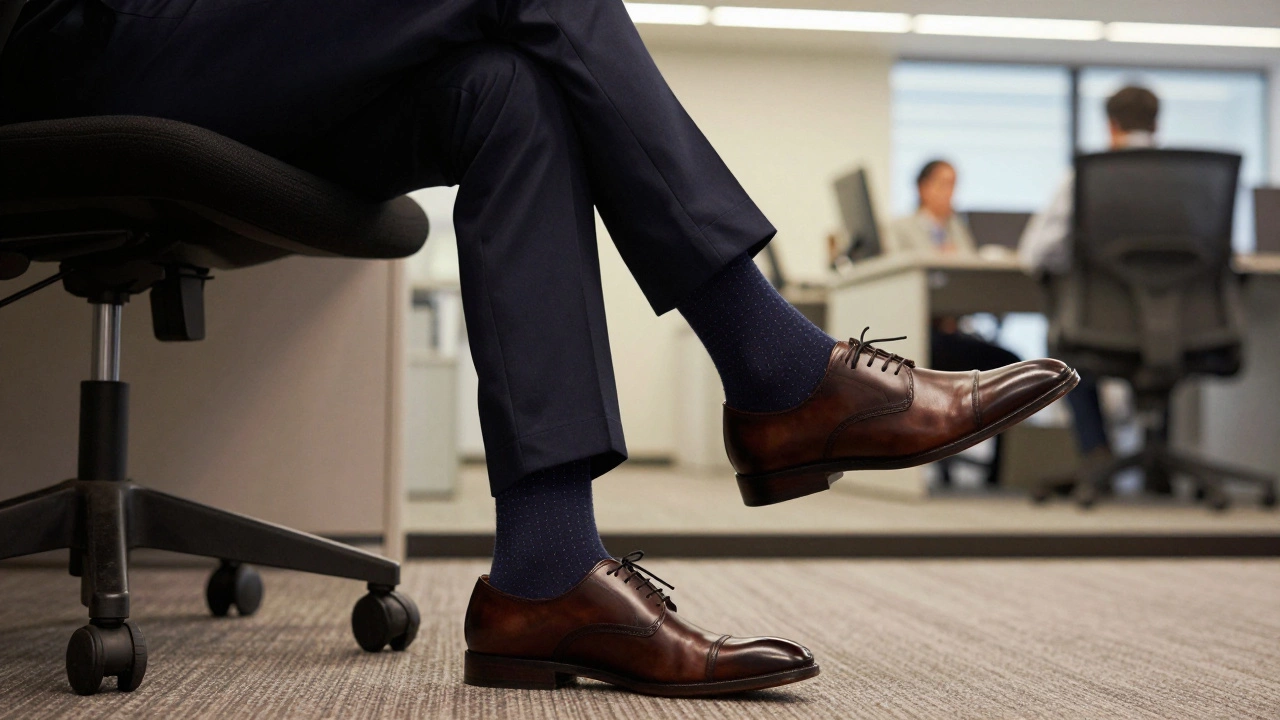
Let's talk about etiquette. In professional settings, visible ankles can sometimes signal a lack of attention to detail. While trends change, the standard business attire still expects socks to cover the skin between the shoe and the trouser leg. This prevents any accidental exposure when you cross your legs or sit down. It looks polished. It shows respect for the occasion.
Furthermore, consider the person sitting next to you on the bus or in the office. Foot odor is not a private problem. It travels. Wearing quality socks is a courtesy to those around you. It is a small act of consideration that maintains social harmony. Nobody wants to breathe in the scent of someone else's unwashed feet.
How to Choose the Right Fit
Even the best sock fails if it fits poorly. Socks should be snug but not tight. Tight socks cut off circulation, leading to cold feet and discomfort. Loose socks bunch up, creating pressure points and blisters. Check the toe seam. A flat, seamless toe closure reduces irritation. Many people don't realize that rough seams can cause calluses over time.
Also, consider the height. For dress shoes, opt for mid-calf or crew length. This ensures coverage when seated. For loafers or boat shoes, a lower cut might work, but ensure it stays up. Test your socks by walking around your house. If they slide down after ten minutes, they are not suitable for all-day wear.
Maintaining Freshness
Washing your socks correctly is part of the equation. Use hot water to kill bacteria. Avoid fabric softeners on athletic or wool socks, as they coat the fibers and reduce wicking ability. Rotate your shoes. Never wear the same pair of leather shoes two days in a row. Give them 24 hours to air out and dry completely. Insert cedar shoe trees to absorb residual moisture and maintain shape.
If you find yourself constantly dealing with sweaty feet despite wearing socks, you might have hyperhidrosis. In this case, consult a podiatrist. They can recommend clinical-strength antiperspirants for your feet. But for most people, the right sock combined with proper shoe rotation solves 90% of the problem.
Final Thoughts on Comfort
Comfort is subjective, but health is objective. You might feel "freer" without socks for a few hours. But the long-term cost includes damaged shoes, potential fungal infections, and social embarrassment. Investing in high-quality socks is one of the cheapest ways to improve your daily comfort and protect your wardrobe. Treat your feet well, and they will carry you everywhere you need to go.
Can I wear leather shoes without socks if I use powder?
Foot powder can help absorb some moisture, but it is not a substitute for socks. Powder clumps up with sweat and can create a gritty texture inside your shoe. It also does not provide a barrier against friction, so you are still at risk for blisters. Socks offer both moisture management and physical protection.
What color socks should I wear with brown leather shoes?
For brown shoes, you have more flexibility. Navy, grey, olive green, and patterned socks work well. Avoid black socks with light brown shoes, as the contrast can be jarring. Dark brown shoes pair nicely with charcoal or burgundy socks. The key is to coordinate with your trousers, not just the shoes.
Do no-show socks damage leather shoes?
Indirectly, yes. Because no-show socks often slip down, they expose the heel to direct contact with the shoe. This increases sweat absorption in the rear part of the shoe and raises the risk of blisters. Over time, the concentrated moisture can degrade the leather lining faster than full-coverage socks would.
How often should I replace my socks?
Replace socks when they lose elasticity, develop holes, or no longer fit snugly. Generally, everyday socks last 6-12 months with regular washing. High-quality merino wool socks may last longer due to their durability. Always wash them promptly after wear to prevent permanent odor setting.
Is it okay to wear athletic socks with dress shoes?
It depends on the design. Thick, padded athletic socks are too bulky for most dress shoes and can cause discomfort. However, thin, seamless athletic-style socks made from synthetic blends can work if they fit well. Ensure they are dark-colored and do not show above the shoe line when sitting.