Should T-Shirts Fit or Loose? The Real Guide to the Perfect Fit
- Cleo Fairchild
- 26 February 2026
- 0 Comments
T-Shirt Fit Calculator
How Your Measurements Determine Your Perfect Fit
This calculator uses the principles from the article to determine if you should wear a fitted or loose t-shirt based on your measurements. For best results, measure your existing t-shirt or use your body measurements.
Your Recommended Fit
Ever bought a t-shirt that looked great on the model, only to find it hanging off you like a bedsheet-or squeezing you like a sausage casing? You’re not alone. The debate between t-shirt fit and loose t-shirts isn’t about trends. It’s about function, comfort, and how you actually live your day.
Why Fit Matters More Than You Think
A t-shirt that fits right doesn’t just look better. It moves with you. It doesn’t ride up when you reach for something on a high shelf. It doesn’t cling awkwardly when you sit down. And it doesn’t get caught in your belt buckle when you pull your pants up. Most people don’t realize that t-shirt fit is determined by three things: shoulder width, chest measurement, and length. If any one of those is off, the whole thing feels wrong-even if the size label says "medium." For example, if your shoulders are wider than the seam on the shirt, it’ll look like you’re wearing a too-small tank top. That’s not because you’re big. It’s because the shirt was cut for someone with narrower shoulders.What "Fitted" Really Means
A fitted t-shirt isn’t tight. It’s not a compression shirt. It’s designed to follow your body’s natural shape without pulling or bunching. Think of it like a second skin-but not the kind that makes you sweat more. Here’s how to tell if a fitted t-shirt is right:- The shoulder seams sit right at the edge of your shoulder bones.
- You can pinch about 1 inch of fabric on your side without pulling.
- The hem hits just below your waistband, not halfway down your hips.
- No bulging around the chest or stomach-just smooth lines.
When Loose Is Better
Loose t-shirts aren’t lazy. They’re intentional. A relaxed fit works when:- You’re wearing it as an overshirt over a tank or long-sleeve tee.
- You’re in a hot climate and need airflow.
- You’re sitting at a desk all day and need freedom of movement.
- You’re layering under a jacket or vest.
The Body Type Myth
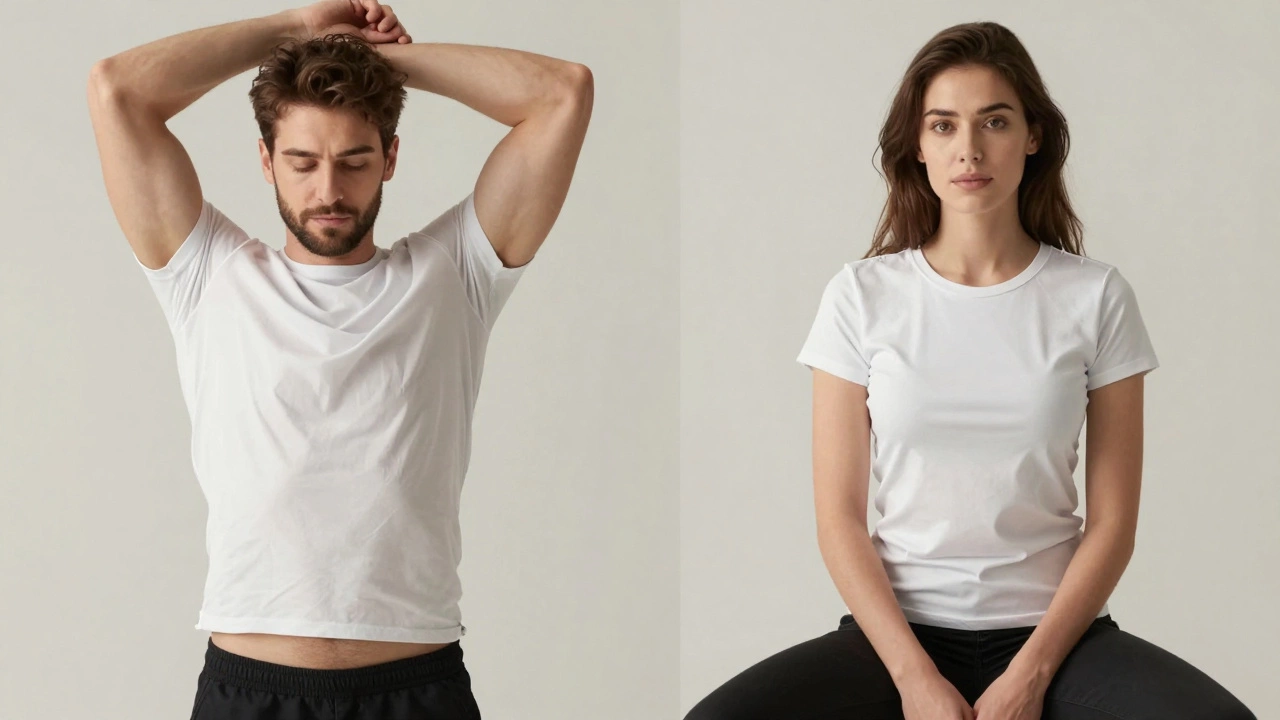
You’ve heard it: "Slim guys should wear fitted. Big guys should go loose." That’s outdated advice. A tall, lean person can look great in a relaxed fit if the proportions are right. A shorter, stockier person can pull off a fitted tee if it’s cut for their torso length. The real rule? Match the cut to your proportions, not your size label. Try this: Stand in front of a mirror in your underwear. Put on a fitted t-shirt. Then put on a loose one. Which one makes your shoulders look even? Which one hides your waistline? Which one makes you look like you’re wearing a shirt instead of a bag? You’ll know the answer immediately.What Happens When Fit Goes Wrong
Bad fit has consequences. A t-shirt that’s too tight? It wrinkles across the chest. It pulls at the seams. It shows every curve-even the ones you don’t want to show. And if you’re active? You’ll be constantly adjusting it. Too loose? It looks sloppy. It gets caught on chairs. It looks like you didn’t care enough to pick the right size. And in photos? You look like you’re wearing a tent. I’ve seen guys wear XXL t-shirts because they thought "bigger = more comfortable." But when the sleeves hang past their knuckles and the hem covers half their thighs, it doesn’t look cool. It looks like they gave up.How to Measure Yourself (Without a Tape Measure)
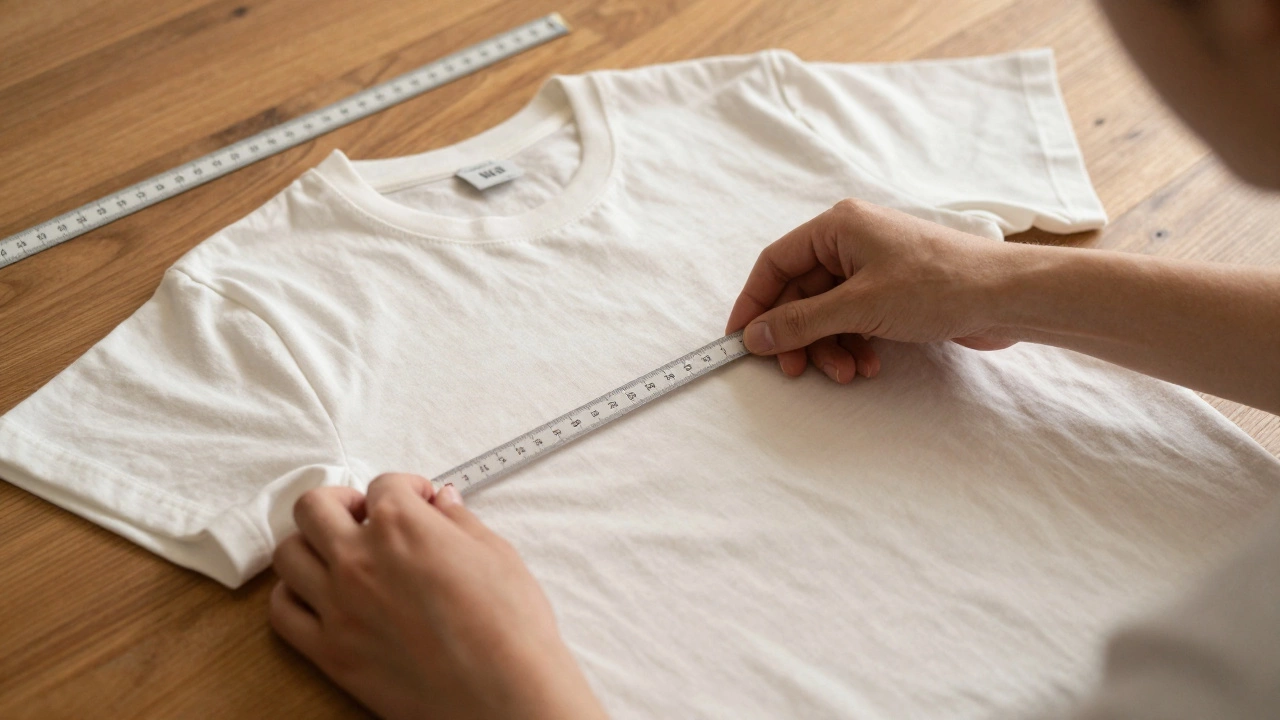
You don’t need to buy a measuring tape. Here’s how to find your fit using what you already own:- Take your favorite t-shirt-the one that fits just right.
- Lay it flat on a table.
- Measure from armpit to armpit across the chest. That’s your chest width.
- Measure from the shoulder seam to the bottom hem. That’s your length.
- Measure the sleeve from the shoulder seam to the cuff.
Fit by Occasion
Your t-shirt shouldn’t be the same for work, gym, date night, and running errands.- Work (casual office): Fitted, but not skin-tight. Cotton or cotton-blend. No logos.
- Workout: Slightly fitted, moisture-wicking fabric. No baggy sleeves.
- Date night: Fitted, darker wash, clean hem. Avoid graphic prints unless they’re subtle.
- Weekend errands: Loose, breathable, comfortable. You’re not trying to impress anyone.
- Layering: Fitted base layer. Loose outer layer. Don’t mix two loose layers.
What to Avoid
Here are three common mistakes:- Buying based on size alone: A size M in one brand can be a size L in another. Always check measurements.
- Wearing t-shirts past their shelf life: If the neckline is stretched out, the fabric is thin, or the hem is curling, toss it. It’s not "vintage." It’s worn out.
- Trying to hide your body: A loose t-shirt shouldn’t be a disguise. It should enhance how you move and feel.
Final Rule: Fit Is Personal
There’s no universal "perfect" fit. What works for someone else might look off on you. The goal isn’t to look like a magazine model. It’s to look like yourself-comfortable, confident, and not stuck in a shirt that doesn’t belong to you. Try on multiple fits. Don’t just grab the first one you see. Compare them side by side. Move around. Sit down. Reach up. See how it feels. Your t-shirt should feel like nothing. And if it does? You’ve nailed it.Should I buy t-shirts one size up for a looser fit?
Only if the brand runs small. Most modern t-shirts are cut true to size. Buying one size up often makes the shirt look baggy in the wrong places-like the sleeves or shoulders-instead of giving you a clean relaxed fit. Look for brands that offer "relaxed" or "oversized" cuts instead of just sizing up.
Can I wear a fitted t-shirt if I have a belly?
Yes-especially if it’s cut for your torso length. A well-fitted t-shirt doesn’t mean skin-tight. It means the fabric follows your shape without pulling or wrinkling. If the shirt is too short, it’ll ride up. If it’s too tight across the stomach, it’ll create unflattering lines. Look for longer cuts and stretch fabrics. Brands like Madewell and Aerie offer fitted tees designed for different body shapes.
Is a loose t-shirt always more comfortable?
Not necessarily. A loose t-shirt that’s too long or too wide can feel bulky and unstructured. Comfort comes from balance. The right amount of room lets you move without restriction, but too much fabric creates drag and gets caught on things. Look for fabrics with a little stretch and a cut that ends at your hip bone-not mid-thigh.
Do I need different t-shirts for different seasons?
Yes, but not because of fit. In summer, go for lightweight cotton or linen blends that breathe. In winter, layer a fitted long-sleeve tee under a jacket instead of a thick, bulky short-sleeve tee. The fit stays the same-what changes is the fabric weight and how you layer it.
How do I know if a t-shirt is too long?
Stand straight and let your arms hang naturally. If the hem hits below your hip bone-especially if it covers your pants’ front pocket-it’s too long. A good length ends right at the top of your hip bone or just slightly below. Anything longer starts to look like a tunic or a shirt meant for lounging, not everyday wear.