Safety Shoes vs. Work Shoes: Key Differences Explained
- Cleo Fairchild
- 22 October 2026
- 0 Comments
Safety Shoe Selector
Not sure if you need certified safety footwear? Answer the questions below to find out what type of shoe meets OSHA and ASTM standards for your specific work environment.
Required Features Checklist:
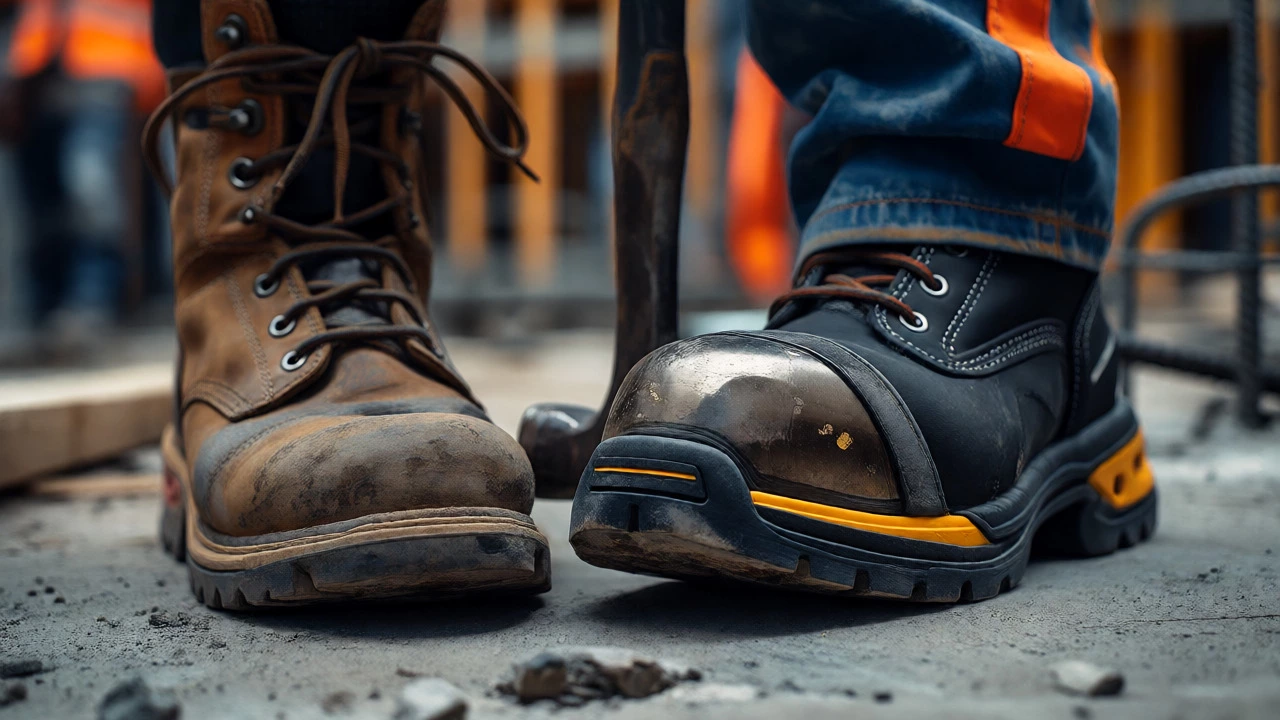
You walk into the hardware store looking for boots to wear on your construction site. The clerk points you toward a rugged pair of leather boots and says, "These are great work shoes." You grab them, head home, and realize later that they lack a protective toe cap. You just made a mistake that could cost you a toe if a hammer falls from a ladder. This confusion is incredibly common. People use work shoes and safety shoes interchangeably, but they serve fundamentally different purposes. One focuses on comfort and durability for general labor; the other prioritizes protection against specific hazards defined by strict industrial standards.
If you are buying footwear for a job site, getting this distinction wrong isn't just an inconvenience-it's a safety violation. OSHA regulations in the United States, for example, require employers to assess workplace hazards and provide appropriate Personal Protective Equipment (PPE). Wearing non-safety-rated work shoes in a zone requiring impact protection can lead to fines for your employer and injuries for you. So, what actually separates a sturdy pair of work boots from certified safety footwear? It comes down to engineering, certification, and intended hazard mitigation.
The Core Definition: Durability vs. Protection
Let's clear up the terminology first. Work shoes are designed for durability and comfort during long shifts. Think of a carpenter wearing slip-resistant sneakers or a nurse wearing clogs. These shoes protect your feet from fatigue, minor abrasions, and slippery floors. They might have thick soles and reinforced stitching, but they do not necessarily meet rigorous impact resistance standards.
Safety shoes, also known as safety-toe boots or steel-toed shoes, are engineered specifically to protect against severe physical hazards. These include falling objects, compression forces, punctures from sharp debris, electrical shocks, and extreme temperatures. Their defining feature is the protective toe cap, which must withstand a minimum impact energy of 75 foot-pounds and a compression load of 2,500 pounds according to ASTM F2413 standards.
The key difference lies in the certification. A work shoe might be tough, but unless it carries a specific rating label inside the tongue or heel, it is not safety equipment. Safety shoes undergo destructive testing to prove they can save your toes. Work shoes are tested for wear resistance and comfort over time.
Understanding the Toe Cap: Steel, Composite, and Alloy
The most visible difference-and the one most people focus on-is the toe cap. In safety shoes, this component is mandatory. In standard work shoes, it is optional or entirely absent.
Traditional steel toe caps offer the highest level of protection against heavy impacts. They are dense, heavy, and conduct temperature and electricity. If you work in a freezing warehouse, your toes will feel cold quickly with steel caps. If you work around live electrical circuits, steel can be a conductor, posing a shock risk unless the shoe has additional insulation ratings.
Modern alternatives like composite toe caps use materials such as carbon fiber, fiberglass, or Kevlar. These caps are lighter than steel and do not set off metal detectors, making them ideal for airport security personnel or military contractors. Crucially, composites are non-conductive, providing better electrical hazard (EH) protection without adding weight. However, they are generally bulkier because they need more material to achieve the same strength as steel.
Aluminum toe caps strike a middle ground. They are lighter than steel and offer similar protection levels but are still conductive. They are popular in manufacturing environments where weight matters but electrical hazards are minimal.
Certification Standards: How to Spot Real Safety Gear
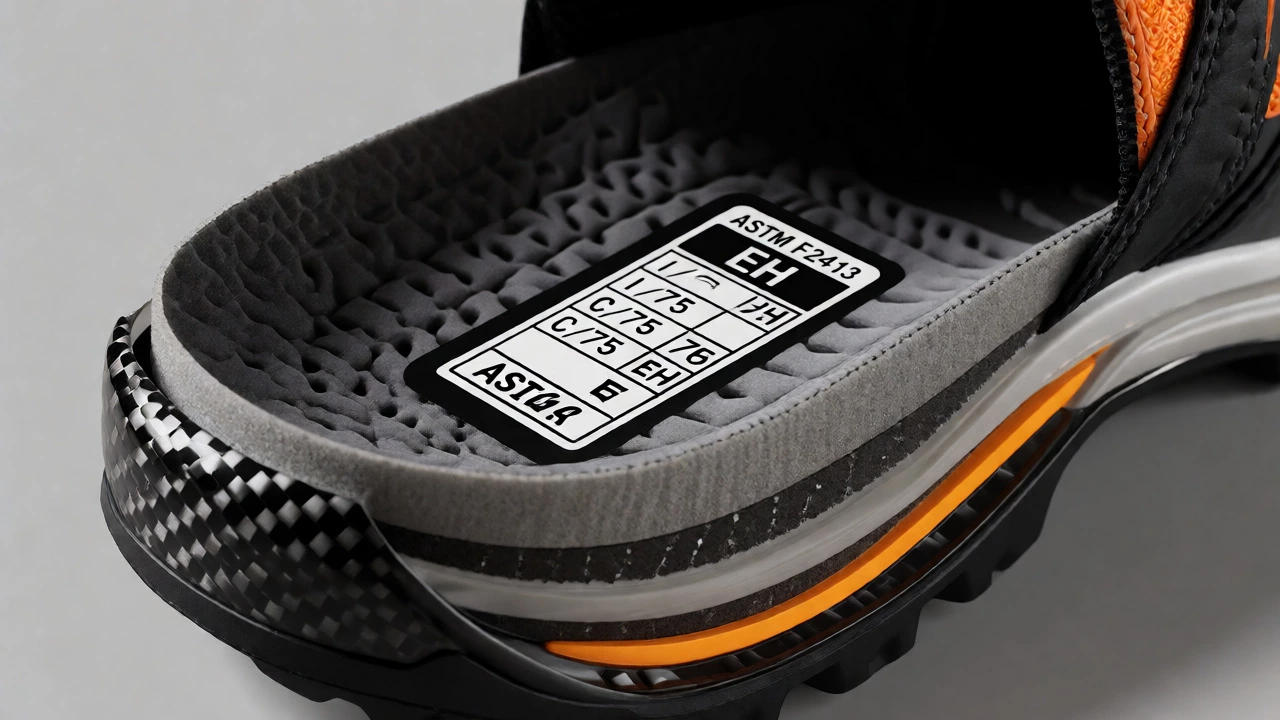
You cannot rely on marketing terms like "tough" or "heavy-duty." You need to look for specific codes printed inside the shoe. In North America, the primary standard is ASTM F2413. This standard dictates how shoes are tested and labeled.
When you inspect a pair of safety shoes, look for a tag that lists performance claims. Here is what those codes mean:
- I/75 C/75: Impact resistance of 75 foot-pounds and Compression resistance of 2,500 pounds. This is the baseline for most industrial jobs.
- SD (Static Dissipative): Controls static electricity buildup, critical for electronics assembly lines to prevent damage to sensitive components.
- EH (Electrical Hazard): Provides secondary protection against open circuits up to 600 volts in dry conditions. Note: This does not make the shoe insulated rubber boots; it’s a supplementary layer.
- M (Metatarsal Guard): Protects the metatarsal bones at the top of the foot from crushing injuries.
- PR (Puncture Resistance): A midsole plate prevents nails or glass from piercing through the bottom of the shoe.
Standard work shoes rarely carry these full designations. A slip-resistant work sneaker might mention "oil-resistant sole," but it won’t claim I/75 C/75 impact protection because it hasn’t been tested for it.
Hazard-Specific Features Beyond the Toe
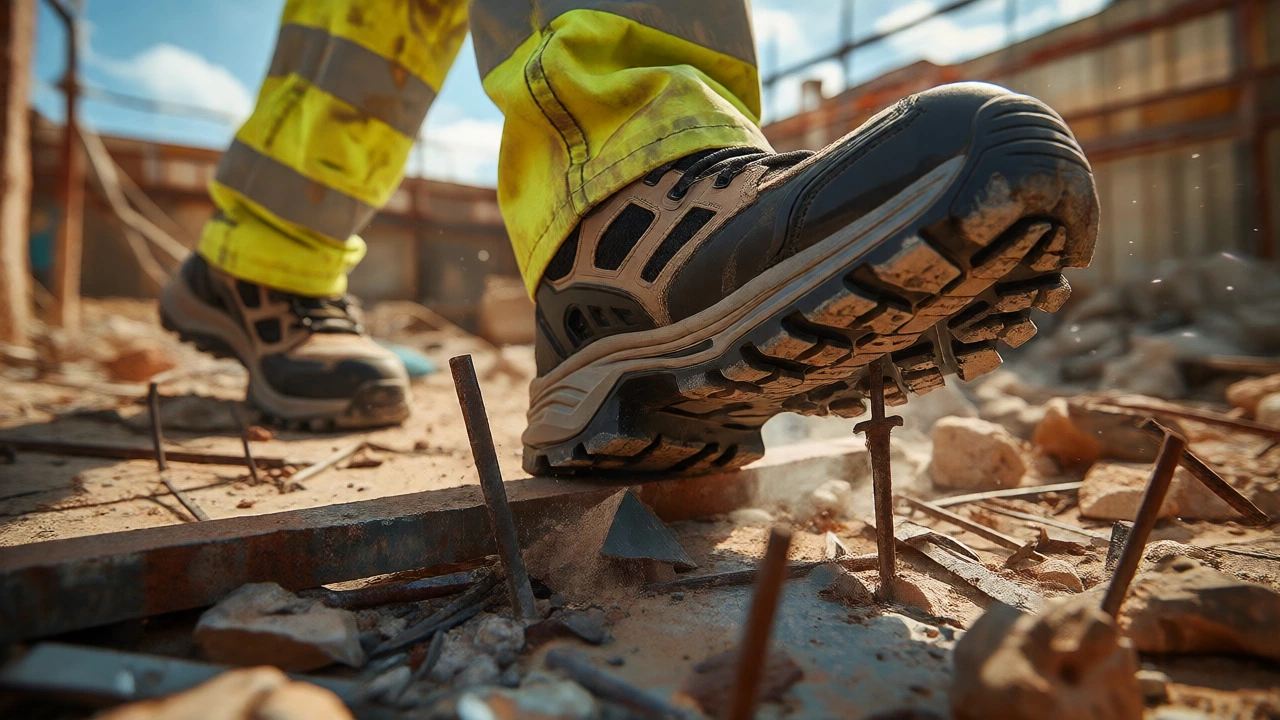
Safety shoes address hazards that regular work shoes ignore. Consider puncture-resistant midsoles. Construction sites are littered with rusty nails, rebar ends, and broken glass. A thin rubber sole on a fashion-forward work boot offers zero defense against a six-inch nail driving upward through the arch. Safety shoes integrate a steel or composite plate between the insole and outsole to stop this.
Another critical feature is slip resistance. While many work shoes market themselves as slip-resistant, safety standards often test for specific coefficients of friction on oily or wet surfaces. ASTM F2913 provides a voluntary standard for slip resistance. Industrial kitchens and hospital floors have different slickness profiles than concrete warehouses. Safety footwear manufacturers often tailor tread patterns and rubber compounds to these specific environments.
Then there is heat resistance. Foundry workers or welders need soles that won’t melt when stepping on hot slag. Standard EVA foam soles in comfortable work shoes deform at relatively low temperatures. Safety shoes for high-heat environments use nitrile rubber or specialized compounds rated for contact heat up to 300°C (572°F).
| Feature | General Work Shoes | Certified Safety Shoes |
|---|---|---|
| Primary Goal | Comfort, durability, style | Injury prevention, compliance |
| Toe Protection | Optional or none | Mandatory (Steel, Composite, Alloy) |
| Impact Rating | Not standardized | ASTM I/75 (Minimum) |
| Puncture Resistance | Rarely included | Common (ASTM PR) |
| Weight | Generally lighter | Heavier due to protective layers |
| Price Range | $50 - $150 | $80 - $250+ |
| Typical Users | Retail, Light Labor, Office | Construction, Manufacturing, Utilities |
When to Choose Which?
So, should you buy safety shoes if you don't strictly need them? Not always. Safety shoes are heavier, stiffer, and often less breathable than their non-safety counterparts. If you work in a retail environment, walking on clean carpet and tile, a steel toe is unnecessary baggage. You want flexibility and cushioning for thousands of steps per day. A high-quality work shoe with excellent arch support and slip resistance is the smarter choice.
However, if your workplace requires PPE, you have no choice. But even within safety shoes, you can optimize for comfort. Look for models with memory foam insoles, moisture-wicking linings, and flexible composite toes rather than rigid steel. Many modern safety shoes now mimic the aesthetic of athletic sneakers while hiding the protective tech underneath.
A common pitfall is assuming all "industrial" boots are safety boots. Some logger boots are built for traction and ankle support in muddy terrain but lack a toe cap. Always check the label. If the tag doesn't explicitly state ASTM F2413 compliance with impact and compression ratings, treat it as a work shoe, not safety gear.
Maintenance and Lifespan
Safety shoes require maintenance to remain effective. Cracked soles compromise slip resistance. Dried-out leather loses its water-repellent properties. Most importantly, if a heavy object drops on your safety shoe, replace it immediately-even if it looks fine externally. The internal structure of the toe cap may have deformed microscopically, reducing its ability to absorb future impacts. Unlike work shoes, which you replace when the tread wears down or the lining tears, safety shoes have a functional expiration date after significant trauma.
Regular cleaning also extends life. Concrete dust is highly alkaline and can degrade adhesives and leather fibers over time. Brushing off debris weekly and conditioning the leather monthly keeps the shoe structurally sound. Remember, a degraded safety shoe is just an expensive work shoe.
Do all work shoes have steel toes?
No. Only safety-rated shoes have protective toe caps. Many work shoes prioritize comfort and flexibility, omitting the hard toe guard entirely. Always check the product description or the label inside the shoe for ASTM F2413 markings to confirm toe protection.
Can I wear safety shoes outside of work?
Yes, but consider the trade-offs. Safety shoes are heavier and stiffer, which can cause fatigue during casual walking. Additionally, wearing them outdoors exposes the protective features to elements they aren't optimized for, potentially shortening their lifespan before you need them for actual hazard protection.
What does EH mean on safety shoes?
EH stands for Electrical Hazard. It indicates that the shoe provides secondary protection against accidental contact with open electrical circuits up to 600 volts in dry conditions. It does not mean the shoe is fully insulated like a rubber boot; it is a supplementary safety feature for electricians and utility workers.
Are composite toes safer than steel toes?
They offer equal protection against impact and compression when properly rated. Composite toes are superior in cold weather (no thermal conductivity) and for security screening (non-metallic). Steel toes are generally thinner and stronger for the same weight, making them better for tight-fitting boots. Neither is inherently "safer"; they suit different environments.
How long do safety shoes last?
Lifespan depends on usage intensity and care. Typically, active users replace them every 6 to 12 months. Signs of wear include smooth tread, cracked soles, or separated seams. Crucially, if a heavy object strikes the toe cap, replace the shoes immediately regardless of age, as structural integrity may be compromised.