How Old Is a Vintage Jacket? The Definitive Age Guide
- Cleo Fairchild
- 21 June 2026
- 0 Comments
Vintage Jacket Age Calculator
-- Years Old
Manufactured in --
Description will appear here.
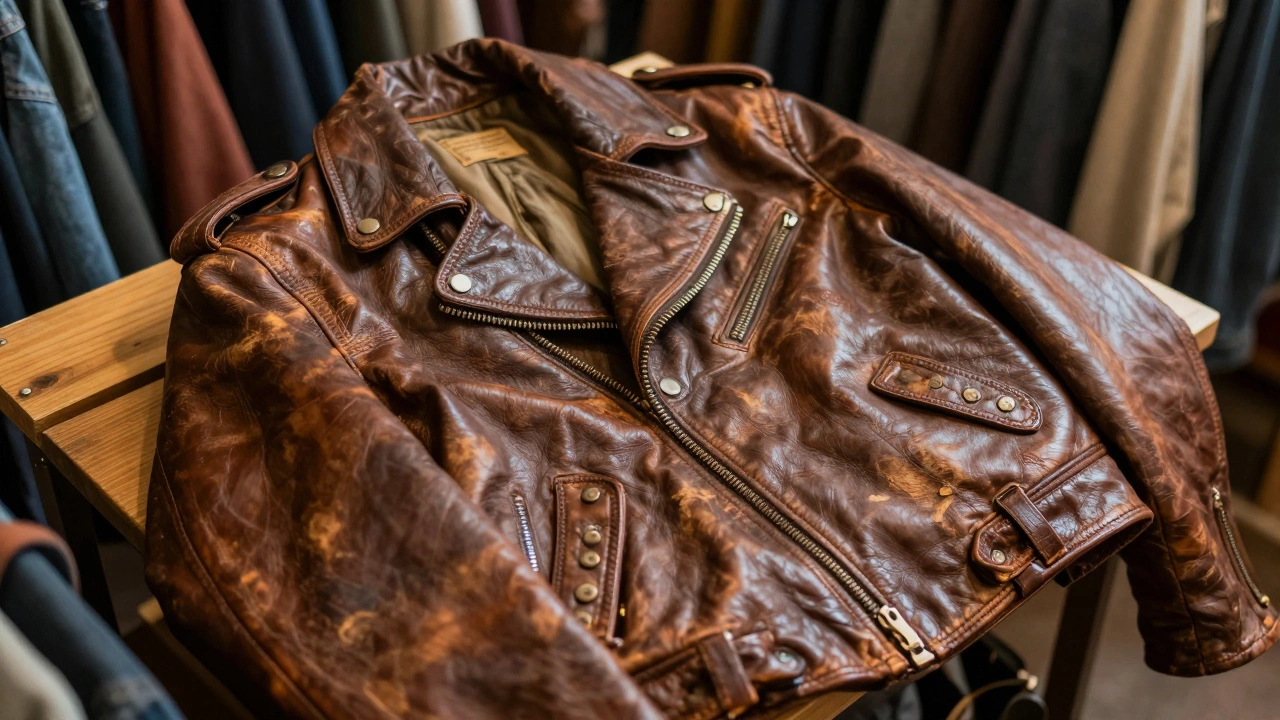
You’ve just spotted a leather biker jacket in a thrift store. It looks incredible-distressed, worn-in, with that perfect patina. But is it actually vintage, or is it just old? This question trips up almost everyone entering the world of pre-loved fashion. The answer isn’t as simple as “if it’s old, it’s vintage.” In fact, calling a 1990s denim jacket “vintage” might be technically incorrect depending on who you ask.
Understanding the specific age brackets for clothing helps you shop smarter, value your items correctly, and avoid overpaying for something that doesn’t meet the criteria. Whether you are hunting for investment pieces or just want to add some character to your wardrobe, knowing the timeline is essential.
The General Rule: What Makes a Jacket "Vintage"?
In the broadest sense of the word, vintage refers to items that are at least 20 years old but less than 100 years old. This is the standard definition used by most auction houses, antique dealers, and serious collectors. If a jacket was made in 2005, it is not yet vintage in 2026. It becomes vintage in 2025. Wait, no-it becomes vintage in 2025? Actually, since today is June 2026, anything made before 2006 qualifies.
However, the fashion industry often plays fast and loose with this definition. You will see boutiques selling items from the late 1990s and early 2000s as "vintage." While purists might roll their eyes, there is a distinction between strict collecting standards and retail marketing. For the average shopper, if it has a distinct style from a past era and is no longer being produced by the original manufacturer, it feels vintage. But for valuation and historical accuracy, stick to the 20-year rule.
Vintage vs. Antique vs. Retro: Know the Difference
Confusion often arises because people use these terms interchangeably. They are not. Here is how to separate them clearly:
| Term | Age Requirement | Characteristics |
|---|---|---|
| Vintage | 20-99 years old | Original materials, period-correct styling, often high quality due to older manufacturing standards. |
| Antique | 100+ years old | Fragile, historical significance, often requires preservation rather than wear. Examples include Edwardian coats or WWII-era uniforms. |
| Retro | Any age (usually new) | Newly made items designed to look like they belong in a previous decade. A 2024 jacket styled like a 1970s flight jacket is retro, not vintage. |
| Second-Hand / Pre-Loved | Less than 20 years old | Previously owned but too recent to be vintage. Often sold for sustainability reasons rather than historical value. |
Why does this matter? Because an antique jacket is a garment over 100 years old that holds historical value requires different care than a 30-year-old denim jacket. An antique might have silk lining that disintegrates if touched, while a vintage 1980s windbreaker is likely durable enough for daily wear. Knowing the difference protects your investment.
Decoding Your Jacket’s Age: Labels and Tags
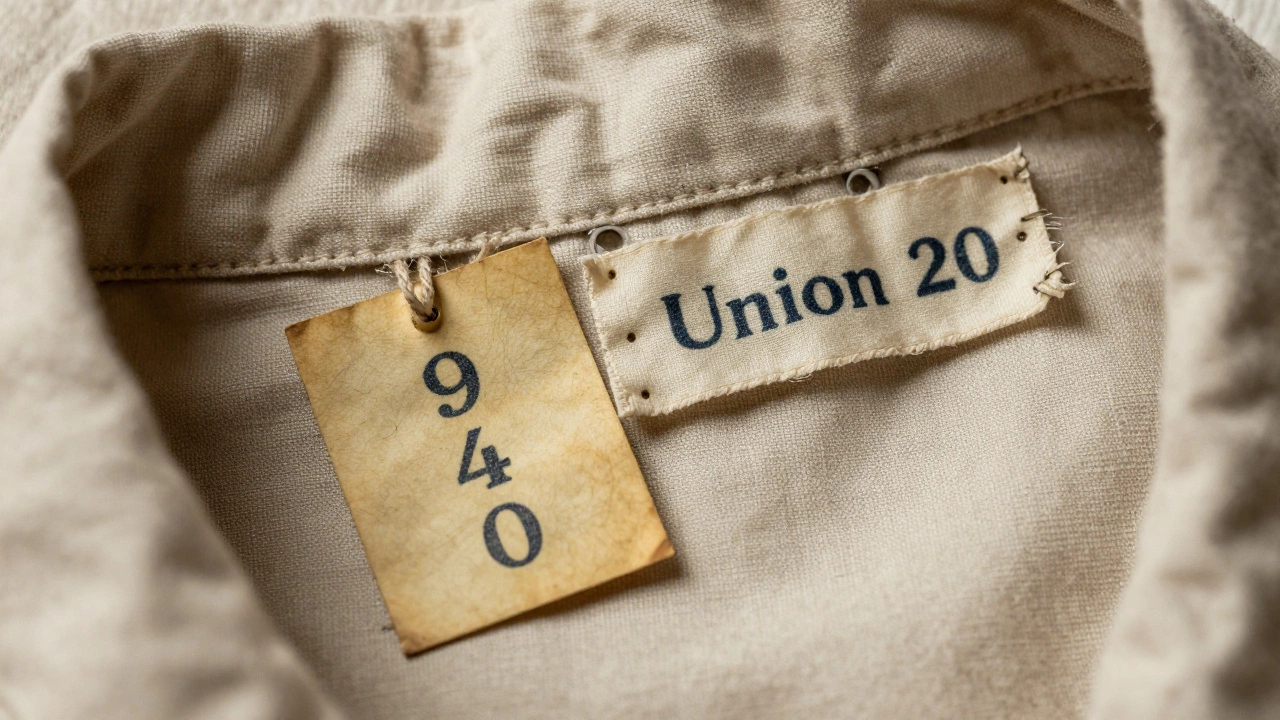
If you don’t know when a jacket was made, you can usually figure it out by looking at the tags. Fashion labels have evolved significantly over the decades. Here is a quick guide to reading them:
- No Label: Likely pre-1930s. Before mass production became widespread, many garments were homemade or made by local tailors without branded tags.
- Paper Tag Only: Common in the 1930s and 1940s. These tags were often glued inside the collar or side seam and may have fallen off.
- Sewn-In Cotton Label: Became standard after World War II. Look for union labels (like ILGWU) which were common in US-made goods until the 1970s.
- Care Instructions: Mandatory care labels (wash, dry clean, fabric content) became law in the US in 1972 and in the UK/Europe shortly after. If a jacket lacks a care label, it was likely made before the mid-1970s.
- Country of Origin: "Made in USA" or "Made in England" suggests higher-end vintage. "Made in China" or "Made in Bangladesh" typically indicates post-2000s production, meaning it is not yet vintage.
For example, a Levi's jacket with a red tab introduced in 1971 tells you immediately it is post-1971. If it also has a metal rivet pattern that changed in 1983, you can narrow the window further. These details turn a guess into a fact.
Popular Eras of Vintage Jackets
Not all vintage jackets are created equal. Some eras are more sought after than others due to design innovation and cultural impact. Here are the key periods hunters look for:
1940s-1950s: The Golden Age of Tailoring
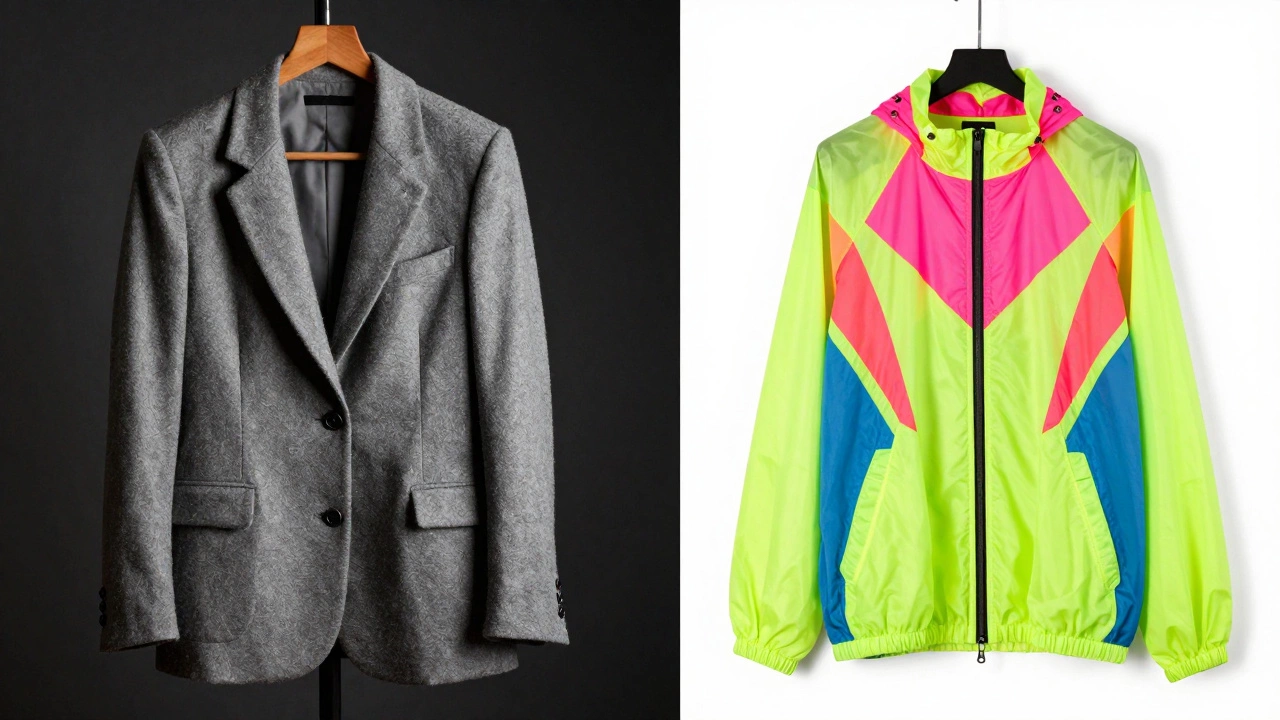
Jackets from this era feature strong shoulders, nipped waists, and heavy fabrics like wool and tweed. Think military surplus field jackets or tailored blazers. Materials were natural and durable. A well-preserved 1950s leather motorcycle jacket is a collector’s dream.
1960s-1970s: Denim and Counter-Culture
This is the heyday of denim jackets. Brands like Levi’s, Wrangler, and Lee produced millions of trucker jackets. The 1970s also saw the rise of synthetic blends, polyester windbreakers, and bold prints. A suede fringe jacket or a psychedelic-print bomber belongs here.
1980s: Power and Excess
Shoulder pads, neon colors, and oversized silhouettes define this decade. Leather bikers got bigger and louder. Also, the rise of sportswear brands like Nike and Adidas began producing track jackets that are now highly coveted streetwear staples.
1990s: Grunge and Minimalism
Flannel shirts tied around waists, oversized denim, and minimalist slip dresses dominated. A 1990s vintage jacket might be a flannel overshirt or a sleek black leather moto jacket inspired by films like *The Matrix* (though that film is late 90s/early 00s). Note: Since we are in 2026, 1990s items are just crossing into vintage territory.
Why Buy Vintage Instead of New?
Beyond the cool factor, there are practical reasons to seek out older garments. First, quality. Many vintage jackets were made during a time when labor costs were lower and materials were prioritized. A 1970s leather jacket often uses full-grain leather, whereas modern equivalents might use corrected grain or bonded leather to cut costs.
Second, sustainability. The fashion industry is one of the largest polluters globally. Buying a second-hand jacket extends the lifecycle of existing garments and reduces textile waste. You are keeping clothes out of landfills. When you buy vintage, you are voting for a slower, more conscious fashion cycle.
Third, uniqueness. Fast fashion produces identical copies of trends. Vintage offers one-of-a-kind pieces. No one else in your office will have the exact same 1960s mod shift dress jacket or 1980s pastel windbreaker.
Common Pitfalls When Hunting for Vintage
Even experienced shoppers make mistakes. Here is what to watch out for:
- Smell: Musty odors can indicate mold or mildew, which can damage fabric fibers permanently. A light smoke smell can sometimes be washed out, but chemical smells are a red flag.
- Stains: Check underarms, collars, and cuffs. Oil stains on white cotton or rust spots on zippers are difficult or impossible to remove completely.
- Structural Integrity: Check seams for unraveling. Inspect zippers-they should glide smoothly. Broken zippers on vintage jackets are expensive to replace because finding matching vintage hardware is hard.
- Overpricing: Just because something is 30 years old doesn’t mean it’s valuable. Mass-produced 1990s fast fashion has little resale value unless it is from a iconic brand like Tommy Hilfiger or Ralph Lauren.
How to Care for Your Vintage Find
Once you bring your vintage jacket home, treat it differently than your new purchases. Older fabrics are fragile. Avoid machine washing unless the label explicitly says it’s safe and the fabric is sturdy (like thick denim). Most vintage leather and wool should be professionally cleaned. Store them on wide, padded hangers to maintain shoulder shape. Keep them away from direct sunlight to prevent fading.
Remember, the goal is preservation. You aren’t just buying clothes; you are curating history. With the right knowledge, you can build a wardrobe that is stylish, sustainable, and truly unique.
Is a 10-year-old jacket considered vintage?
No. By standard definition, a garment must be at least 20 years old to be classified as vintage. A 10-year-old jacket is considered second-hand or pre-loved. However, some retailers may loosely use the term "vintage" for items from the late 2010s to attract customers, but this is not accurate according to collecting standards.
What is the difference between vintage and retro?
Vintage refers to original items from a past era (20-99 years old). Retro refers to new items that are designed to look like they are from the past. For example, a brand-new jacket made in 2026 that mimics 1970s styles is retro, not vintage.
How can I tell if a jacket is authentic vintage?
Check the labels, tags, and construction. Look for union labels, lack of care instructions (pre-1970s), and country of origin tags. Examine the hardware (zippers, buttons) for vintage brands like Talon or Conmar. Fabric composition and stitching techniques also provide clues about the manufacturing date.
Are vintage jackets worth more than new ones?
It depends on the brand, condition, and rarity. Iconic brands like Schott NYC, Levi's, or designer pieces from the 1980s and 1990s can command high prices. However, generic mass-produced vintage items may not hold significant financial value, though they offer stylistic uniqueness.
Can I wash a vintage jacket?
Proceed with caution. Many vintage fabrics shrink or degrade in machines. Always check the care label first. If there is no label, assume professional cleaning is safer, especially for leather, wool, or delicate materials. Spot cleaning is often the best option for minor stains.