How Long Should Leather Shoes Last? The Real Answer & Care Guide
- Cleo Fairchild
- 13 July 2026
- 0 Comments
Leather Shoe Value Calculator
There is nothing quite as disappointing as looking down at your favorite pair of leather shoes is a durable footwear option made from animal hide that offers both style and longevity when properly maintained only to find the sole separating from the upper or the heel wobbling dangerously. You might be asking yourself if you bought a bad pair, or if you are just unlucky. The truth is, there is no single number that applies to every pair. A cheap fashion brand might give you six months, while a well-constructed dress shoe can last twenty years.
The lifespan of your shoes depends entirely on three things: how they were built, how often you wear them, and how well you treat them. If you want your investment to pay off, you need to understand what makes some shoes rot in a year while others survive decades. Let’s break down exactly what determines how long your leather shoes will last and what you can do to extend their life significantly.
Construction Quality Determines Lifespan
The biggest factor in how long a shoe lasts is not the color or the brand logo; it is the construction method. Most modern shoes fall into two categories: cemented (glued) and stitched. This distinction changes everything about durability.
Cemented shoes are glued together. This is common in fast-fashion brands and entry-level department store shoes. They are cheaper to make, but the glue fails over time. Once the adhesive breaks down due to moisture and heat, the sole falls off. There is usually no way to fix this. These shoes typically last between 1 to 3 years with regular wear.
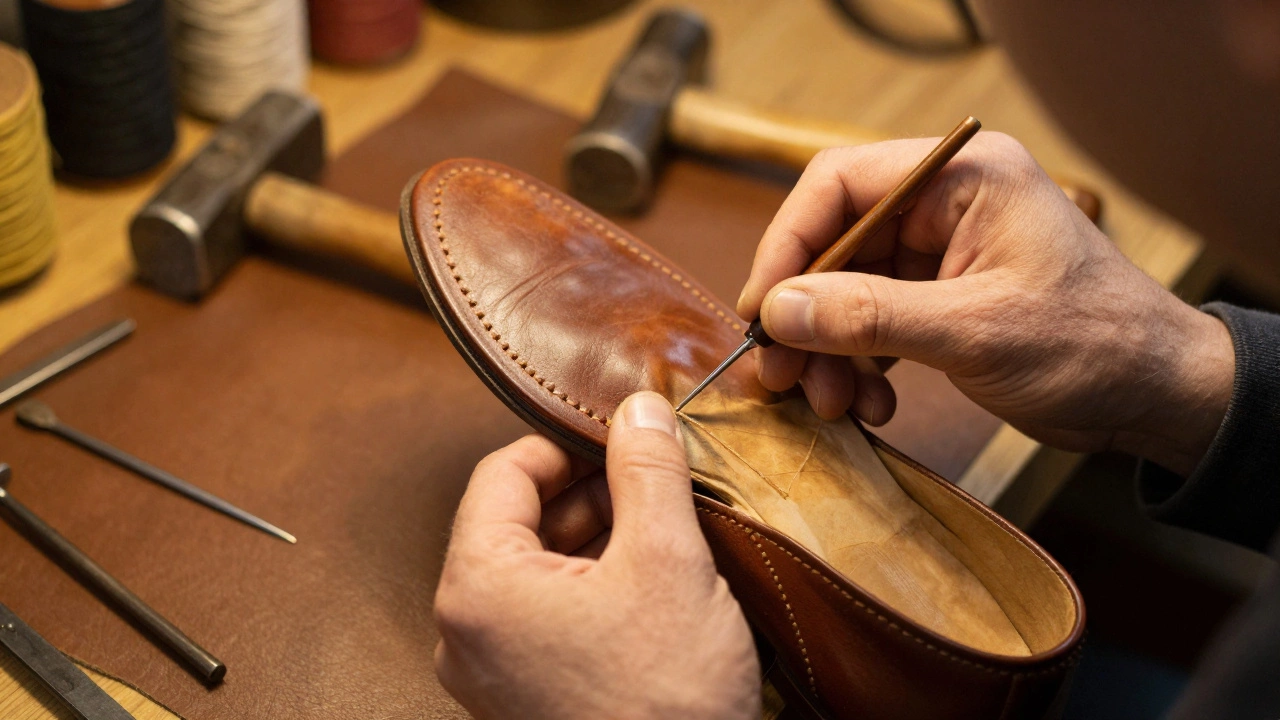
Stitched shoes, particularly those using the Goodyear welt is a construction technique where the upper, insole, and outer sole are stitched together via a strip of leather called a welt, allowing for multiple resoles, are built differently. The upper is stitched to a strip of leather (the welt), which is then stitched to the sole. If the sole wears out, a cobbler can cut the stitches, remove the old sole, and stitch on a new one. This process can be repeated several times. A Goodyear-welted shoe can easily last 10 to 20 years if cared for properly.
| Construction Type | Average Lifespan | Repairable? | Best For |
|---|---|---|---|
| Cemented (Glued) | 1-3 years | Rarely | Casual wear, budget options |
| Blake Stitch | 5-10 years | Yes | Dress shoes, slim profiles |
| Goodyear Welt | 10-20+ years | Yes (multiple times) | Daily drivers, heavy use |
| Hand-Welted | 20+ years | Yes (multiple times) | Luxury, heirloom quality |
If you are buying shoes that you plan to keep for more than two years, look for stitching around the base of the shoe. If you see a visible row of stitches connecting the sole to the upper, you have a repairable shoe. If it looks smooth and seamless, it is likely glued and disposable.
Frequency of Wear Matters More Than You Think
Even the best-made leather shoes will fail quickly if you wear them every single day. Leather needs time to dry out. When you walk, your feet sweat. That moisture gets trapped inside the shoe. If you put the same pair on the next day, the leather remains damp. Wet leather weakens, cracks, and loses its shape.
To maximize lifespan, follow the "two-day rule." Never wear the same pair of leather shoes two days in a row. Give them at least 24 hours to air out and return to their original shape. If you work in an office five days a week, you should own at least two pairs of dress shoes. Rotate them. This simple habit can double the life of your shoes.
Consider the surface you walk on too. Concrete is harsh. It grinds down soles quickly and sends shockwaves up through the footbed, breaking down the internal structure. Walking on tile, wood, or carpet is much gentler. If you live in a city like Bristol with lots of pavement, expect your soles to wear faster than someone who walks mostly indoors.
Daily Care Extends Life Significantly
You do not need to be a professional cobbler to keep your shoes alive. Basic maintenance prevents small problems from becoming fatal flaws. Here is what you need to do regularly:
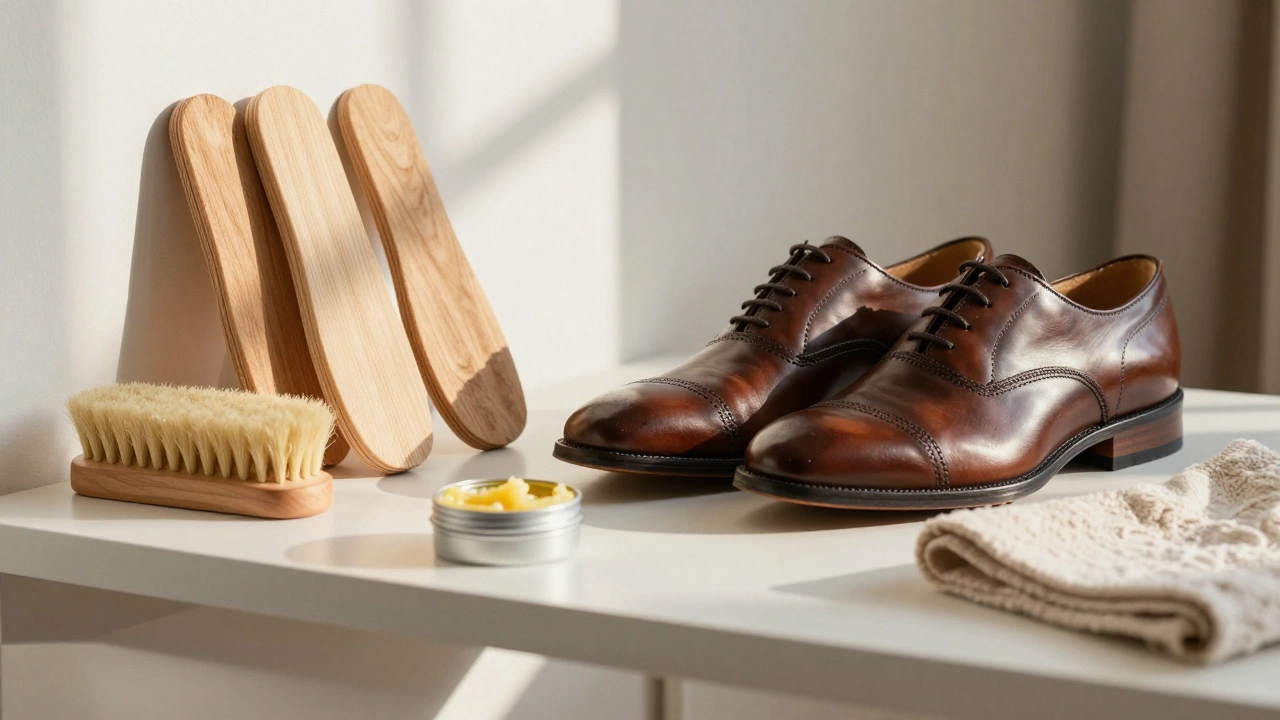
- Brush them after every wear. Dust and dirt act like sandpaper. If you leave grit on your shoes, it scratches the leather every time you move. Use a horsehair brush to remove surface dirt immediately after taking them off.
- Use shoe trees. This is non-negotiable for longevity. Insert cedar shoe trees while the shoes are still slightly warm from wear. They absorb moisture and hold the shape of the toe box. Without them, creases deepen into cracks that cannot be fixed.
- Condition every few months. Leather dries out over time. Apply a high-quality leather conditioner (like beeswax-based cream) every 3-6 months. This keeps the fibers supple and prevents cracking. Test on a small area first to ensure color match.
- Polish before wearing. A thin layer of wax polish protects against water and scuffs. It also adds shine. Don’t skip this step-it’s the first line of defense against rain and mud.
If you get caught in the rain, wipe the shoes dry with a cloth immediately. Do not let them air-dry near a heater or radiator. Heat causes leather to shrink and crack. Stuff them with newspaper to help absorb internal moisture, then let them dry naturally at room temperature.
When to Resole vs. Replace
Knowing when to repair and when to replace saves money and reduces waste. Here is a quick guide:
Resole if:
- The upper leather is still intact, with no major cracks or tears.
- The stitching holding the upper is secure.
- The lining inside is not falling apart.
- You love the fit and comfort.
Replace if:
- The leather upper has deep cracks that expose the inner layers.
- The heel counter (back part) is collapsed or broken.
- The insole is worn through and uncomfortable.
- The cost of repair exceeds 30% of the price of a new pair.
A good cobbler can tell you if a shoe is worth saving. In Bristol, for example, local cobblers charge around £40-£80 for a full resole on a Goodyear-welted shoe. That is far cheaper than buying a new £200+ pair. But if the upper is ruined, no amount of sole replacement will save it.
Signs Your Shoes Are Dying
Pay attention to these warning signs. Ignoring them leads to sudden failure:
- Separating sole: If you see gaps between the sole and upper, especially at the toe or heel, the glue or stitching is failing. Get it checked soon.
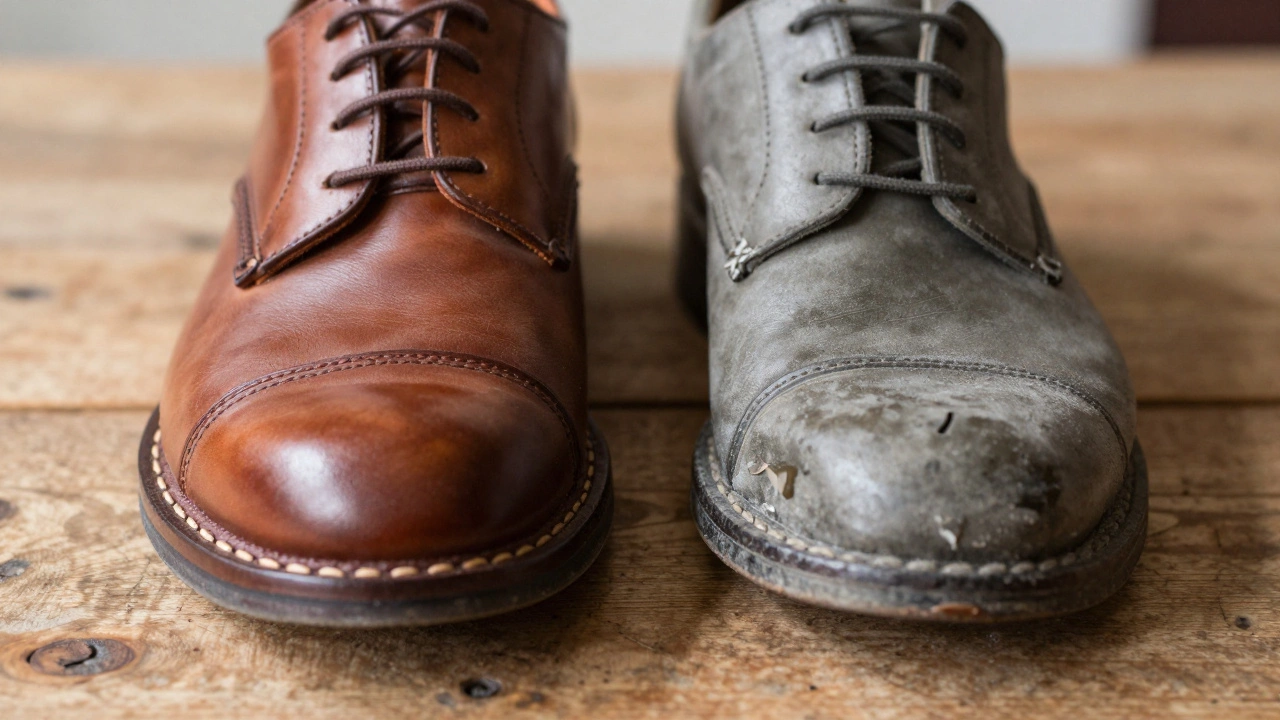
- Deep creasing: Light creases are normal. Deep, wide cracks across the vamp (front part) mean the leather is drying out and losing strength.
- Worn-through heels: If the heel cap is uneven or tilted, it affects your posture and accelerates wear on the rest of the shoe.
- Foul odor: Persistent smell despite cleaning means bacteria are thriving in the lining. This indicates poor ventilation and potential material breakdown.
Catching issues early allows for minor repairs. Waiting until the sole falls off completely often means the damage is irreversible.
Pro Tips for Maximum Longevity
Here are some lesser-known tricks that professionals use:
- Rotate your collection. Own at least three pairs of everyday shoes. This gives each pair 48-72 hours to recover between wears.
- Protect the soles. Ask your cobbler to add a thin rubber topy layer to leather soles. It provides grip and extends life by absorbing impact. Pure leather soles wear fast on concrete.
- Store properly. Keep shoes in a cool, dry place away from direct sunlight. UV light fades and dries out leather. Use breathable fabric bags, not plastic.
- Break them in slowly. Don’t wear new leather shoes all day on day one. Start with short walks. This prevents excessive creasing and blisters.
Investing in quality upfront pays off. A £150 pair of Goodyear-welted shoes that lasts ten years costs less per year than a £50 pair that lasts one year. Plus, they look better as they age.
How often should I condition my leather shoes?
Condition your leather shoes every 3 to 6 months, depending on how often you wear them and the climate. If you live in a dry area or wear them daily, condition every 3 months. In humid climates, you may stretch it to 6 months. Always clean the shoes before applying conditioner to avoid trapping dirt.
Can I resole any leather shoe?
No. Only shoes constructed with stitching (like Goodyear welt, Blake stitch, or hand-welted) can be reliably resoled. Cemented (glued) shoes cannot be resoled effectively because the upper is not designed to withstand the stress of reattachment. Check for visible stitching around the base of the shoe.
Why do my leather shoes smell bad even after cleaning?
Persistent odor usually comes from bacterial growth in the lining due to trapped moisture. Ensure you use cedar shoe trees to absorb humidity and allow shoes to air out for at least 24 hours between wears. Avoid wearing socks made of synthetic materials, which trap sweat. Natural fiber socks like wool or cotton help reduce odor.
Is it better to buy expensive leather shoes or replace cheap ones often?
Buying higher-quality shoes with stitched construction is almost always more cost-effective long-term. A £200 pair that lasts 10 years costs £20 per year. A £50 pair that lasts 1 year costs £50 per year. Expensive shoes also offer better comfort, support, and aesthetics that improve with age.
How do I know if my leather shoes are ruined beyond repair?
Shoes are likely beyond repair if the upper leather has deep, structural cracks, the heel counter is collapsed, or the insole is disintegrating. If the cost of repairs exceeds 30% of the price of a new comparable pair, replacement is usually the smarter choice. Consult a trusted cobbler for an honest assessment.