Best Shoes for Standing All Day: A Practical Guide
- Cleo Fairchild
- 18 October 2026
- 0 Comments
Work Shoe Finder
Not sure which shoes are right for you? Answer these quick questions to get a personalized recommendation based on your work environment and physical demands.
You know that feeling. It’s 4 PM, you’ve been on your feet since 7 AM, and your lower back starts to ache before you even realize your toes are numb. We often think the solution is just "buying better shoes," but most people buy the wrong kind of better shoes. They buy thick-soled sneakers that look good but offer zero arch stability, or they buy stiff leather boots that take six months to break in-time you don’t have when you’re working a double shift.
Here is the hard truth: there is no single best shoe for everyone. Your ideal pair depends entirely on what you do while you stand. Are you walking across a warehouse floor? You need different mechanics than someone standing still behind a checkout counter. This guide cuts through the marketing fluff to help you find the right fit for your specific job, your foot shape, and your budget.
The Myth of Maximum Cushioning
Most people assume that softer is better. If you stand on concrete all day, you want to feel like you’re walking on clouds, right? Not exactly. While initial comfort feels great, overly soft foam compresses quickly. After about four hours, that plush memory foam collapses under your weight, leaving you standing on essentially flat rubber with no structural support. This forces your muscles to work harder to stabilize your ankle, leading to fatigue faster than a firmer shoe would.
What you actually need is energy return and stability. Look for midsoles made from materials like EVA (ethylene-vinyl acetate) or PU (polyurethane) rather than cheap air-filled bladders that pop or flatten. Brands like Brooks and Hoka use advanced foams, but the key metric isn't just softness-it's how much the shoe resists compression over time. If you press your thumb into the sole and it springs back instantly, that’s good. If it stays dented, save your money.
Categorizing Work Environments
To find the right shoe, you first need to categorize your work environment. The demands on your feet change drastically based on surface type and movement patterns. Here is a breakdown of the three main scenarios and what each requires.
| Environment Type | Primary Challenge | Key Shoe Feature Needed | Recommended Style |
|---|---|---|---|
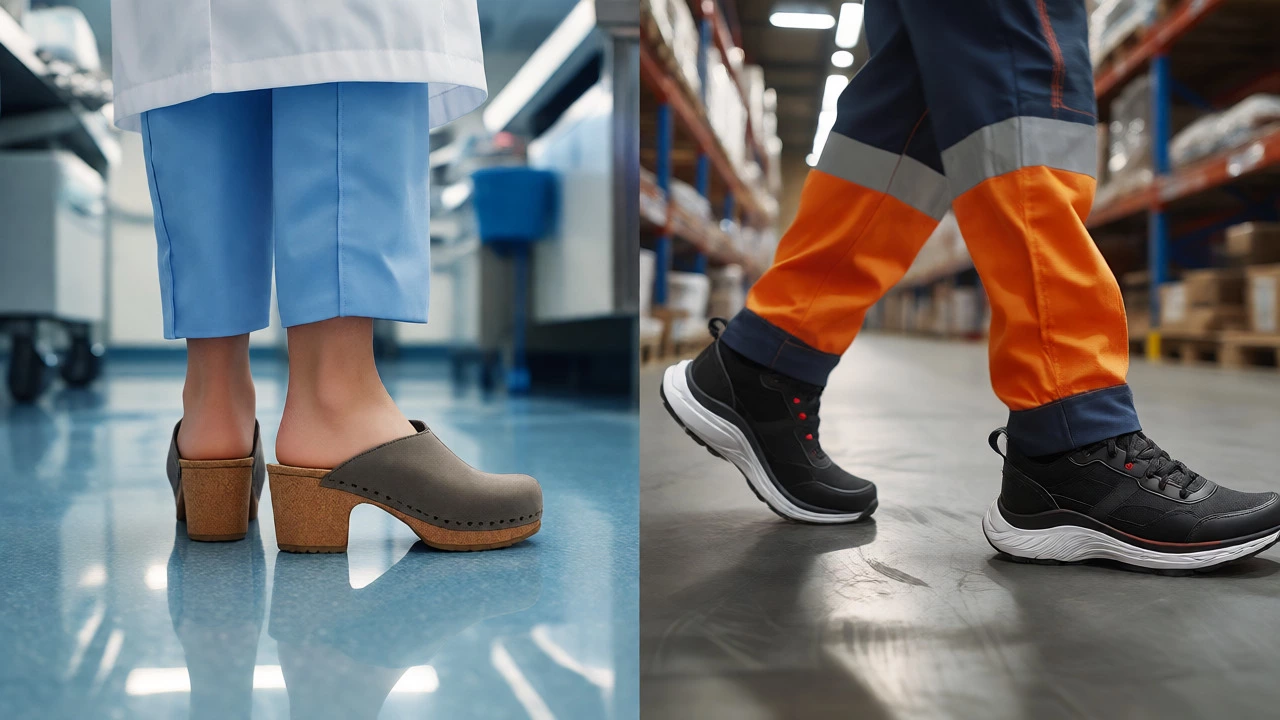
| Static Standing | Constant pressure on heels/balls of feet | High Arch Support & Shock Absorption | Clog or Slip-on Sneaker |
| Dynamic Walking | Impact stress on knees/hips | Heel-to-Toe Drop Control & Flexibility | Running-style Trainer |
| Industrial/Hazardous | Crush injuries, slips, chemical exposure | Safety Toe Cap & Oil-Resistant Sole | Composite Toe Boot |
For the Static Stander (Retailers, Nurses, Chefs)
If you stand in one spot for eight hours, gravity is your enemy. Blood pools in your legs, and your plantar fascia tightens up. For this group, slip-resistant outsoles are non-negotiable if you’re in food service or healthcare. Look for brands like Dansko or Birkenstock Professional. These aren't just fashion statements; their cork footbeds mold to your unique foot shape over time, creating a custom orthotic effect. The rigid shank (the stiff piece inside the sole) prevents your arch from collapsing, which saves your lower back.
For the Walker (Warehouse, Delivery, Construction)
Walking miles a day is different from standing still. You need flexibility. A stiff boot will fight your natural gait, causing calf strain. Instead, opt for athletic-inspired work shoes. Brands like New Balance or ASICS offer models with wide toe boxes, allowing your toes to splay naturally upon impact. This reduces friction and prevents bunions. Ensure the heel counter (the back part of the shoe) is firm enough to lock your heel in place, preventing slippage that causes blisters during long walks.
For the Industrial Worker
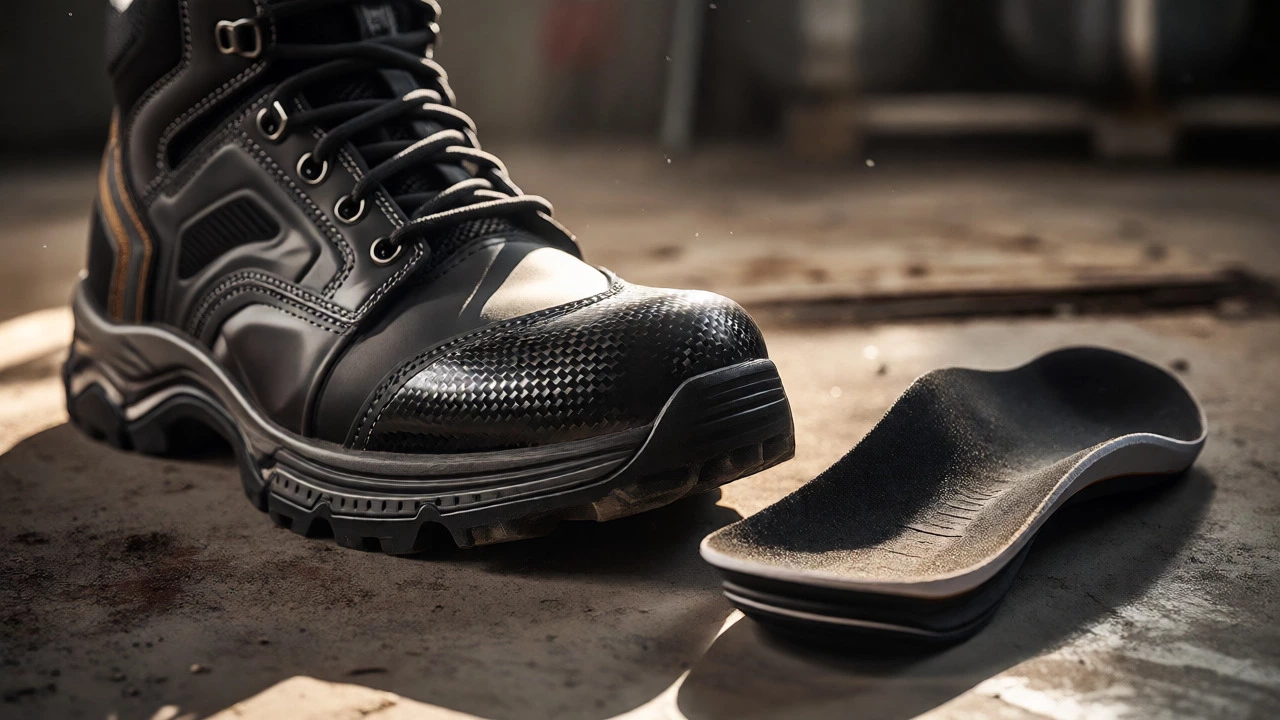
Safety standards dictate your choices here. Steel toes are traditional, but composite toes (made from carbon fiber or plastic) are lighter and don’t conduct cold or heat as aggressively. In 2026, many workers prefer metatarsal guards integrated into the upper rather than bulky external plates. If you work around electricity, ensure the shoe is EH-rated (Electrical Hazard). Always check the ASTM F2413 standard compliance label on the tongue of the shoe to verify it meets current safety regulations.
Understanding Fit: Width and Volume
Most people buy shoes too narrow. Feet swell throughout the day due to fluid retention and heat. A shoe that fits perfectly at 9 AM might cut off circulation by 3 PM. When shopping, try shoes on in the afternoon. Wear the same socks you’ll wear to work-thick wool blends can change the fit significantly compared to thin cotton ones.
Pay attention to width designations. Standard widths are labeled 'D' for men and 'B' for women. If you experience numbness or tingling, you likely need a 'W' (Wide) or 'EE' (Extra Wide) option. Don’t force a narrow foot into a wide shoe either; excess volume causes sliding, which leads to friction blisters. The goal is a snug heel pocket with room for toe movement.
The Role of Insoles and Orthotics
Even the best mass-produced shoe has limitations because human feet vary wildly. Off-the-shelf insoles are a game-changer for extending the life of your shoes and reducing pain. Over-the-counter options like Superfeet or Powerstep provide medical-grade arch support without the custom price tag. They typically cost between £25 and £40 ($30-$50) and last longer than the shoe itself.
If you have specific conditions like plantar fasciitis or flat feet, consider consulting a podiatrist for custom orthotics. However, be aware that adding an insole raises the internal volume of the shoe. You may need to go up half a size to accommodate the extra layer. Test this combination before committing to a full work week.
Maintenance and Longevity
Your shoes have a lifespan, usually measured in mileage rather than time. For active walkers, replace shoes every 300-500 miles. For static standers, look for signs of midsole compression-if the creases in the foam don't bounce back, the shock absorption is gone. Rotating two pairs of shoes allows the foam to decompress overnight, extending the life of both pairs by up to 30%.
Clean them regularly. Sweat and bacteria build up inside the lining, degrading the material and causing odor. Use antimicrobial sprays weekly and let them air dry away from direct heat sources like radiators, which crack leather and glue.
Common Pitfalls to Avoid
- Breaking in painful shoes: Modern materials shouldn't require a painful break-in period. If it hurts in the store, it will hurt more after ten minutes of walking.
- Ignoring sock quality: Cotton socks retain moisture, leading to blisters. Invest in merino wool or synthetic blend socks designed for moisture-wicking.
- Buying based on brand alone: Just because Nike makes great running shoes doesn't mean their industrial line fits your high arches. Try before you buy.
- Skipping lacing techniques: Learning the "heel lock" lacing method can prevent slipping and reduce strain on the Achilles tendon without buying new shoes.
Frequently Asked Questions
How often should I replace my work shoes?
It depends on usage. For heavy walkers, replace them every 6-8 months or after 500 miles. For those who stand mostly stationary, 9-12 months is typical. Check the midsole for permanent compression lines; if the foam looks crushed, the support is gone.
Are expensive shoes worth the investment?
Generally, yes. Higher-priced shoes use denser, longer-lasting foams and better adhesives. A £100 shoe lasting 12 months costs less per month than a £40 shoe lasting 3 months. Plus, better ergonomics can prevent costly medical issues down the road.
Can I wear running shoes to work?
Yes, if your workplace doesn't require safety toes and you are walking dynamically. Running shoes offer excellent cushioning. However, avoid them if you stand statically for hours, as the unstable rocker bottom can cause calf fatigue. Also, ensure they are not slippery on wet surfaces.
What is the best shoe for plantar fasciitis?
Look for shoes with a firm heel counter, strong arch support, and a slight heel lift (drop) of 8-12mm. This reduces tension on the plantar fascia. Brands like Oofos and Vionic specialize in recovery and work-friendly designs with built-in orthotic structures.
Do I need steel-toe caps if I don't drop things?
If your employer mandates safety footwear, yes. Even if you don't drop tools, accidental kicks against pallets or machinery are common. Composite toes are lighter and safer in electrical environments, while steel offers maximum crush protection for heavy industry.