Are Hoodies and Sweaters the Same? Here’s the Real Difference
- Cleo Fairchild
- 1 December 2025
- 0 Comments
Hoodie vs. Sweater Identifier Tool
Identify Your Garment
Answer the questions below to determine if your item is a hoodie, sweater, or hybrid.
People often use the words hoodie and sweater interchangeably. You see someone wearing a thick, long-sleeved top with a hood and assume it’s a sweater. But that’s not always right. They might look similar, but hoodies and sweaters aren’t the same thing. And if you’re trying to pick the right one for your wardrobe, mixing them up could lead to the wrong buy.
What exactly is a hoodie?
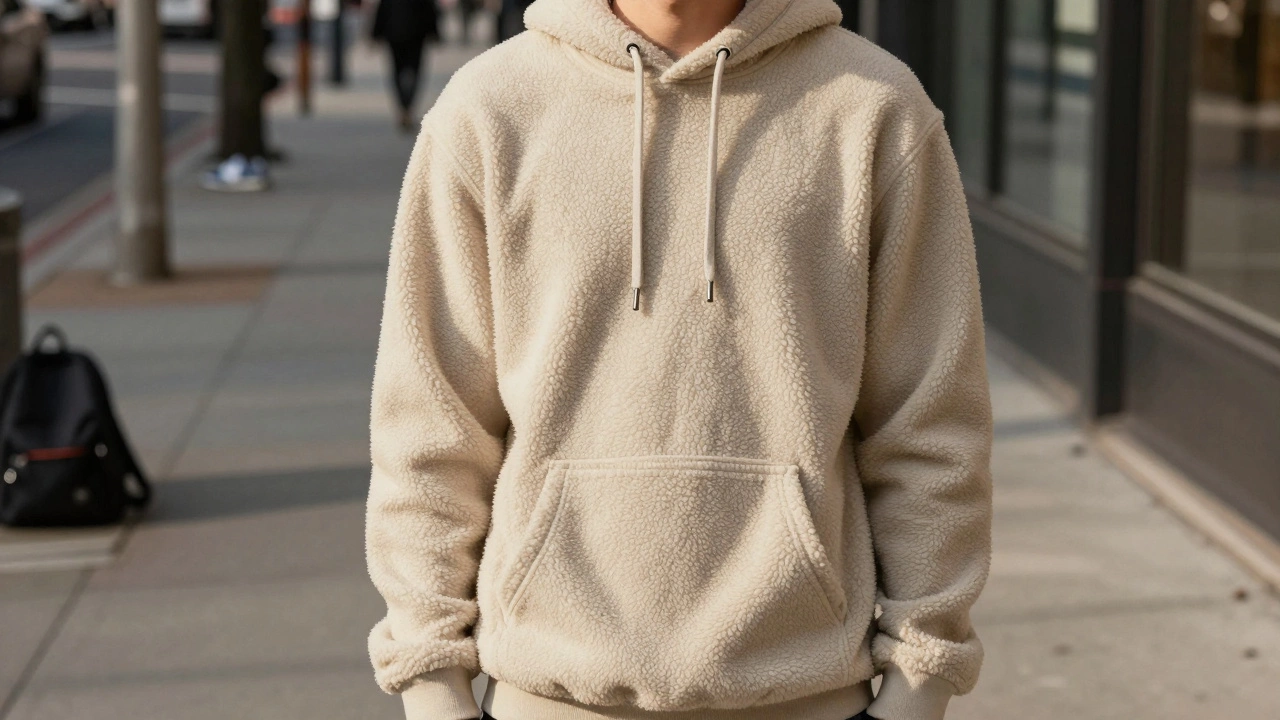
A hoodie is a sweatshirt with a hood attached. That’s it. Simple. The hood is the defining feature. Most hoodies are made from cotton fleece or a cotton-polyester blend, which gives them that soft, slightly fuzzy interior. They’re designed for comfort, not formality. You’ll find them in casual settings: walking the dog, running errands, chilling at home, or even as part of streetwear outfits.
Most hoodies have a front pocket - often called a kangaroo pocket - that runs across the lower front. This isn’t just for style; it’s practical. You can warm your hands or stash your phone, keys, or wallet. The drawstring on the hood lets you adjust it for wind or rain. Some hoodies have ribbed cuffs and hems to keep the fit snug. Others are oversized, loose, and meant to drape. But no matter the cut, if it has a hood, it’s a hoodie.
Brands like Nike, Adidas, and Champion built their reputation on hoodies. So did streetwear labels like Supreme and Off-White. Hoodies became symbols of youth culture, skateboarding, hip-hop, and even tech workers in Silicon Valley. They’re not just clothing - they’re part of a lifestyle.
What defines a sweater?
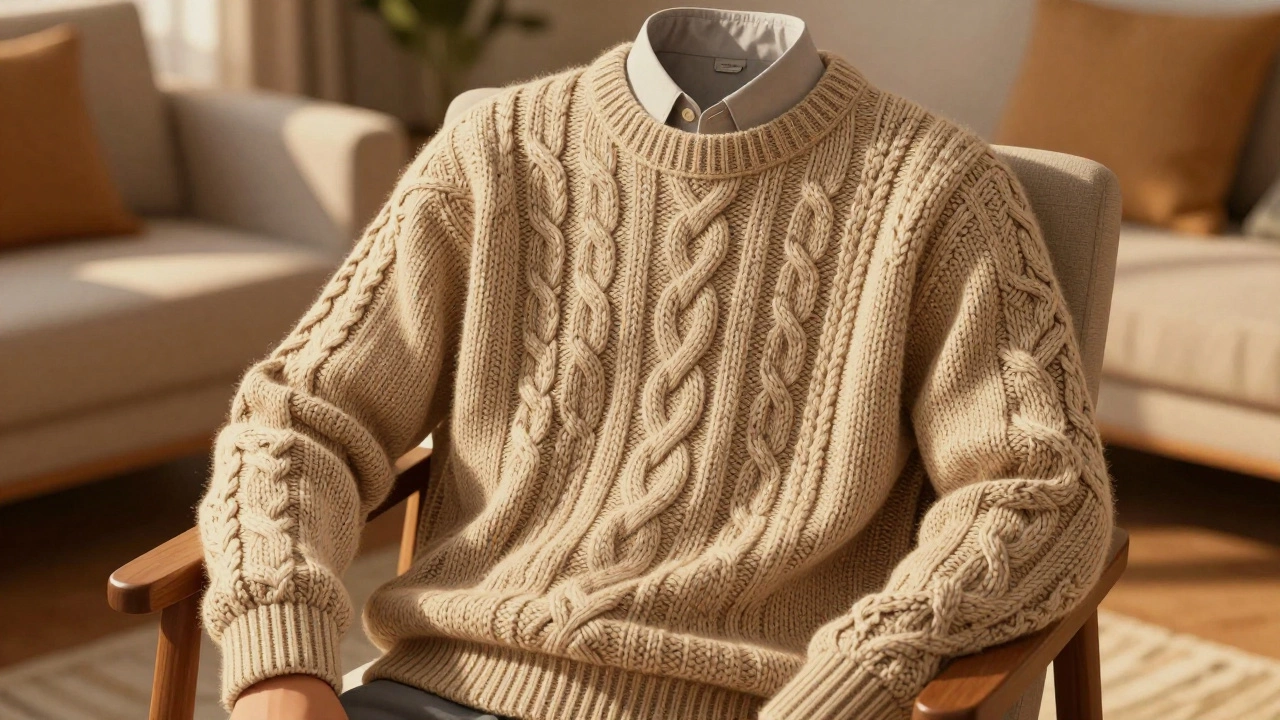
A sweater, on the other hand, is a knitted garment. That’s the key. Sweaters are made by interlocking loops of yarn - either by hand or machine. The material can be wool, cashmere, alpaca, cotton, acrylic, or blends. The texture, weight, and warmth depend on the knit pattern and fiber.
There are many types of sweaters: crewnecks, turtlenecks, cardigans, pullovers, and even fisherman sweaters with thick, cable-knit patterns. Some are tight-fitting. Others are chunky and slouchy. But none of them have hoods. If you see a sweater with a hood, it’s not a traditional sweater - it’s a hoodie.
Sweaters are often worn in cooler weather, but they’re also common in smart-casual settings. Think of a wool crewneck worn over a button-down shirt in an office, or a cashmere turtleneck paired with tailored trousers. They’re more versatile in dress codes than hoodies. A good sweater can go from brunch to a business meeting without looking out of place.
Material differences matter
Hoodies are almost always made from fleece or jersey knit - woven fabrics, not knitted. They’re heavier than T-shirts but not as structured as sweaters. The fleece lining traps heat well, making hoodies great for outdoor activity or chilly evenings.
Sweaters, especially wool ones, are naturally insulating. Merino wool, for example, regulates temperature and wicks moisture better than cotton fleece. That’s why hikers and skiers often choose wool sweaters over hoodies - they stay warm even when damp. But wool can itch. That’s why many sweaters now blend wool with synthetic fibers like acrylic or nylon for softness.
Hoodies rarely use wool. It’s too expensive and too stiff for the casual, relaxed fit they’re designed for. If you see a hoodie labeled as "wool," it’s likely a blend with mostly polyester or cotton. True wool sweaters don’t come with hoods - they’re made for elegance, not lounging.
When you wear each one
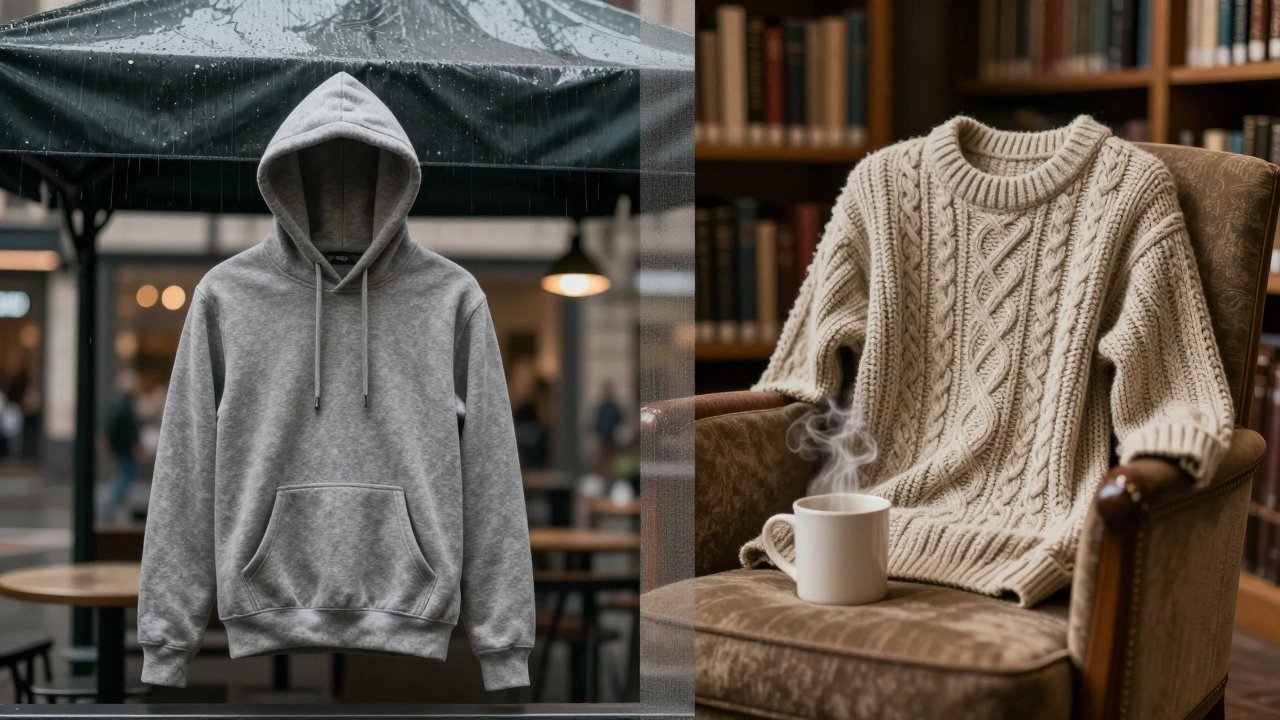
Wear a hoodie when you want comfort first. It’s the go-to for lazy Sundays, gym bags, or when you’re heading out in unpredictable weather. The hood gives you instant protection from wind or light rain. You don’t need to carry a jacket. And the pocket? It’s a lifesaver when your hands are cold and you’ve forgotten gloves.
Wear a sweater when you want to look put together - even if you’re being casual. A fine-gauge merino sweater over a collared shirt reads as thoughtful. A chunky cable-knit sweater with jeans feels cozy but intentional. Sweaters work in places where hoodies would look too sloppy: coffee shops with Wi-Fi, library study rooms, family dinners, or even some workplaces with relaxed dress codes.
Here’s a simple rule: if you’re wearing it to run to the store in 10 minutes, grab a hoodie. If you’re going to meet someone for a conversation that matters, reach for a sweater.
What about hooded sweaters?
You might see products labeled as "hooded sweaters." That’s where things get confusing. These are rare, but they exist. They’re usually high-end or fashion-forward pieces - think Acne Studios or Lululemon. They’re made with sweater materials (wool, cashmere) but have a hood added for modern styling.
But here’s the truth: if it has a hood and is made from knit fabric, it’s technically a hybrid. Most brands still call it a sweater because of the material. But functionally, it acts like a hoodie. In everyday use, most people won’t care. But if you’re shopping for quality or care instructions, you need to know the difference.
Check the label. If it says "100% merino wool" and has a hood, it’s a wool hoodie. If it says "fleece polyester" and has a hood, it’s a classic hoodie. If it says "knit cotton blend" and has no hood, it’s a sweater.
Why the confusion exists
The line blurred in the 2010s. Streetwear brands started making sweaters with hoods. Fast fashion copied them. Retailers started labeling everything with hoods as "sweaters" because it sounds nicer than "hoodie." Marketing does that. It makes things feel more premium.
But here’s the catch: if you’re washing a wool sweater with a hood in hot water because you thought it was just a hoodie, you’ll shrink it. If you throw a fleece hoodie in the dryer on high heat thinking it’s a sweater, you might melt the polyester.
Knowing the difference isn’t about fashion police. It’s about keeping your clothes in good shape. And understanding why you’re wearing something - comfort or style - helps you build a smarter wardrobe.
Quick visual guide
Still unsure? Here’s how to tell them apart at a glance:
- Hoodie: Has a hood, front pocket, made of fleece or jersey, usually cotton blend, casual, no visible knitting.
- Sweater: No hood, no front pocket, made of knitted yarn (wool, cashmere, etc.), may have cables or patterns, fits more deliberately, often worn over shirts.
If you’re holding it and can see the knit stitches - it’s a sweater. If it’s smooth inside and fuzzy, and has a drawstring - it’s a hoodie.
Final takeaway
Hoodies and sweaters serve different purposes. One is for comfort. The other is for warmth with style. You can wear both. But you shouldn’t treat them the same. Know what you’re buying. Know how to care for it. And don’t let a label fool you.
Next time you’re shopping, look past the name. Check the fabric. Feel the weave. Look for the hood. That’s how you’ll know what you’re really getting.