Why Can't You Wear Crocs at Work? Rules, Safety & Alternatives

- Cleo Fairchild
- 4 June 2026
- 0 Comments
Workplace Footwear Suitability Checker
Imagine walking into your office on a Monday morning. Your feet are relaxed, your stride is easy, and you’re wearing that pair of bright yellow foam clogs everyone loves for the beach. Then, your manager stops you in the hallway. "You can’t wear those," they say. It’s not just about style; it’s often about policy, safety, and professionalism. So, why do so many workplaces ban Crocs, even though they are arguably the most comfortable shoe on the market?
The short answer is that while Crocs excel as casual slip-ons, they fail to meet the specific requirements of many professional environments. Whether it’s a lack of toe protection, insufficient ankle support, or simply violating a strict business formal dress code, there are solid reasons why HR departments draw the line at foam clogs. Let’s break down exactly where the problem lies and what you should wear instead.
The Safety Hazard: Why Hospitals and Kitchens Ban Them
If you work in healthcare, food service, or manufacturing, the ban on Crocs isn’t about looking fancy-it’s about keeping you alive. In these high-risk environments, footwear has a job to do beyond holding your foot in place.
Are Crocs safe for hospital work?
Only if they are specifically certified as medical-grade. Standard Crocs lack the necessary slip resistance and fluid repellency required in sterile environments. However, brands like Crocs themselves now offer 'On-The-Clock' models designed for healthcare workers with enhanced grip and closed heels.
In a kitchen, a dropped knife or a spill of hot oil can cause severe injury. Standard Crocs have open backs and perforated tops. If a heavy pan slips from a shelf, it lands directly on your toes. There is no steel cap or composite toe box to absorb the impact. Similarly, in a laboratory, chemical spills can seep through the holes in the upper material, burning your skin. OSHA (Occupational Safety and Health Administration) guidelines in the US, and HSE (Health and Safety Executive) regulations in the UK, often mandate closed-toe, closed-heel shoes for any role involving physical hazards.
Even the famous 'comfort' feature-the roomy fit-can be a liability. If you trip over a cable or a wet floor, a loose shoe might fly off entirely, leaving you barefoot on a potentially dangerous surface. Proper safety shoes are designed to stay on your feet during sudden movements.
The Professional Image: Business Casual vs. Beach Casual
Move away from the factory floor or the operating theater, and the issue becomes one of perception. In corporate offices, client-facing roles, and retail environments, your appearance signals your level of seriousness. This is where the concept of 'business casual' comes into play, and unfortunately, standard Crocs usually don’t make the cut.
Dress codes exist to maintain a certain level of uniformity and professionalism. When you wear flip-flops or clogs, it can signal to clients or colleagues that you are too relaxed about your responsibilities. It’s not personal; it’s about brand consistency. A lawyer, a banker, or a sales representative needs to project competence and attention to detail. Wearing footwear associated with lounging at home undermines that image.
However, the landscape is shifting. With the rise of remote work and hybrid models, many tech companies and startups have adopted much looser dress codes. In these environments, clean, minimalist Crocs (like the classic black or navy ones) might be acceptable, especially on 'Casual Fridays.' But if you are meeting a new client, it’s still safer to opt for loafers, leather sneakers, or oxfords.

Comfort vs. Support: The Hidden Cost of Foam
You might argue, "But my feet hurt less in Crocs!" And you’d be right-for the first hour. Crocs use a proprietary resin called Croslite™, which is lightweight and cushioned. But comfort isn’t just about softness; it’s about support.
Standard Crocs lack arch support and heel stability. For people who stand for eight hours a day, this can lead to plantar fasciitis, shin splints, or knee pain over time. The wide toe box allows your toes to splay, which feels good initially but doesn’t control foot motion. Without proper lateral support, your ankles can roll slightly with every step, leading to fatigue.
If you need all-day comfort for work, look for shoes with:
- Arch Support: Built-in contours that match the natural curve of your foot.
- Cushioning: Memory foam or gel inserts that absorb shock from hard floors.
- Stability: A firm heel counter that keeps your foot aligned.
Brands like Skechers, Dansko, and Birkenstock offer professional-looking shoes that provide this structural support without sacrificing comfort. They bridge the gap between the 'cloud-like' feel of Crocs and the durability needed for a workday.
When Are Crocs Actually Allowed?
It’s not a total ban everywhere. There are specific scenarios where Crocs are not just allowed but recommended:
- Healthcare Professionals (With Caveats): Many nurses and doctors wear Crocs because they are easy to clean and quick-drying. However, they must be the closed-back 'on-the-clock' style, not the open-back sandals.
- Creative Industries: Graphic designers, video editors, and software developers often work in environments where individual expression is valued. As long as the shoes are clean and not offensive, they are usually fine.
- Outdoor Labor: Gardeners and landscapers sometimes wear Crocs for their drainage capabilities when working in mud or water, provided there are no heavy machinery risks.
The key is checking your employee handbook. If it says 'closed-toe shoes required,' standard Crocs are out. If it says 'professional attire,' interpret that as 'no beachwear.'
Better Alternatives for the Workplace
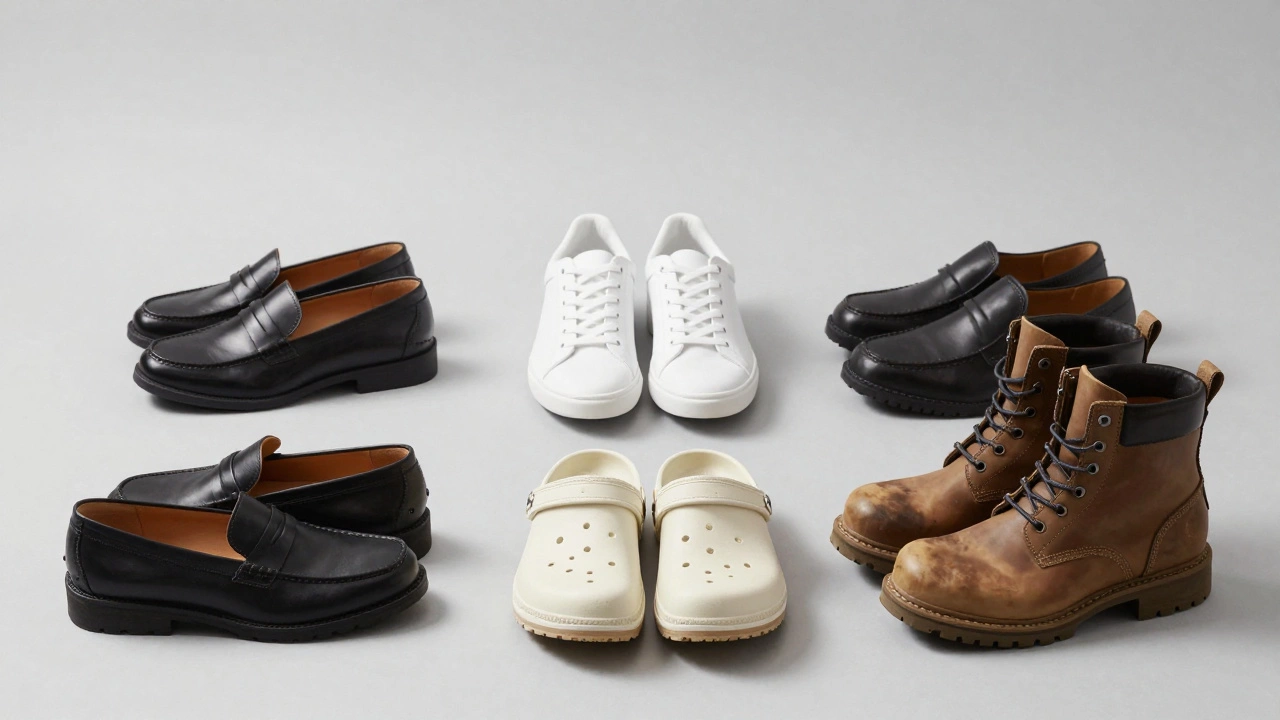
If you love the ease of slip-on shoes but need to comply with work rules, consider these alternatives:
| Shoe Type | Best For | Pros | Cons |
|---|---|---|---|
| Leather Loafers | Office / Client Meetings | Professional look, durable, breathable | Can take time to break in |
| Closed-Toe Sneakers | Tech / Creative Roles | High comfort, modern aesthetic | May not fit strict formal codes |
| Clogs (Dansko/Sorel) | Hospitality / Healthcare | Excellent arch support, easy to clean | Bulky, heavier than Crocs |
| Safety Boots | Construction / Warehousing | Toe protection, slip-resistant | Heavy, less flexible |
For example, a pair of white leather sneakers is now widely accepted in business casual settings. They offer the slip-on convenience of Crocs but look polished enough for a team meeting. Similarly, memory foam driving moccasins provide a luxurious feel while maintaining a structured shape.
Navigating the Gray Area
What if your boss hasn’t explicitly banned them? Here’s a simple rule of thumb: When in doubt, upgrade. If you’re unsure whether your current shoes are appropriate, ask yourself: "Would I feel comfortable wearing these to a job interview?" If the answer is no, they’re probably not suitable for daily work either.
Also, consider the condition of your shoes. Even if Crocs are allowed, worn-out, stained, or broken straps will always look unprofessional. Cleanliness matters. A fresh pair of black Crocs looks intentional; a faded, scuffed pair looks lazy.
Ultimately, dressing for work is a balance between personal comfort and professional respect. While Crocs have revolutionized casual footwear, they haven’t yet conquered the boardroom. By understanding the safety and image concerns behind the ban, you can choose footwear that protects your feet, respects your workplace culture, and keeps you comfortable throughout the day.
Can I wear Crocs to a corporate office?
Generally, no. Most corporate offices adhere to business casual or formal dress codes that prohibit open-backed or overly casual footwear. Stick to loafers, oxfords, or closed-toe flats to ensure you meet professional standards.
Are Crocs considered professional attire?
No, standard Crocs are not considered professional attire. They are classified as casual or resort wear. While some creative industries may tolerate them, traditional professional settings view them as inappropriate due to their informal design and lack of structure.
What is the difference between regular Crocs and work-safe Crocs?
Regular Crocs have an open back and ventilation holes, making them unsafe for environments with falling objects or chemical spills. Work-safe versions, often labeled 'On-The-Clock' or 'Professional,' feature a closed heel strap, fewer perforations, and sometimes slip-resistant soles, making them suitable for healthcare and light industrial roles.
Why do nurses love wearing Crocs?
Nurses appreciate Crocs for their lightweight design, ease of cleaning, and water resistance. The roomy fit reduces foot swelling during long shifts. However, many hospitals now require the closed-back style to prevent tripping and ensure better hygiene compliance.
Can I get fired for wearing Crocs to work?
While unlikely to result in immediate termination, repeated violations of a clear dress code policy can lead to disciplinary action. Employers have the right to enforce reasonable appearance standards, especially in client-facing or safety-sensitive roles. Always check your employee handbook first.