Who Makes the Most Popular Jeans? The Global Denim Leaders Ranked
- Cleo Fairchild
- 8 June 2026
- 0 Comments
Find Your Perfect Denim Match
What matters most to you?
Select your preferences and click "Find My Jeans" to discover which global leader matches your style.
Brand Name
Tagline goes here
Why this fits you:
Reasoning text goes here.
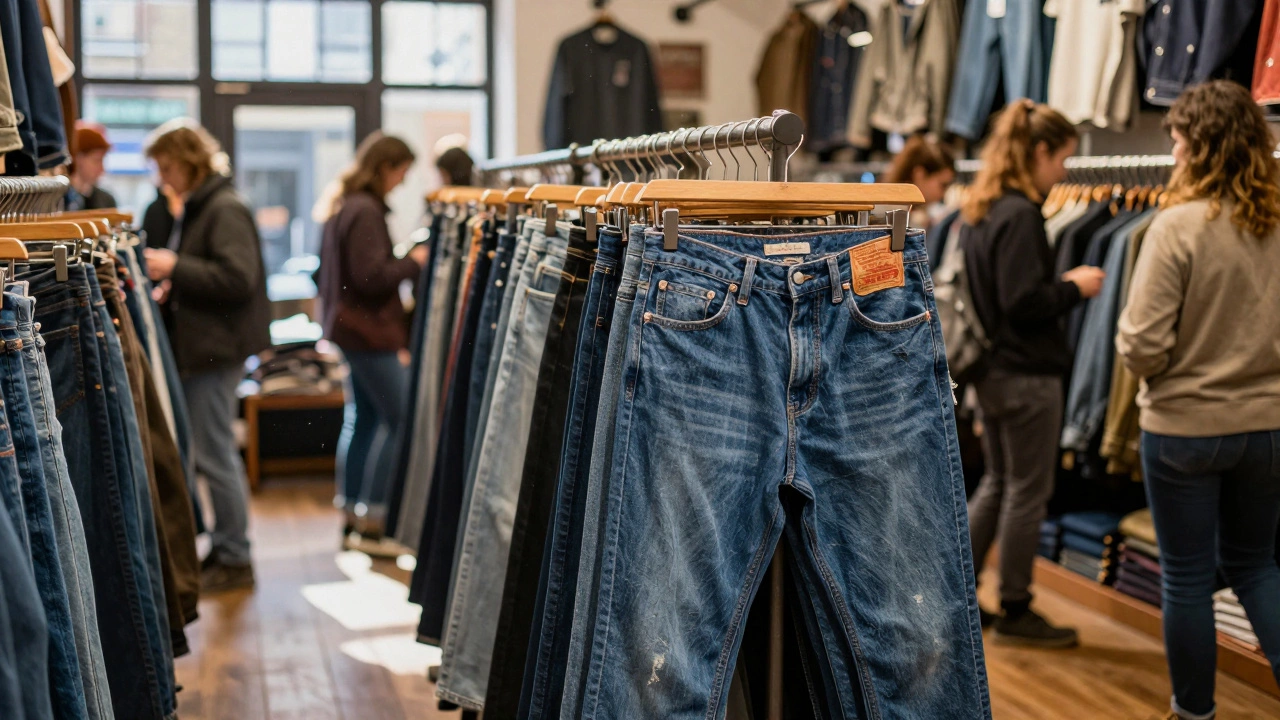
Walk into any thrift store, browse a fast-fashion rack, or check out a celebrity’s street style feed, and one fabric dominates the scene: denim. But when you ask who actually makes the most popular jeans in the world, the answer isn’t just about who has the coolest logo on the back pocket. It’s about volume, heritage, and global reach. While hundreds of labels churn out blue pants every year, a handful of giants control the majority of the market.
If you are looking for the brand with the highest sales volume and the deepest cultural footprint, Levi Strauss & Co. sits at the top of the mountain. They aren't just a competitor; they are the standard against which all other denim is measured. However, the landscape is shifting. Fast fashion giants like H&M and Zara move millions of pairs, while workwear legends like Wrangler hold onto specific demographics with iron grip. Understanding who makes the most popular jeans requires looking beyond the billboard ads and digging into the actual numbers and consumer habits that drive the industry.
The Undisputed King: Levi Strauss & Co.
When people think of jeans, they think of Levi’s. This isn’t an accident of marketing; it’s the result of over 170 years of dominance. Levi Strauss & Co. generates billions in annual revenue, with their core denim business accounting for the vast majority of those earnings. Their flagship product, the 501 Original Fit, was the first riveted jean ever created, designed to withstand the rigors of Gold Rush laborers. Today, it serves as the template for almost every straight-leg jean on the market.
Why does Levi’s maintain this lead? Consistency. Whether you buy a pair in New York, Tokyo, or Berlin, the fit, the wash, and the quality remain remarkably similar. This reliability builds trust. For the average consumer who doesn’t want to guess if a new brand will shrink or fade poorly, Levi’s is the safe bet. In 2024 alone, the company reported significant growth in its direct-to-consumer channels, proving that even in an era of digital-native brands, the heritage giant still commands the throne.
The Volume Giants: Fast Fashion Titans
If we define "popular" strictly by the number of pairs sold rather than revenue per pair, the conversation changes. Here, companies like H&M, a Swedish multinational clothing-retail company and Zara, part of the Inditex group enter the chat. These retailers do not build their identity solely on denim, but their sheer scale means they move more units of jeans than many dedicated denim houses.
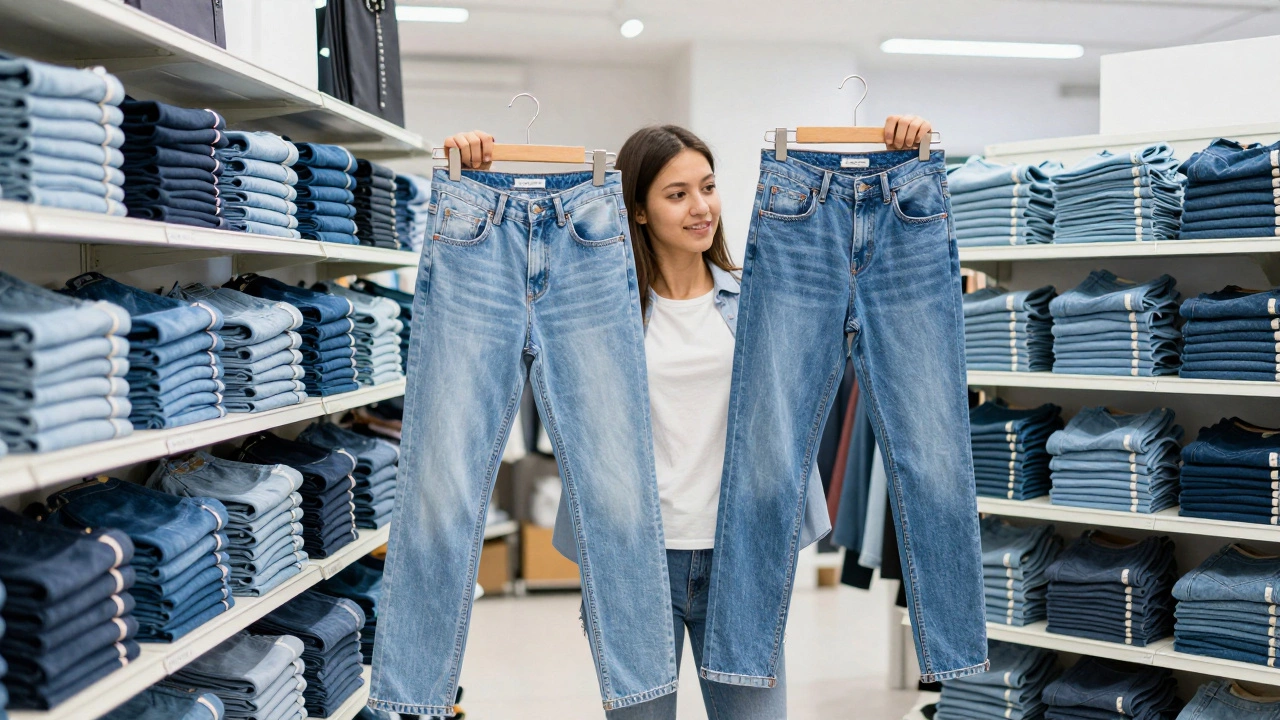
H&M, for instance, sells tens of millions of pairs of jeans annually across its global network. Their appeal lies in accessibility and trend responsiveness. If a high-waisted, wide-leg silhouette becomes viral on social media, H&M can have a version on the shelf within weeks at a fraction of the cost of designer brands. For students, budget-conscious shoppers, and trend-chasers who view jeans as disposable rather than heirloom items, these fast-fashion options are often the "most popular" choice in terms of frequency of purchase.
However, there is a trade-off. While H&M and Zara dominate volume among younger, price-sensitive demographics, they lack the brand loyalty of Levi’s. A customer might buy three pairs of H&M jeans in a year because they fall apart, whereas a customer might buy one pair of Levi’s every two years because they last. This distinction is crucial when analyzing market share versus cultural impact.
The Workwear Legacy: Wrangler and Lee
In the United States, particularly in rural areas and among older demographics, popularity looks different. Here, Wrangler, a brand owned by Capri Holdings and Lee, also owned by Capri Holdings are titans. Wrangler, in particular, holds a unique position. It is the official jean of cowboys and rodeo competitors. This niche association has given Wrangler a cult-like status that translates into massive steady sales.
Wrangler’s popularity is driven by durability and fit. Their classic 13MWZ (Men’s Western Zip) is iconic. Unlike the fashion-forward cuts of European brands, Wrangler focuses on function. For the working class, farmers, and tradespeople, these jeans are tools, not accessories. This practical utility ensures that Wrangler maintains a loyal customer base that rarely strays to competitors. Lee follows a similar path, often competing directly with Wrangler in the mid-price segment, offering slightly softer fabrics and varied fits to appeal to a broader casual audience.
The Rise of Premium and Direct-to-Consumer Brands
The definition of "popular" is also expanding into the premium space. Brands like G-Star RAW, a Dutch denim brand and Diesel, an Italian luxury fashion house have carved out significant market shares by positioning jeans as high-end fashion statements. While their unit sales may not match H&M, their revenue contribution is substantial due to higher price points ($100-$200+ per pair).
Additionally, direct-to-consumer (DTC) brands like Everlane and Uniqlo have disrupted the middle ground. Uniqlo, specifically, has become a global powerhouse in basic apparel. Their elastane-blend jeans offer comfort that rivals athletic wear, appealing to consumers who prioritize ease of movement over traditional rigid denim aesthetics. In Asia, Uniqlo’s market penetration is so deep that it often outsells Levi’s in local stores, challenging the American brand’s global hegemony in specific regions.
Comparing the Heavyweights
To understand where each brand stands, it helps to look at their primary strengths and target audiences side-by-side.
| Brand | Primary Strength | Avg. Price Point | Target Audience |
|---|---|---|---|
| Levi’s | Heritage & Trust | $60 - $90 | All ages, global |
| H&M / Zara | Trend Speed & Price | $20 - $40 | Gen Z, Budget shoppers |
| Wrangler | Durability & Workwear | $40 - $60 | Rural US, Tradespeople |
| Uniqlo | Comfort & Basics | $40 - $60 | Minimalists, Asian markets |
| Diesel | Fashion & Design | $150 - $250 | Fashion-forward, Luxury |
How Popularity Is Measured in Denim
It is important to clarify what we mean by "most popular." Is it the brand with the highest Google search volume? The highest retail sales? Or the most mentions on social media?
- Sales Volume: Levi’s and H&M likely tie here, depending on whether you count wholesale vs. retail. Levi’s leads in dedicated denim revenue.
- Brand Recognition: Levi’s wins overwhelmingly. Even people who don’t wear Levi’s know the red tab.
- Social Engagement: Fast fashion brands and influencer-collaborative labels (like Dr. Denim or Re/Done) often see higher engagement rates per post, though from a smaller base.
- Resale Value: Vintage Levi’s and certain designer collaborations hold value better than any other brand, indicating long-term desirability.
This multi-faceted view explains why Levi’s remains the answer to "who makes the most popular jeans" despite the fragmentation of the market. They balance mass appeal with brand equity in a way that no single competitor currently matches.
Regional Variations in Preference
Popularity is not uniform across the globe. In Europe, brands like G-Star RAW and Diesel enjoy stronger footholds due to local manufacturing ties and fashion-centric cultures. In Japan, denim culture is incredibly sophisticated, with brands like Evisu and Pure Blue Japan commanding respect among enthusiasts, though Levi’s still dominates the mass market.
In Latin America, Levi’s has historically had a strong presence, but local brands and fast-fashion imports are gaining ground. In Africa, emerging markets are seeing a rise in affordable denim options, with H&M and local manufacturers capturing the growing middle class. Understanding these regional shifts is key for anyone analyzing the true scope of denim popularity.
The Future of Denim Dominance
As sustainability concerns grow, the definition of popularity may shift again. Consumers are increasingly asking where their jeans come from and how they were made. Brands that fail to address water usage and chemical dyeing processes risk losing relevance, regardless of their current sales figures. Levi’s has invested heavily in sustainable practices, such as WaterLess technology, to maintain its leadership. Competitors who lag behind in ethical production may find their "popularity" eroding among younger, conscious consumers.
Furthermore, the rise of athleisure continues to threaten traditional denim. Joggers and leggings compete for the same wardrobe real estate. For jeans to remain the most popular pant, brands must continue to innovate in comfort without sacrificing the rugged aesthetic that defines denim. Hybrid fabrics and stretch technologies are becoming standard, blurring the lines between casual wear and activewear.
Who owns the most popular jeans brand?
Levi Strauss & Co. is a publicly traded company, meaning it is owned by its shareholders. However, the Straus family retains significant influence through dual-class stock structures. Wrangler and Lee are owned by Capri Holdings Limited, which also owns Michael Kors and Versace.
Are Levi's jeans really the best selling?
Yes, in terms of dedicated denim revenue and global brand recognition, Levi's consistently ranks first. While fast-fashion retailers like H&M may sell more total units of pants, Levi's generates more income specifically from jeans and holds the strongest brand loyalty.
What is the difference between Wrangler and Lee?
Both brands are owned by Capri Holdings and focus on workwear and casual denim. Wrangler is generally perceived as more rugged and associated with Western/cowboy culture, while Lee often offers slightly softer fabrics and a wider variety of modern fits aimed at general casual wear.
Why are some jeans so expensive?
Price varies based on fabric quality, construction methods, brand heritage, and marketing costs. Premium brands use higher-grade cotton, intricate washing techniques, and detailed stitching. Additionally, luxury brands charge for the design aesthetic and exclusivity, not just the material.
Is denim becoming less popular?
Denim remains a staple, but its dominance is challenged by athleisure. However, trends cycle back. As formal dress codes relax, comfortable yet structured denim continues to be a versatile option. Innovation in stretch and sustainability is keeping denim relevant for new generations.