What Does a Grey Suit Mean? Decoding the Psychology and Style of Grey

- Cleo Fairchild
- 19 April 2026
- 0 Comments
Grey Suit Style Matcher
Select your current scenario or the "vibe" you want to project to find the perfect grey suit recommendation.
Charcoal
High FormalityMid-Grey
Medium FormalityLight Grey
Low-Medium FormalityRecommendation
Styling Guide:
Quick Takeaways for Your Wardrobe
- Charcoal Grey: The gold standard for authority and formality. Perfect for funerals, high-stakes interviews, and evening events.
- Mid-Grey: The ultimate all-rounder. It works for the office, daytime weddings, and social mixers.
- Light Grey: Relaxed and approachable. Best for summer, spring, and creative environments.
- The Psychology: Grey suggests stability and balance. It is less aggressive than black and less traditional than navy.
The Hidden Language of Grey
When you wear a grey suit, you are communicating a specific set of traits. While a black suit often feels like a "uniform" (think security guards or funeral directors), grey feels like a choice. It suggests a level of sophistication that is understated. If you walk into a room wearing charcoal, you look like the person in charge of the budget. If you wear light grey, you look like the person who has a great idea for the marketing campaign.
From a psychological perspective, grey is the color of compromise. It doesn't lean toward the warmth of brown or the coolness of blue. This makes it the perfect "neutral" canvas. In professional settings, this neutrality is your biggest asset. It tells your clients or bosses that you are objective and steady. You aren't there to overshadow the project with a loud outfit; you're there to get the job done.
Decoding the Shades: Charcoal, Mid, and Light
Not all greys are created equal. The "meaning" of your suit changes drastically as you move across the spectrum. Let's break down the three primary categories you'll encounter when shopping for men's tailoring.
| Shade | Vibe/Meaning | Best Occasion | Formality Level |
|---|---|---|---|
| Charcoal | Authority, Seriousness | Board meetings, Funerals, Galas | High |
| Mid-Grey | Versatility, Approachability | Daily Office, Daytime Weddings | Medium |
| Light Grey | Freshness, Modernity | Summer parties, Creative gigs | Low to Medium |
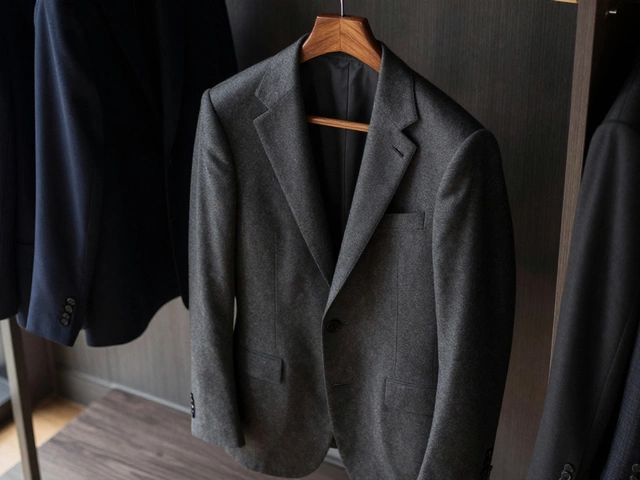
Charcoal is essentially the "black suit" of the grey family. It is the most formal and carries the most weight. If you are attending a funeral or a very formal corporate event where black is too stark, charcoal is your best bet. It conveys a sense of maturity and respect. In fact, most style consultants suggest that a charcoal suit should be the first suit any man owns because it covers the widest range of formal needs.
Mid-grey, often called "medium grey," is the workhorse. It is the most practical shade because it hides creases and dust better than the extremes. When you wear this, you're signaling that you are professional but not stiff. It's an excellent choice for a first date where you want to look put-together but not like you're heading to a court hearing.
Light grey, on the other hand, is all about the season and the setting. Because it reflects more light, it feels airy and optimistic. Wearing light grey in the middle of January in London might look out of place, but in May or June, it's a power move. It suggests you are confident enough to step away from the traditional dark colors of the corporate world.
Matching the Mood: What to Wear Underneath
The meaning of the suit can be shifted by what you pair with it. This is where you can actually manipulate how people perceive you. For instance, a charcoal suit paired with a crisp white shirt and a deep red tie is a classic "power outfit." It says you are here to lead. If you swap that tie for a knit navy tie, you instantly become more approachable and less intimidating.
For mid-grey suits, you have a huge playground. A light blue shirt is a foolproof combination that screams "competence." If you want to lean into a more modern, creative look, try a black turtleneck under a mid-grey suit. This shifts the meaning from "corporate employee" to "architect or gallery owner." It's a sophisticated blend that works well in cities like New York or London where style is more experimental.
Light grey suits are trickier. Because the suit is so light, a dark shirt can create too much contrast, making you look like you're wearing a costume. Stick to pastels or a clean white. If you're wearing a light grey suit to a summer wedding, try a linen shirt without a tie. This changes the meaning of the outfit from "business" to "celebratory," showing that you respect the occasion but aren't stressing over the dress code.

The Shoe Dilemma: Black vs. Brown
One of the biggest mistakes men make with grey suits is picking the wrong shoes. The shoes act as the anchor for the entire look and can change the perceived formality of the suit. Leather footwear is the standard here, but the color choice is critical.
Black shoes are the traditional choice for charcoal suits. They keep the look sharp and serious. If you're going for a strictly formal vibe, don't deviate from black. However, pairing black shoes with a light grey suit can sometimes look a bit too harsh, creating a visual "clash" that draws the eye straight to your feet instead of your face.
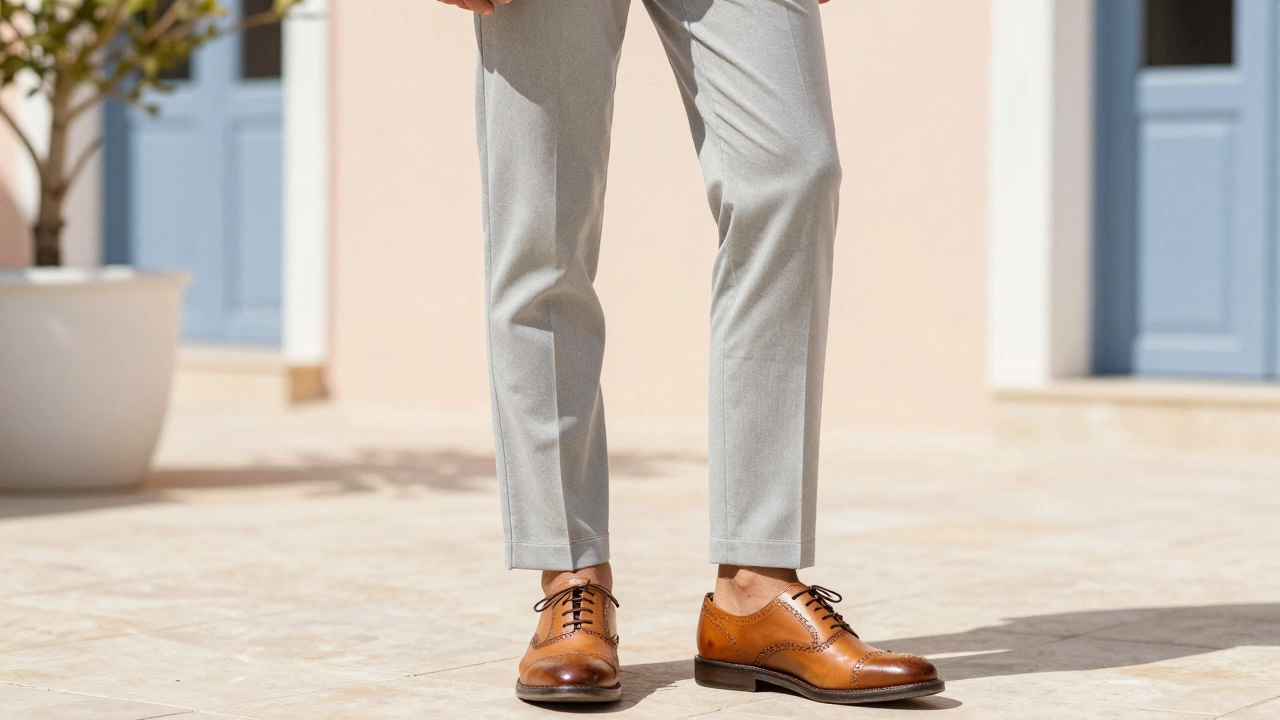
Brown shoes-specifically dark chocolate or oxblood-are the secret weapon for mid-grey and light grey suits. Brown adds a layer of warmth and style. A pair of tan brogues with a light grey suit suggests a relaxed, Mediterranean-inspired elegance. It tells the world you understand the nuances of style and aren't just following a handbook. The general rule of thumb: the lighter the suit, the lighter the brown of the shoe.
Avoiding the "Accounting" Stereotype
There is a common fear that a grey suit makes you look like a 1950s accountant or a government bureaucrat. This usually happens when the fit is too baggy or the fabric is a dull, flat polyester. To avoid this, focus on the cut and the texture. A slim-fit or tailored cut immediately modernizes the look.
Look for fabrics with a bit of texture, like a sharkskin weave or a subtle herringbone pattern. Wool is the gold standard for suit fabric because it breathes well and holds its shape. When the fabric has a slight sheen or a visible weave, it adds depth. This prevents the suit from looking like a flat slab of grey paint and instead makes it look like a piece of craftsmanship. When you wear a well-textured grey suit, the meaning shifts from "generic employee" to "style connoisseur."
When to Choose Grey Over Navy or Black
So, when do you actually reach for the grey instead of the usual navy or black? Navy is the color of trust and tradition. Black is the color of formality and mourning. Grey is the color of versatility. If you are going to an event where you aren't sure of the exact dress code, grey is the safest bet. It fits in everywhere.
If you're heading to a job interview for a creative role, navy might feel too conservative and black might feel too aggressive. A mid-grey suit is the perfect middle ground. It shows you're professional enough to dress up, but flexible enough to fit into a creative culture. Similarly, for weddings, grey is often preferred over black because it doesn't compete with the groom (if the groom is in black) and doesn't feel as heavy during a sunny afternoon ceremony.
Is a grey suit appropriate for a funeral?
Yes, provided it is a dark shade. Charcoal grey is a highly respectful and appropriate choice for funerals. It is often seen as a softer alternative to black while still maintaining the necessary level of solemnity and formality.
Can I wear a light grey suit to a business meeting?
It depends on the industry. In creative fields (advertising, tech, design), light grey is perfectly acceptable and can make you look modern and approachable. In traditional fields (law, finance), it may be seen as too casual; in those cases, stick to charcoal or navy.
What color shirt goes best with a grey suit?
White is the most classic and safe choice for all shades of grey. Light blue is an excellent second choice, especially for mid-grey suits, as it adds a professional contrast. For light grey suits in summer, pale pink or lavender can work well to create a fresh, seasonal look.
Should I wear brown or black shoes with a grey suit?
Use black shoes with charcoal grey for maximum formality. Use brown shoes (from tan to dark chocolate) with mid-grey and light grey to add warmth and a modern touch. Avoid light tan shoes with very dark charcoal suits, as the contrast is too jarring.
Does a grey suit mean I'm boring?
Not at all. Grey is a neutral base that allows your personality to shine through your accessories. By playing with tie colors, pocket squares, and shoe choices, you can make a grey suit look incredibly dynamic and stylish rather than boring.
Final Style Tips for the Road
If you're still on the fence about which grey to buy, start with a charcoal suit. It is the Swiss Army knife of menswear. Once you've mastered the dark tones, move into mid-grey for your daily rotations. Finally, add a light grey piece for those summer events where you want to stand out without being loud.
Remember that the a grey suit is more than just a piece of clothing-it's a tool for social navigation. Use the dark shades when you need to project power and the lighter shades when you want to project openness. When in doubt, prioritize the fit over the brand; a cheap grey suit that fits perfectly will always look more expensive than a designer suit that is too big.