How to Stop Feet Hurting at Work: The Complete Guide to Relief and Prevention
- Cleo Fairchild
- 9 August 2026
- 0 Comments
Work Foot Pain Relief & Prevention Tool
Assess Your Work Environment
Your Risk Assessment
Enter your details to see your foot pain risk level and get personalized recommendations.
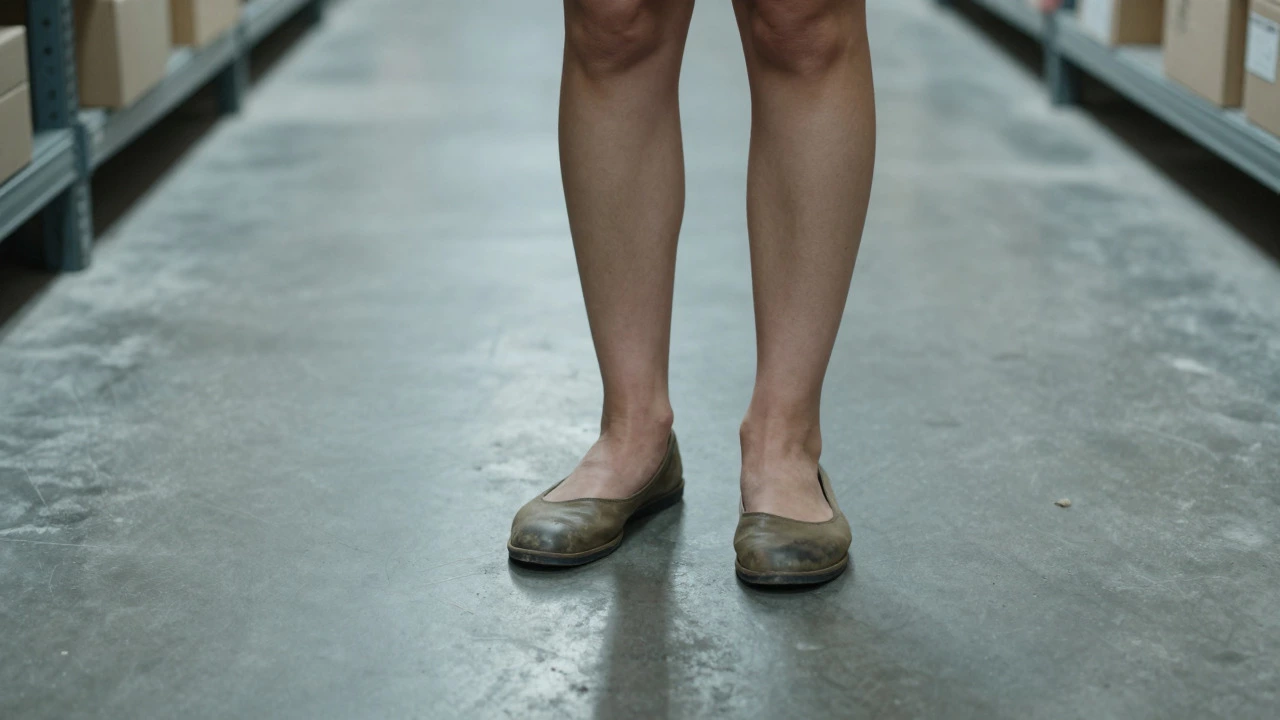
Standing on concrete for eight hours a day feels less like work and more like punishment. By 2 PM, your heels throb, your arches ache, and your lower back joins the party. You aren't alone. Millions of workers from nurses to retail staff deal with chronic foot pain simply because their environment demands too much from their bodies without enough support. But here is the good news: you don't have to accept this as the price of doing business. With the right combination of footwear, simple exercises, and smart habits, you can eliminate that daily agony.
The Root Causes of Work-Related Foot Pain
Before you buy expensive gear, you need to understand why your feet hurt in the first place. It’s rarely just one thing. Usually, it’s a perfect storm of poor biomechanics, hard surfaces, and inadequate support. When you stand still or walk on rigid floors like tile or concrete, your body absorbs shock through your joints. If your shoes lack cushioning, that shock travels up your legs, causing inflammation in your knees, hips, and spine.
Common conditions include plantar fasciitis, which causes sharp heel pain due to inflammation of the tissue connecting your heel bone to your toes. Then there is metatarsalgia, a bruising sensation in the ball of the foot often caused by high-impact activities or tight shoes. Many people also suffer from flat feet or fallen arches, where the natural curve of the foot collapses, leading to uneven weight distribution and strain on muscles.
If you ignore these signals, they escalate. A minor ache becomes chronic pain, leading to altered gait patterns that cause knee injuries or sciatica. Addressing the root cause means looking at your entire kinetic chain, starting from the ground up.
Choosing the Right Work Shoes
Your shoes are the foundation of your comfort strategy. Not all "comfortable" shoes are created equal. You need specific features designed for prolonged standing or walking. Look for these critical elements:
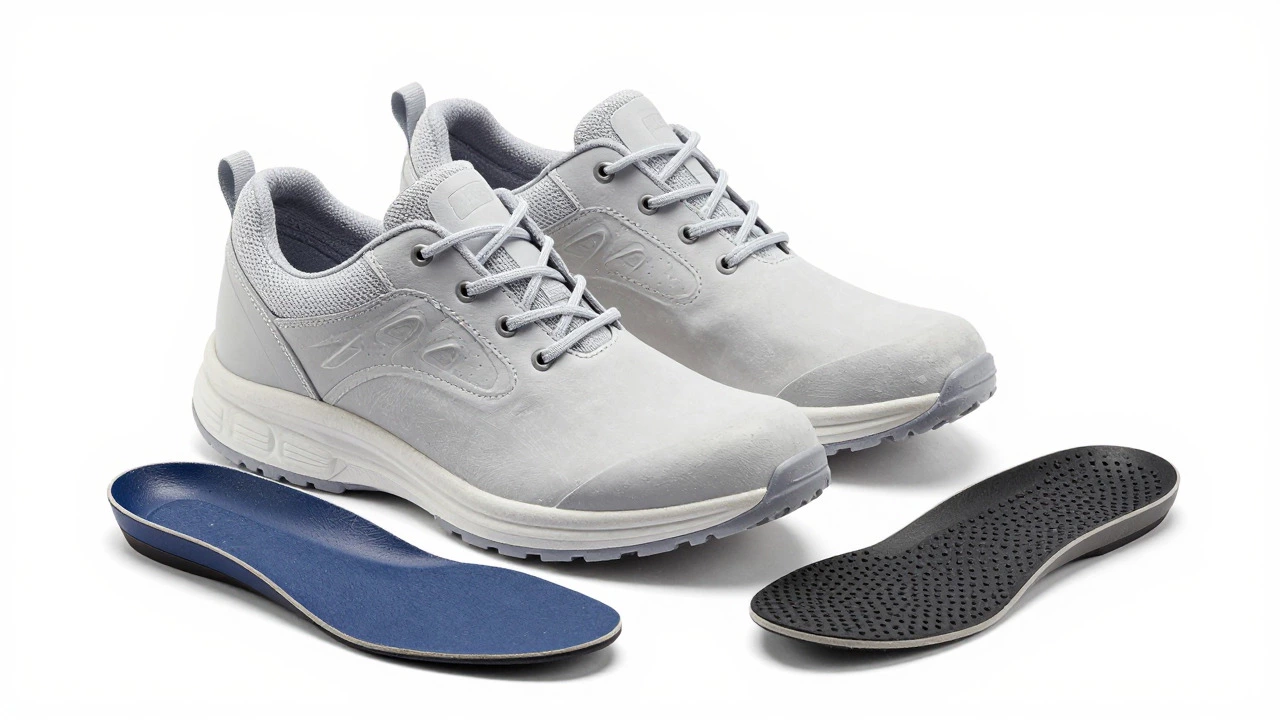
- Cushioned Midsole: Materials like EVA (ethylene-vinyl acetate) or polyurethane provide shock absorption. Brands often use proprietary foams, but the principle remains the same: softness underfoot reduces impact stress.
- Arch Support: This is non-negotiable. Your arch acts as a spring. Without support, it flattens, causing muscle fatigue. Look for shoes with built-in contoured footbeds.
- Rocker Sole: A curved sole helps roll your foot forward during walking, reducing the strain on your Achilles tendon and calf muscles. This is especially helpful if you spend most of your day moving rather than standing still.
- Wide Toe Box: Your toes should splay naturally. Narrow, pointed shoes compress toes, leading to bunions and neuromas. Ensure there is at least a thumb's width of space between your longest toe and the shoe's end.
- Slip Resistance: Safety matters. Slip-resistant outsoles prevent falls, which can cause acute trauma. Look for rubber compounds with deep treads designed for wet or oily surfaces.
| Feature | Benefit | Best For |
|---|---|---|
| Memory Foam Insole | Conforms to foot shape, provides immediate comfort | Short-term relief, light standing |
| Firm Arch Support | Maintains foot alignment, reduces muscle strain | Flat feet, plantar fasciitis, long shifts |
| Gel Heel Cushion | Absorbs high-impact shock at heel strike | Walking-heavy jobs, heel pain |
| Wide Toe Box | Prevents toe compression and nerve damage | Bunions, wide feet, circulation issues |
Popular brands known for ergonomic work shoes include Hoka One One, praised for maximal cushioning, and Brooks, which offers excellent stability. For those needing slip resistance, Skechers Work and Dansko are industry standards in healthcare and hospitality. Remember, the best shoe is the one that fits your unique foot structure. Try them on in the afternoon when your feet are slightly swollen, mimicking end-of-day conditions.
The Power of Orthotic Insoles
Even the best shoes may not provide enough support for your specific needs. This is where orthotic insoles come in. These inserts correct biomechanical issues by supporting the arch and aligning the foot properly.
You have two main options: over-the-counter (OTC) and custom-made. OTC insoles are affordable and effective for mild to moderate pain. Look for brands like Superfeet or Dr. Scholl’s that offer varying levels of arch support. They are readily available and allow you to experiment with different firmness levels.
Custom orthotics, prescribed by a podiatrist, are molded to your exact foot shape. They are ideal for severe conditions like significant pronation, diabetes-related neuropathy, or chronic plantar fasciitis that hasn’t responded to other treatments. While costly, they offer precise correction that generic inserts cannot match. Always check with your employer if they cover part of the cost, as many industries recognize foot health as a workplace safety issue.
Simple Stretches and Exercises for Relief
Shoes and insoles are passive solutions; movement is active. Incorporating simple stretches into your routine can dramatically reduce tension and improve circulation. Here are three moves you can do at your workstation or break room:
- Towel Scrunches: Place a towel on the floor and use your toes to scrunch it toward you. This strengthens the intrinsic muscles of the foot, improving arch support naturally.
- Calf Stretches: Tight calves pull on the Achilles tendon, aggravating heel pain. Stand facing a wall, place one foot back with the heel down, and lean forward until you feel a stretch in the calf. Hold for 30 seconds.
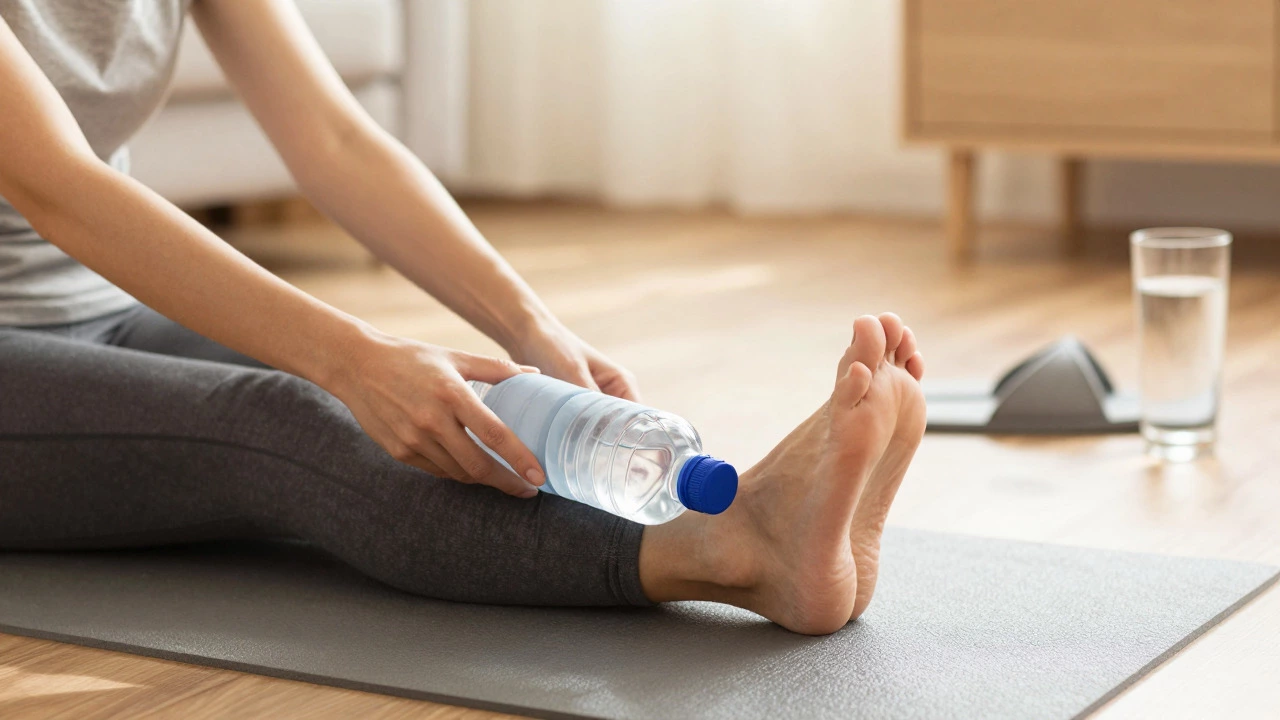
- Plantar Fascia Roll: Freeze a water bottle and roll your bare foot over it for 5-10 minutes. The cold reduces inflammation while the pressure massages the fascia. Do this first thing in the morning or after work.
Consistency is key. Doing these exercises for five minutes a day yields better results than an hour once a week. Think of it as maintenance for your most used tools.
Ergonomic Habits and Workplace Adjustments
Your behavior at work plays a huge role in foot health. Standing still for long periods is actually worse for your feet than walking. Static loading increases pressure on the heel and ball of the foot. Try to shift your weight frequently, pace around if possible, or use an anti-fatigue mat.
Anti-fatigue mats are essential for stationary roles. These mats, made from foam or rubber, compress slightly under your weight, encouraging micro-movements in your leg muscles. This keeps blood flowing and reduces joint stiffness. Place them wherever you stand for more than 15 minutes continuously.
Hydration also matters. Dehydrated muscles cramp more easily. Drink water regularly throughout your shift. Additionally, consider wearing compression socks. They improve venous return, reducing swelling and fatigue in the legs and feet. Many healthcare workers swear by them for preventing varicose veins and general heaviness.
When to See a Professional
Sometimes, self-care isn't enough. If your pain persists despite changing shoes, using insoles, and stretching, it’s time to consult a professional. A podiatrist can diagnose underlying issues like stress fractures, arthritis, or nerve entrapment. Early intervention prevents minor problems from becoming debilitating conditions.
Don’t wait until you’re limping. Chronic pain affects your mood, productivity, and overall quality of life. Investing in your foot health now saves you from costly medical bills and time off work later. Your feet carry you through life-treat them with respect.
Quick Tips for Immediate Relief
Need help right now? Try these quick fixes:
- Take frequent breaks to sit or elevate your feet.
- Apply ice packs to sore areas for 15 minutes.
- Massage your feet vigorously to stimulate blood flow.
- Switch to supportive sandals or flip-flops during lunch breaks to let your feet breathe.
- Use topical analgesics like menthol creams for temporary pain masking.
Remember, prevention is easier than cure. Build good habits today, and your future self will thank you with every step.
What are the best shoes for standing all day?
The best shoes for standing all day feature ample cushioning, strong arch support, and a wide toe box. Brands like Hoka One One, Brooks, and Dansko are highly rated. Look for models specifically labeled as 'work' or 'standing' shoes, which often include rocker soles and slip-resistant outsoles.
Do orthotic insoles really help with foot pain?
Yes, orthotic insoles can significantly reduce foot pain by correcting biomechanical issues. They support the arch, distribute weight evenly, and reduce strain on muscles and joints. Over-the-counter options work for mild pain, while custom orthotics are better for severe or chronic conditions.
How can I relieve foot pain quickly at work?
For quick relief, try taking short breaks to sit or elevate your feet, perform calf stretches, and massage your soles. Using an anti-fatigue mat and switching to supportive footwear during breaks can also provide immediate comfort. Ice packs after work help reduce inflammation.
Is it better to wear flat shoes or heels for work?
Flat, supportive shoes are generally better for work, especially if you stand or walk a lot. High heels shift your center of gravity forward, increasing pressure on the ball of the foot and straining the Achilles tendon. Low-heeled or zero-drop shoes with good arch support are the safest and most comfortable option.
When should I see a doctor for foot pain?
See a doctor if your foot pain persists despite home remedies, worsens over time, or is accompanied by swelling, redness, or numbness. Chronic pain affecting your daily activities requires professional diagnosis to rule out serious conditions like fractures, arthritis, or nerve damage.