Are Crocs a Health Code Violation? The Real Rules for Work Shoes
- Cleo Fairchild
- 14 December 2025
- 0 Comments
Let’s cut to the chase: Crocs are not automatically a health code violation. But if you’re wearing them in a hospital kitchen, a construction site, or a commercial bakery, you might be breaking rules you didn’t even know existed.
What Actually Counts as a Health Code Violation?
Health codes aren’t about fashion. They’re about safety, sanitation, and preventing contamination. In the UK, the Food Standards Agency and the Health and Safety Executive set the standards. In the US, it’s OSHA and local health departments. The rules vary by industry, but the core idea is the same: your shoes must protect you, protect others, and not become a source of dirt or injury.Crocs are made of a soft, closed-cell resin called Croslite. They’re lightweight, easy to clean, and slip-resistant - which sounds great. But here’s the catch: they’re not engineered for high-risk environments. No steel toe. No puncture-resistant sole. No ankle support. No sealed seams to keep fluids out.
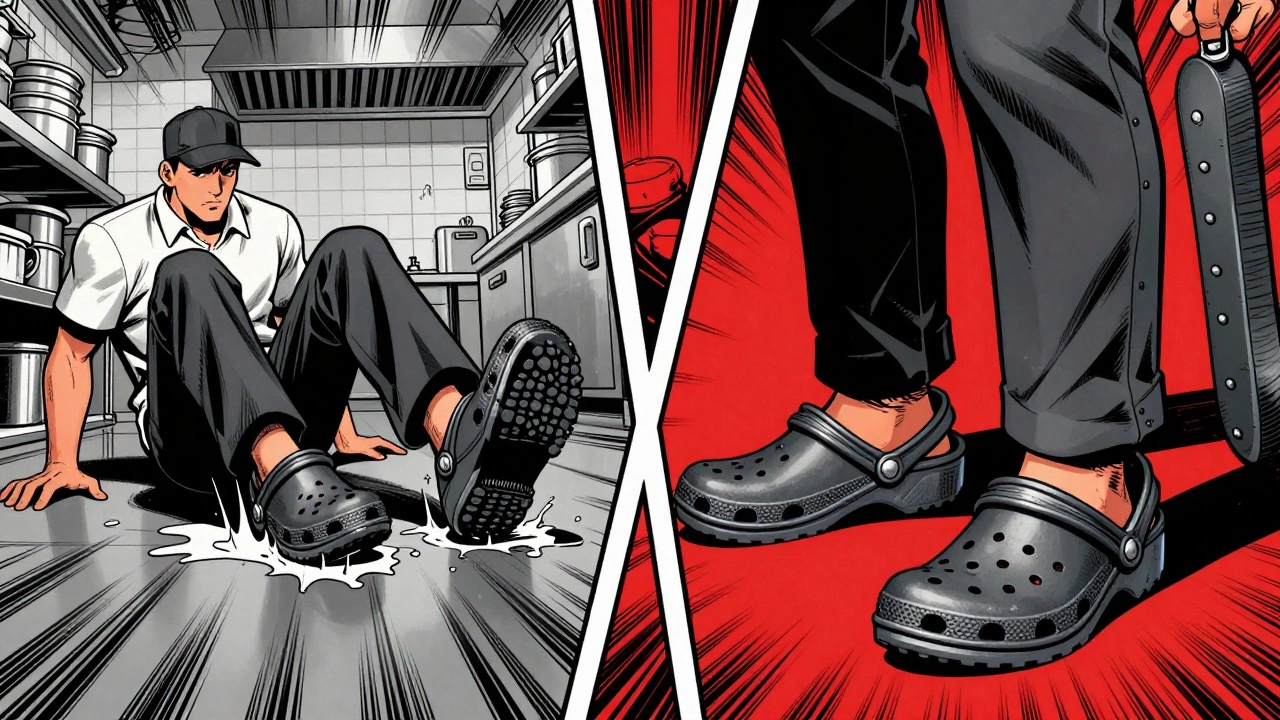
In a restaurant kitchen, spilled grease, broken glass, or raw chicken juices can soak into the porous material of Crocs. Even if you wipe them down, bacteria can linger. That’s why many food service employers require closed-toe, non-slip shoes with smooth, non-porous soles - think clogs made of hard plastic or rubber, not foam.
Where Crocs Are Allowed (and Where They’re Not)
Not all workplaces are the same. The rules depend on the risk level.- Allowed: Offices, schools (non-lab areas), retail stores, light warehouse work, some clinics (non-surgical), and administrative roles in hospitals.
- Not allowed: Commercial kitchens, operating rooms, construction zones, manufacturing plants, chemical labs, and any place where you’re handling heavy tools, sharp objects, or hazardous fluids.
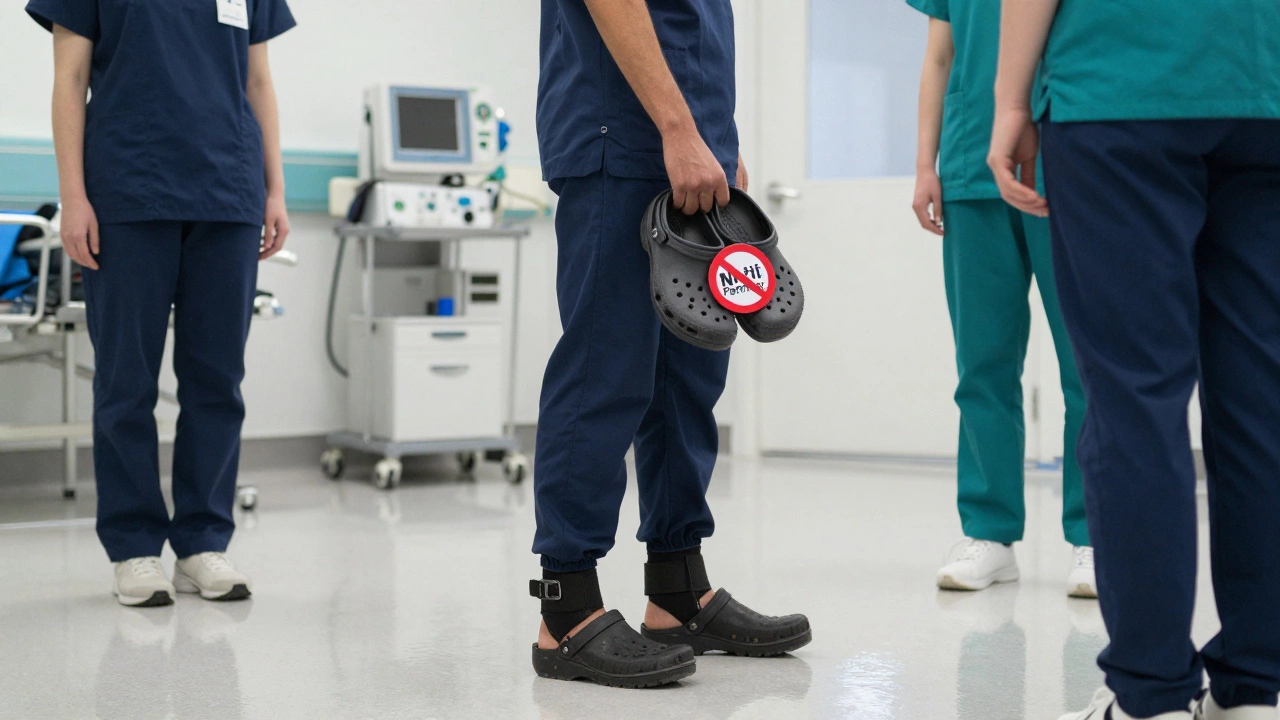
In 2023, a UK NHS trust in Bristol banned Crocs in its emergency department after a nurse slipped on a wet floor and twisted her ankle. The investigation found her Crocs had no ankle support and the sole degraded after six months of daily use. That’s not an isolated case. Hospitals across the US and Europe have tightened footwear policies since 2020, especially after the pandemic exposed how easily contaminants spread through footwear.
Why People Think Crocs Are ‘Fine’
The confusion comes from marketing. Crocs markets itself as ‘comfortable medical footwear’. And yes - doctors, nurses, and lab techs do wear them. But there’s a big difference between wearing them in a staff lounge and wearing them during a 12-hour shift in the ER.Many healthcare workers choose Crocs because they’re easy to slip on and off, easy to clean, and don’t hurt their feet after long hours. But they’re not choosing them because they meet safety standards. They’re choosing them because they’re better than flip-flops. That’s not the same as being compliant.
Employers often turn a blind eye - until something goes wrong. Then suddenly, the policy is enforced. A manager might say, ‘We’ve always let people wear them,’ but that doesn’t make it legal. Compliance isn’t about tradition. It’s about risk.
What the Law Actually Says
There’s no universal law that says ‘Crocs = illegal’. But there are regulations that make them impractical or non-compliant in many settings.- OSHA 29 CFR 1910.136: Requires protective footwear in areas with falling or rolling objects, sharp objects, or electrical hazards. Crocs don’t meet this.
- UK Health and Safety at Work Act 1974: Requires employers to provide safe working conditions, including appropriate PPE. If Crocs don’t protect against workplace hazards, they’re not PPE.
- Food Hygiene Regulations (UK/EU): Require footwear that doesn’t contribute to contamination. Porous materials are discouraged.
These aren’t suggestions. They’re enforceable standards. If an inspector walks into a restaurant and sees staff wearing Crocs, they can issue a notice - not because Crocs are ‘ugly’, but because they fail to meet the minimum safety requirements for that environment.
What to Wear Instead
You don’t need to buy expensive boots. There are plenty of affordable, compliant alternatives that still feel like Crocs.- Sanitizable clogs: Brands like Dansko, Alegria, and Birkenstock have models with sealed, non-porous soles and slip-resistant treads. They cost £40-£80.
- Steel-toe safety shoes: For construction or warehouses, look for EN ISO 20345 certified shoes. Many now have cushioned midsoles for all-day comfort.
- Disposable shoe covers: In sterile environments like labs or operating rooms, some facilities require disposable covers over any shoe - including Crocs - but that’s a band-aid fix, not a solution.
One nurse in Bristol switched from Crocs to Dansko clogs after a spill left her foot stained with bleach. She said, ‘I didn’t realize how much I was risking until I saw the stains on the sole. Now I don’t even think about it - I just wear them.’

The Bigger Picture: Comfort vs. Compliance
The real issue isn’t Crocs. It’s that too many workplaces treat footwear as an afterthought. Employees are expected to stand for 8-12 hours a day, yet given shoes designed for the beach.Employers who care about safety and retention invest in proper footwear. They don’t just hand out a policy - they offer reimbursement programs, hold shoe fairs, or partner with local retailers to get staff discounted safety shoes.
Studies show that workers who wear proper footwear report 30% fewer foot and back injuries. That’s not just about compliance. It’s about reducing sick days, improving productivity, and keeping people on the job.
Crocs might be fine for your weekend walk or your home office. But if you’re working in a place where safety matters - and it should - then your shoes aren’t a fashion statement. They’re part of your safety gear.
What You Should Do
If you’re an employee:- Check your employer’s dress code or safety handbook. Don’t assume - ask.
- If you’re told Crocs are allowed, ask: ‘Is this in writing? Does it meet OSHA or UK HSE standards?’
- If you’re in a high-risk job and your shoes aren’t up to standard, speak up. Your safety matters.
If you’re an employer:
- Don’t just ban Crocs - offer better options. Provide a list of approved footwear.
- Offer a £20-£50 annual footwear allowance. It’s cheaper than a workers’ comp claim.
- Train staff on why it matters. Show them how a porous sole can hold bacteria. Show them videos of slips and falls.
It’s not about hating Crocs. It’s about making sure your shoes are doing their job.
Are Crocs allowed in hospitals?
Some hospitals allow Crocs in non-clinical areas like admin offices or cafeterias. But in operating rooms, ERs, and kitchens, most require closed-toe, non-porous, slip-resistant shoes with ankle support. Crocs rarely meet those standards, so they’re often banned in clinical zones.
Can I get fired for wearing Crocs to work?
Yes - if your job requires safety footwear and your employer has a clear policy. In healthcare, food service, or construction, wearing non-compliant shoes can be grounds for disciplinary action, especially after a safety violation or inspection. It’s not about the brand - it’s about risk.
Do Crocs count as closed-toe shoes?
Technically, yes - they cover the toes. But ‘closed-toe’ doesn’t mean ‘safe’. Health codes care about material, sole grip, ankle support, and resistance to fluids. Crocs fail on multiple points in high-risk settings, so they’re often excluded even if they technically have a closed toe.
Are Crocs slip-resistant?
Some Crocs models have slip-resistant outsoles, but not all. Even those that do aren’t tested to the same standards as certified safety shoes. In wet kitchens or oily floors, they can still slide. Look for shoes with ASTM F2913 or EN ISO 20345 certification for real slip resistance.
What’s the best alternative to Crocs for work?
For most workplaces, sanitizable clogs from Dansko, Alegria, or Birkenstock are the top picks. They’re non-porous, slip-resistant, easy to clean, and offer arch support. For heavy-duty jobs, look for EN ISO 20345 safety shoes with cushioned midsoles. You don’t need to sacrifice comfort - just make sure it’s built for the job.