Why Do Chelsea Boots Hurt My Feet? Common Causes and Simple Fixes
- Cleo Fairchild
- 4 January 2026
- 0 Comments
Chelsea boots look sleek, feel polished, and go with everything-from jeans to dresses. But if your feet are screaming after wearing them, you’re not alone. Thousands of women report the same issue: tight ankles, pinched toes, or arch pain after just an hour in their favorite pair. The problem isn’t that your feet are weird. It’s that Chelsea boots are designed with style first, comfort second.
They’re too tight around the ankle
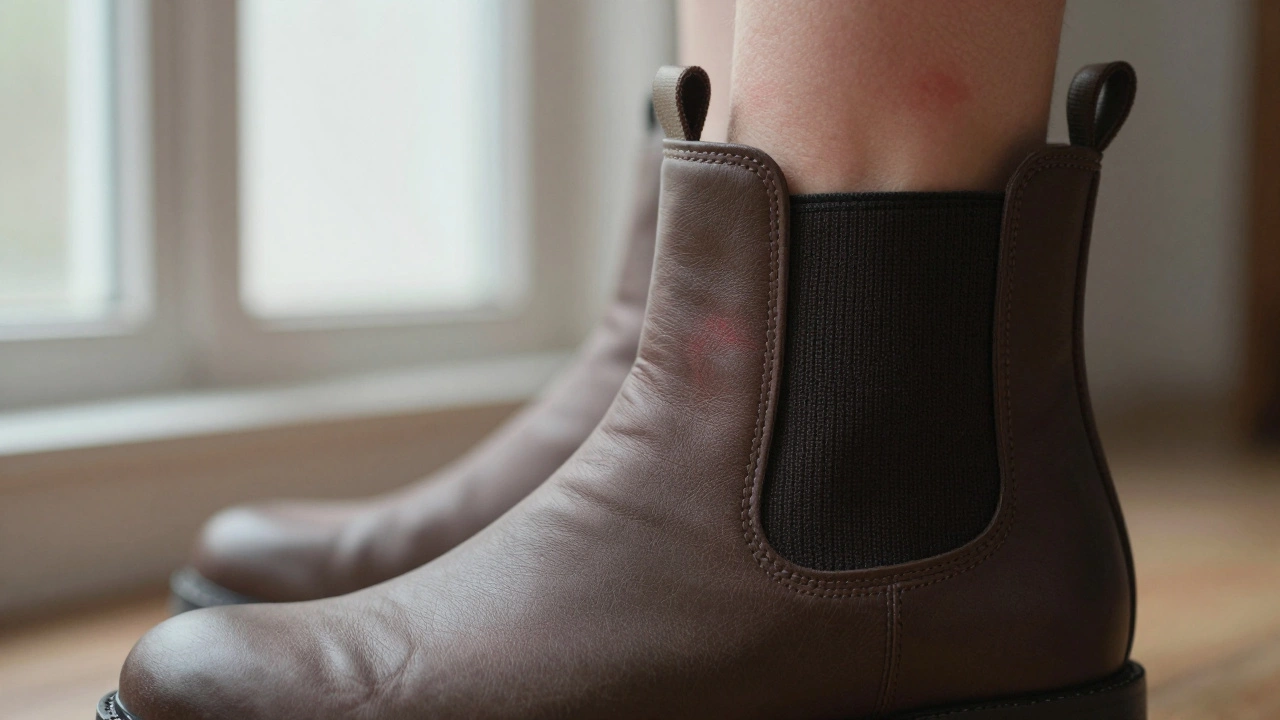
Chelsea boots have a snug, elasticated side panel that’s meant to hug your ankle without laces. That sounds great in theory. In practice, it often means your foot gets squeezed the moment you step in. If you’ve got wider calves, high arches, or even just a bit of swelling by the end of the day, that elastic can dig in like a rubber band left on too long.
Many brands make Chelsea boots with a standard calf width that fits only average feet. Brands like Clarks, Dr. Martens, and Blundstone make some models with wider options, but most fast-fashion versions don’t. If you’ve ever felt a red mark after taking off your boots, that’s the elastic pressing into your skin. It’s not just uncomfortable-it can cut off circulation and cause numbness or tingling over time.
The toe box is too narrow
Chelsea boots often have a pointed or tapered toe shape to look more elegant. But feet aren’t shaped like pencils. Most women’s feet are widest at the ball of the foot, not the toes. When you force your toes into a narrow space, your pinky and fourth toe get squashed. That leads to corns, calluses, or even Morton’s neuroma-a painful nerve condition caused by compression.
Try this test: stand in your boots with socks on. Can you wiggle your toes freely? If not, they’re too tight. A good fit should leave a thumb’s width of space between your longest toe and the end of the boot. Many women don’t realize they need to size up in Chelsea boots because they’re used to wearing sneakers or flats where fit is more forgiving.
No arch support
Chelsea boots are flat or have a minimal heel. That might sound good for walking, but without proper arch support, your feet are doing all the work. Over time, that leads to plantar fasciitis-a sharp pain in your heel or arch that gets worse after standing or walking. Even if you don’t have flat feet, your arches need cushioning. Most cheap Chelsea boots come with a thin, flat insole made of foam that collapses after a few wears.
Look at the inside of your boots. If the insole is smooth and hard, it’s not helping. Brands like Ecco, Clarks, and Rockport make Chelsea boots with contoured footbeds that cradle the arch. If you’re stuck with a pair that doesn’t have support, swapping the insole is the easiest fix. Orthotic insoles designed for boots can make a huge difference.
The heel doesn’t fit your foot
A boot that slips at the heel is annoying. A boot that grips too hard is worse. If your heel is too narrow for the boot’s cup, your foot will slide forward every step, forcing your toes into the front. That’s why you feel pressure on the ball of your foot, even if the rest of the boot feels fine.
Heel slippage happens when the boot’s shape doesn’t match your heel bone. Some women have narrow heels, others have wider ones. If you notice your heel rubbing or blistering, the boot’s back is too wide or too shallow. A heel grip insert or a thin heel pad can help, but it’s not a long-term fix. The real solution? Find a boot that matches your heel shape.
You’re wearing them too soon
Chelsea boots are made of leather or suede. Those materials are stiff when new. Unlike sneakers that stretch over time, leather boots need to be broken in slowly. Wearing them for a full workday right out of the box is like running a marathon in new running shoes without training.
Break them in gradually: wear them for an hour at home with thick socks, then two hours the next day. Use a shoe stretcher or stuff them with damp newspaper overnight to help the leather soften. Don’t skip this step. Rushing it means you’ll blame the boot for hurting your feet when the real issue is you skipped the break-in period.
They’re the wrong size
Many women buy Chelsea boots based on their sneaker size. Big mistake. Boots fit differently than shoes. A size 7 in Nike may be a 6.5 in Clarks, and a 7.5 in Dr. Martens. Plus, boot sizes vary by brand-even within the same brand, depending on the style.
Always try boots on in the afternoon. Feet swell during the day, and what fits in the morning might pinch by 4 p.m. Stand up while trying them on. Walk around the store. If your toes feel squished, or your heel lifts more than a quarter inch, keep looking. Don’t trust the size tag-trust how it feels.
What to do now
If your Chelsea boots are hurting, here’s what actually works:
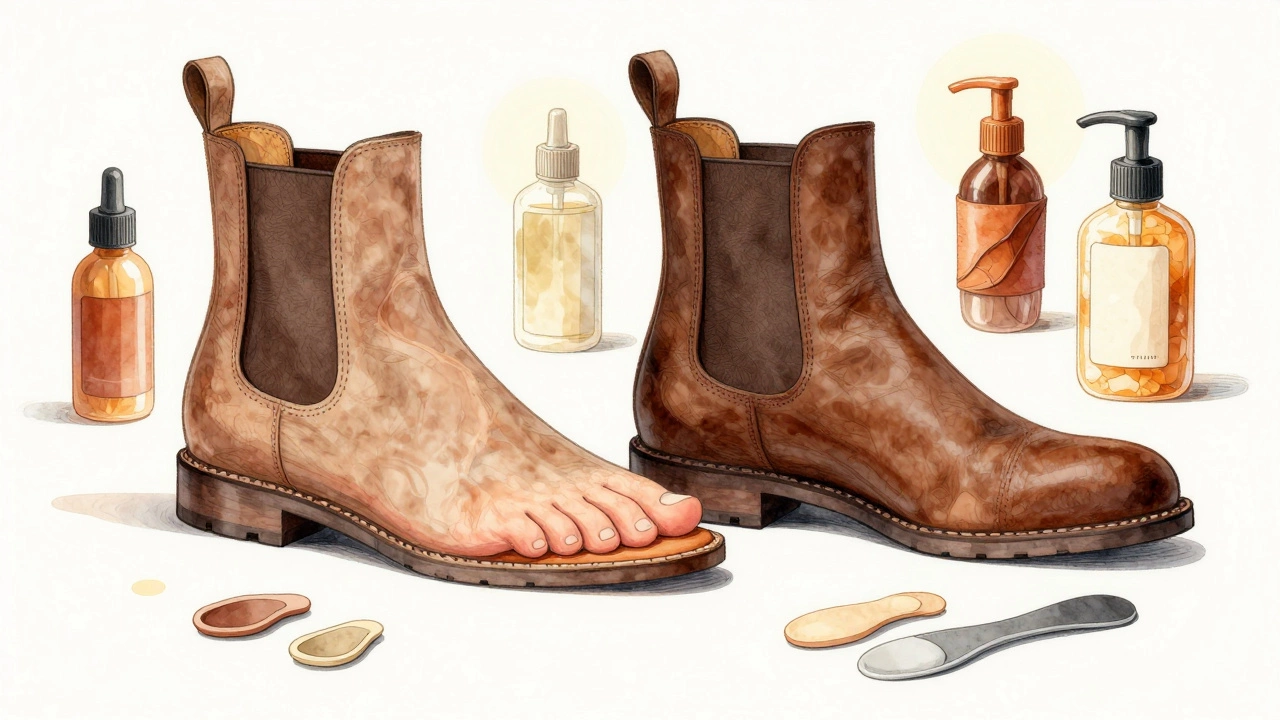
- Swap the insole for a cushioned orthotic one-brands like Superfeet or Sole offer ones designed for boots.
- Use a leather conditioner to soften the elastic sides and the toe box. Apply it every few weeks.
- Wear thick socks or silicone toe separators to create space and reduce pressure.
- Try a shoe stretcher for the toe area or use a hairdryer to warm the elastic while gently stretching it.
- If you’re still in pain after trying these, it’s not your feet-it’s the boot. Replace it with a pair that has a wider toe box and removable insole.
Which Chelsea boots actually don’t hurt?
Not all Chelsea boots are created equal. Here are a few that consistently get praised for comfort:
- Clarks Unstructured Chelsea - Has a cushioned footbed, flexible sole, and comes in wide widths.
- Ecco Soft 7 - Lightweight, with a wide toe box and memory foam insole.
- Dr. Martens 1460 Smooth Leather Chelsea - Stiff at first, but breaks in beautifully. The air-cushioned sole helps with impact.
- Rockport Total Motion - Designed for all-day wear, with arch support built in.
Look for these features: removable insole, flexible sole, wide toe box, and elastic sides that aren’t overly tight. Avoid anything labeled ‘slim fit’ or ‘pointed toe’ if comfort matters to you.
When to stop wearing them
Foot pain isn’t normal. If you’re getting numbness, sharp pain, swelling, or blisters that won’t heal, it’s time to stop wearing those boots. Chronic pain can lead to long-term damage. Don’t push through it hoping it’ll get better. Your feet aren’t meant to be squeezed into fashion.
There’s no rule that says stylish boots have to hurt. The right pair can look just as sharp and feel like you’re walking on clouds. It’s not about giving up style-it’s about choosing better design.
Why do my Chelsea boots hurt my ankles?
The elastic side panels on Chelsea boots are often too tight for wider calves or swollen feet. They can dig into the skin, cause red marks, or even restrict blood flow. Try boots with stretchier elastic, or look for styles with a zipper instead of elastic for more adjustability.
Should I size up in Chelsea boots?
Yes, often. Many women need to go up half a size or even a full size in Chelsea boots because the toe box is narrow and the fit is snug. Always try them on in the afternoon when your feet are at their largest, and walk around in them before buying.
Can I add arch support to Chelsea boots?
Absolutely. Most Chelsea boots come with thin, flat insoles. Replacing them with an orthotic insole designed for boots-like Superfeet or Sole-can relieve arch pain and prevent plantar fasciitis. Look for ones that are slim enough to fit without making the boot too tight.
Do Chelsea boots stretch over time?
Leather Chelsea boots will stretch slightly, especially around the toe and instep. But the elastic sides won’t stretch much at all. Don’t rely on them to stretch into comfort. Break them in slowly with thick socks and use a shoe stretcher if needed. If they hurt from day one, they probably won’t get better.
Are wide-fit Chelsea boots available?
Yes, but you have to look for them. Brands like Clarks, Ecco, and Rockport offer wide widths in their Chelsea styles. Avoid fast-fashion brands-they rarely make wide options. Check the product description for ‘wide fit’ or ‘D width’ and read reviews from other women with similar foot shapes.