What Is a Thick Warm Jacket Called? The Real Names Behind Winter Coats

- Cleo Fairchild
- 1 January 2026
- 0 Comments
When the wind cuts through Bristol like a knife and your fingers go numb before you even reach the bus stop, you don’t just grab any jacket. You need something that actually holds heat. But what do you call that bulky, cozy, no-nonsense coat that keeps you alive in January? It’s not just a ‘winter jacket’-there are real names for these things, and knowing them helps you buy the right one.
It’s Not Just a ‘Winter Jacket’
Most people say ‘winter jacket’ like it’s one thing. But that’s like calling all cars ‘vehicles.’ There’s a big difference between a puffer jacket you throw on for a quick walk to the shops and the heavy-duty parka you wear shoveling snow at 6 a.m. The language around warm jackets has evolved for a reason-each name describes a specific design, insulation, and purpose.
If you’re shopping online or asking for help in a store, using the right term matters. Say ‘puffer jacket’ and you’ll get something lightweight with down or synthetic fill. Say ‘parka’ and you’ll get something with a fur-lined hood, longer cut, and serious weatherproofing. Get it wrong, and you end up with something that looks warm but freezes you solid.
The Main Types of Thick Warm Jackets
There are five main styles of thick, warm jackets you’ll actually find in UK winters. Each one has a name, a purpose, and a place in your wardrobe.
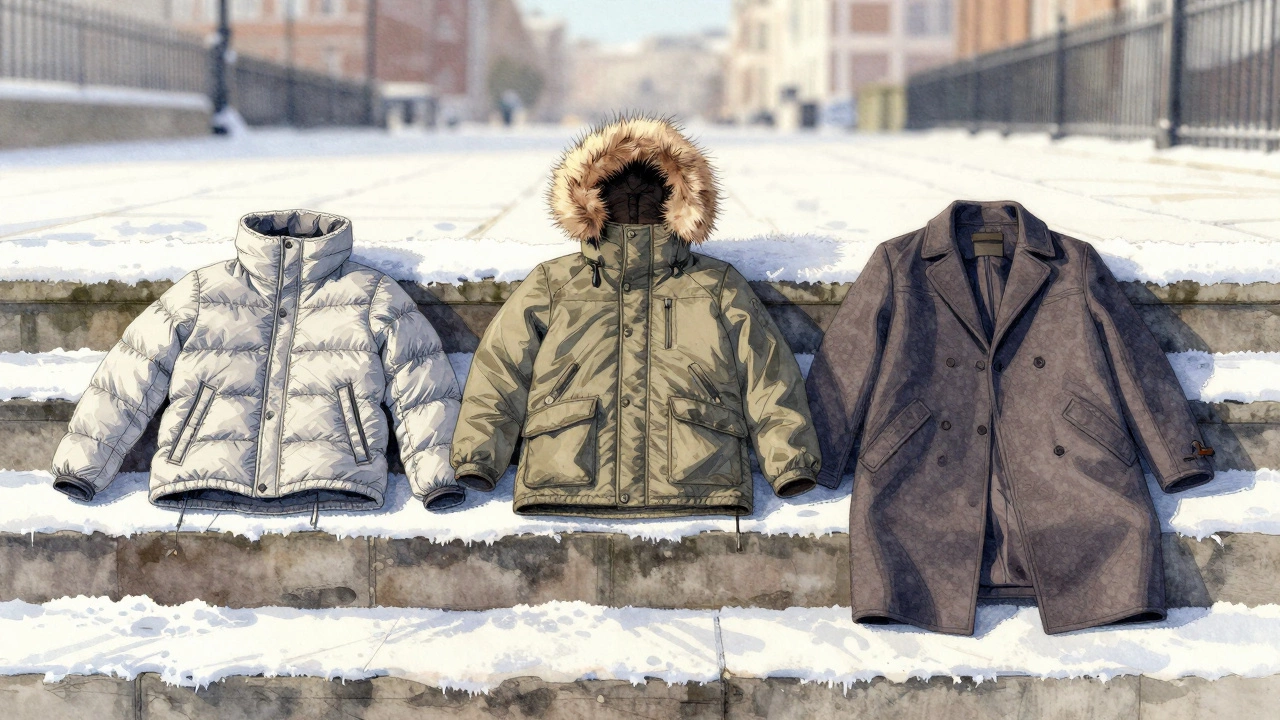
- Puffer jacket - Lightweight, quilted, filled with down or synthetic insulation. Often has a hood. Great for urban commuting, walking the dog, or layering under a raincoat. Not for deep snow or windstorms.
- Parka - Longer than a puffer, usually reaching mid-thigh. Has a fur or faux-fur-lined hood, heavy-duty waterproof shell, and often a removable liner. Designed for extreme cold. Used by Arctic explorers and people who wait for buses in January.
- Insulated jacket - A broader category. Can be puffer-style or more tailored. Uses synthetic insulation like PrimaLoft or Thinsulate. Often worn as a mid-layer under a shell. Popular among hikers and outdoor workers.
- Down jacket - Made with goose or duck down. Super warm for its weight. Best when dry. Loses insulation when wet. Usually more expensive. Ideal for dry cold-like skiing or mountain walks.
- Heavy wool coat - Not technically a ‘jacket,’ but often mistaken for one. Made from thick wool or wool-blend fabric. No insulation inside. Relies on the fabric’s natural warmth. Think of a classic British overcoat. Great for city winters, not for snowdrifts.
Here’s what each one is best for:
| Type | Best For | Weight | Water Resistance | Hood |
|---|---|---|---|---|
| Puffer jacket | Urban walks, layering | Light | Light | Usually |
| Parka | Extreme cold, snow, wind | Heavy | High | Yes, with fur |
| Insulated jacket | Outdoor work, hiking | Medium | Medium | Often |
| Down jacket | Dry cold, travel | Very light | Low | Sometimes |
| Heavy wool coat | City winters, formal settings | Heavy | None | No |
Why the Name Matters When You Buy
Imagine you’re scrolling through an online store looking for a jacket to wear during a winter hike. You type ‘warm jacket.’ You get 50 options. Half are thin windbreakers. Half are puffer jackets meant for city life. You pick one. You get soaked. You’re cold. You’re mad.
Now try searching for ‘parka with detachable fur hood and waterproof shell.’ Suddenly, you’re seeing the right stuff. The terminology isn’t just fancy-it’s functional. Brands use these names to signal performance. If a jacket is called a ‘down jacket,’ it’s meant to be warm but not waterproof. If it’s a ‘technical parka,’ it’s built for blizzards.
Real-world example: In 2023, the UK Met Office reported that temperatures in northern England dropped to -12°C during a prolonged cold snap. People who wore puffer jackets instead of parkas reported frostnip on their cheeks. Those with proper parkas stayed dry and warm. The difference wasn’t luck. It was the name of the jacket.
What About ‘Bomber’ or ‘Field’ Jackets?
You might hear those terms thrown around. A bomber jacket? Usually made of nylon or leather, with a ribbed hem and cuffs. It’s stylish, but not warm unless lined. A field jacket? Designed for military use-water-resistant, durable, but rarely insulated. Neither counts as a thick warm jacket unless you add a thermal layer underneath.
Don’t be fooled by marketing. Some brands slap ‘winter-ready’ on a thin nylon jacket and charge extra. If the description doesn’t mention insulation type, fill weight, or a hood, it’s probably not built for real cold.
What to Look for When Buying
Here’s what actually makes a jacket warm, not just look warm:
- Fill power - For down jackets, look for 600+ fill power. Higher means more warmth for less weight.
- Insulation weight - Synthetic jackets list grams per square meter (g/m²). 100g is light, 200g is medium, 300g+ is for serious cold.
- Shell material - Look for DWR (durable water repellent) coating. Not waterproof, but sheds snow and rain.
- Hood fit - A hood that fits snugly around your face is non-negotiable. Fur-lined hoods trap heat better than synthetic ones.
- Length - Longer jackets (thigh-length or longer) prevent heat from escaping out the bottom.
And don’t forget the zipper. A single zipper? That’s a wind tunnel. Look for a double-layered storm flap or a windproof placket.

What to Avoid
Some jackets look warm but fail in practice:
- Thin polyester shells with no insulation-just ‘fashion warmth’
- Down jackets without a water-resistant shell-they collapse when wet
- Short jackets that end at the waist-heat escapes from your lower back
- Anything labeled ‘windproof’ without mentioning insulation-windproof isn’t warm
There’s a reason why people in Iceland, Canada, and northern Scotland wear parkas. It’s not tradition. It’s survival.
Final Tip: Layering Is Still Key
No jacket, no matter how thick, replaces layers. A warm jacket works best with a thermal base layer and a mid-layer fleece. Even a parka is more effective when you’re not wearing a cotton t-shirt underneath.
Think of your jacket as the final shield. The real warmth comes from the layers beneath it.
What’s the warmest type of jacket for UK winters?
The parka is the warmest for typical UK winters, especially in the north and during snow or wind. It combines long coverage, a fur-lined hood, waterproof shell, and thick insulation. For milder city winters, a heavy insulated jacket or down jacket with a good shell works well.
Is a puffer jacket warm enough for winter?
A puffer jacket is warm enough for light winter days, commuting, or running errands-but not for snow, wind, or prolonged cold. If you’re standing outside for more than 20 minutes, especially in rain or wind, you’ll feel the chill. Choose one with at least 200g of synthetic insulation or 600+ fill power down for better results.
Do I need a fur-lined hood?
Fur-lined hoods aren’t just for looks-they trap heat better than synthetic fur. Real or faux fur disrupts airflow around your face, keeping your cheeks and ears warmer. In temperatures below 2°C, a hood without fur won’t cut it. If you’re sensitive to cold, don’t skip this feature.
Can I wear a down jacket in the rain?
Not without risk. Down loses its insulating power when wet and takes a long time to dry. If you’re in rainy areas like Bristol, choose a down jacket with a DWR coating and a waterproof shell, or opt for synthetic insulation instead. Synthetic fills like PrimaLoft stay warm even when damp.
What’s the difference between a parka and a winter coat?
A ‘winter coat’ is a vague term-could mean anything from a wool overcoat to a parka. A parka is a specific type of winter coat: long, insulated, with a hood, and designed for extreme cold. If someone says ‘winter coat,’ ask what it’s made of and how long it is. That’ll tell you if it’s actually warm enough.
Bottom Line
There’s no such thing as just a ‘thick warm jacket.’ The name tells you exactly what you’re getting. If you want to stay warm in a UK winter, learn the difference between a puffer, a parka, and a down jacket. Choose based on your weather, not your Instagram feed. The right jacket doesn’t just look good-it keeps you alive when the temperature drops.